After the smoke settled, the Hull Women’s Club announced the start of its campaign, with the slogan “A Clubhouse in 1927.” Throughout the year, they said, they would hold whist parties, motion pictures, and lawn fetes to raise funds. Before the first dollar was raised, Mother Nature struck once again. Another lightning storm hit on July 8, knocking out the electric rail service and leaving 500 passengers waiting at the Pemberton station while the train sat immovable at Stony Beach. At least three automobile drivers crashed when bolts of lightning blinded them temporarily.
Boston’s Fire Commissioner Theodore A. Glynn arrived for the summer during the second week of July, welcomed officially by the K Street Zouaves, a volunteer fire company. That news mingled with a report that henceforth, Nantasket Beach would set aside benches as “Reserved for Women (smoking permitted).” The request had come from women themselves, who wanted the right to smoke in public. The move became somewhat of a joke to North Shore residents. The Lynn Daily Item retorted that women on Nahant Beach and other such locales were free to smoke wherever they wanted, without segregation.
Against this backdrop, Hull’s year-round residents made a plea to get some of their land back. The federal government had taken the land atop Telegraph Hill in 1898 for the construction of Fort Revere, but in 1925 only six men garrisoned the place. No guns had been fired since 1909, due to noise complaints by the local residents, and with the “War to End All Wars” already having been fought, the future of the fort looked to be one of emptiness. The town took the opportunity to contact Congressman Charles L. Gifford and plead their case for the return of the property to the townsfolk of Hull.
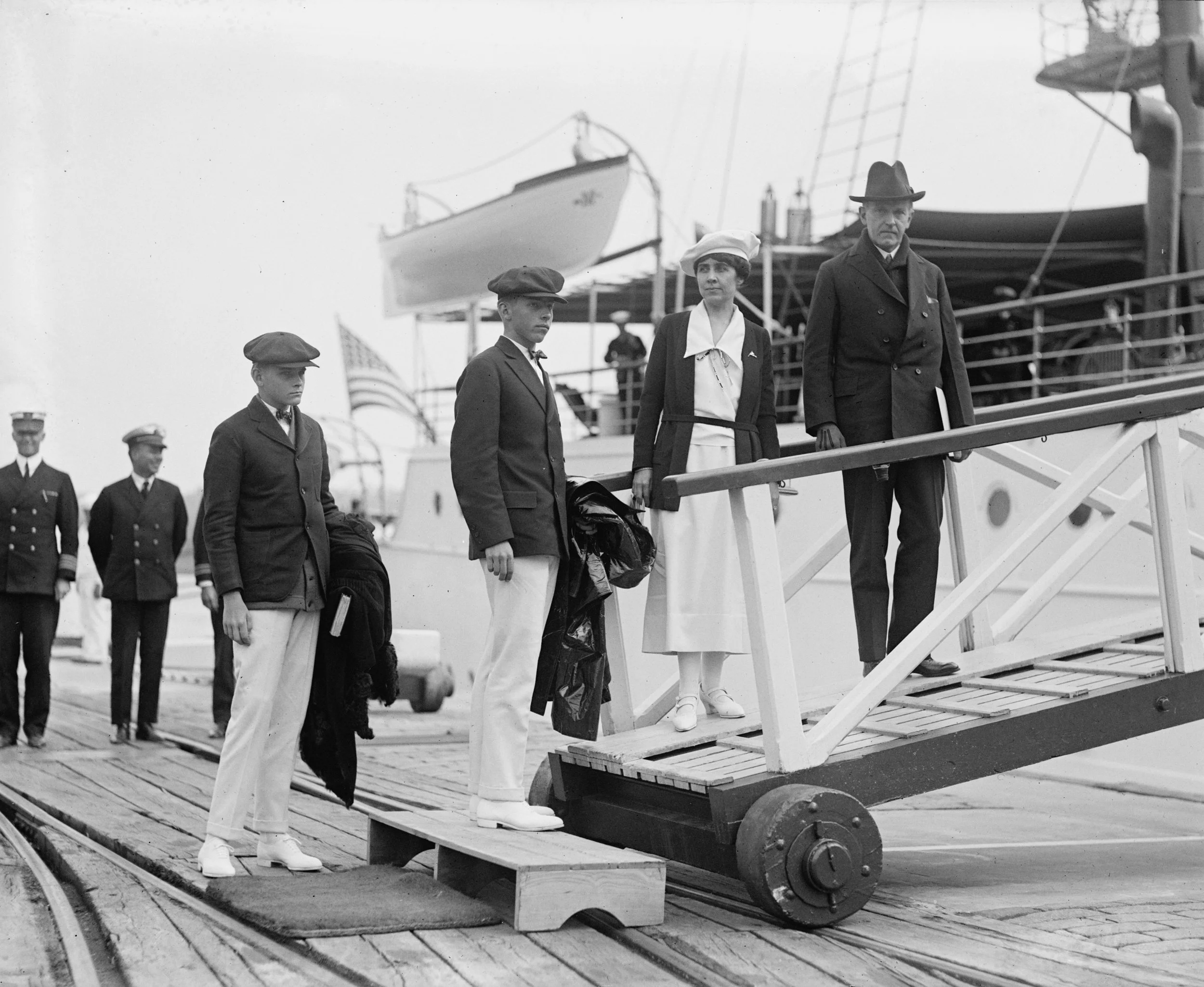
President Coolidge, out for a cruise aboard “Mayflower” on July 9, looked happily toward Hull Hill, even able to point out to others on the yacht the house in which he stayed in 1916. As he approached Fort Andrews on Peddocks Island, cars lined the shore at Pemberton, local residents waving white handkerchiefs in salute. More showed when the fort fired its 21-cannon salute. Landing ashore with his party, Coolidge inspected the sorry-looking campus, gaining a better understanding of the postwar needs of the underfunded coast artillery. Climbing two flights of stairs in the dingy machine shop, Coolidge paused as the man in front of him, Secret Service agent Richard Jervis, plummeted down an empty elevator shaft. Coolidge stepped back, out of danger.
A week later, federal agents stormed through Hull looking for booze. Striking out at several locations, they tried a last-second trick. An officer posing as a friend of Francis Quinlan, son of the operator of the Grand View Hotel at Whitehead, called and told him to evacuate quickly as the Feds were in town. Francis loaded up his car with all the alcohol in the hotel and sped away, only to be stopped by the agents and arrested. Later during the summer, a judge threw the case out, determining the agents had entrapped young Quinlan in a less-than-savory bit of policing.
The United States Fat Men’s Club arrived in Hull for its annual outing which, as with all the other groups, included races. They welcomed the Fat Men of New England, Carl Shaw of Melrose, president, to join in the fun. They were followed by the Dorchester Board of Trade, the Women’s Democratic Club of Massachusetts, the Jewish Anti-Tuberculosis Association, and more.
Hull held a special town meeting on July 18 with the hope of securing a vote to repurchase the Fort Revere land. Everything was in place save for one detail, an assessment by the federal government. Apparently, no one expected a long meeting and indeed, it lasted 15 minutes. In that time, the town voted $30,500 in appropriations for things such as new street signs, road repairs to Rockland House Road, the construction of a seawall at Allerton and more. Moderator Frank S. Hickey arrived in golf attire and never took off his hat. That weekend, 300,000 estimated visitors populated Nantasket Beach.
News broke on July 21 that the president would be coming to town, to visit the Pemberton Inn at the behest of Louis Liggett, a financial backer. The submarine S-1 arrived to be part of the show that afternoon. The following day, Coolidge arrived at 4, and, as he had done once before, re-visited his old summer home on Western Avenue before being taken to the Pemberton Inn for the festivities. After half an hour in total, the Coolidge party boarded their launch and returned to the “Mayflower.”
That weekend, Miss Nina Wolfe took the title of Miss Boston at a seaside beauty pageant, voted the “most pulchritudinous” by the judges. The Miss New England contest would follow in August.
As August approached, though, the year-round residents were already thinking of fall. They called an important meeting with representatives of the New York, New Haven & Hartford Railroad and the Nantasket Steamboat Company to discuss the future of transportation in Hull during the colder months. The railroad was proposing cutting stations and the number of trains due to financial losses. Ultimately, the answer would be buses, a new line running from Hull to Hingham starting November 1.
A third boxer, Jack Sharkey, made news in Hull in 1925, as he trained for his battle with King Solomon of Panama. Two years later, the Boston brawler would take on Jack Dempsey at Yankee Stadium in one of the biggest boxing matches in United States history.
August also began with another high-profile arrest, as Boston police nabbed one of their own, Ralph Lockwood, in connection with a series of bank car holdups. Lockwood was found asleep in a cottage in Hull and fought mightily before being subdued. His trial would become the sensation of the summer.
Out on Nantasket Beach, 200,000 more people enjoyed the surf. As 50,000 cars passed through town, the steamboat and railroad companies watched their fortunes dwindle. Hotel owners, seeing the flexibility of the automobile allowed visitors to travel as they wished, came to see the month-long hotel stay as a thing of the past. The beach’s allure remained strong, but could be accessed for free, or just the price of gasoline. Despite record crowds, Hull was losing its place as a summer resort.
On August 4, another Hull hero was born. Local Boy Scout Leon Galiano, 16, was swimming near Stony Beach when he noticed that his 12-year-old brother Vincent had gone under and not resurfaced. Leon could see bubbles and swam down to their source, hauling young Victor above water and to the shore, where he was restored. The Humane Society of the Commonwealth of Massachusetts got word and promised him a medal after the requisite paperwork had been completed.
As summer began to wane, partygoers turned from dancing to whist. The First Lady decided to help the Hull Women’s Club with its building cause, sending a steel engraving of the White House, personally autographed, framed in mahogany, to Mrs. Henry F. Mitchell, with the idea that it be auctioned to benefit the fund. The Hull schools announced a big change, the move from combined classes to one teacher per grade level.
While the summer was winding down, some still held onto its last vestiges. One young man, trying to find his summer home, stumbled into the wrong house at Whitehead in the middle of the night, climbing through the window of the bedroom of none other than the town’s fire chief, Henry J. Stevens. Arrested on drunkenness, the young man couldn’t remember his own name, and threw out several before the police simply tossed him into a cell to sober up.
Residents learned that the Fort Andrews artillery battery would be firing its guns on August 17, 18, and 19. The Boston Globe quipped that it “may give summer residents in Hull a chance to renew their window glass at government expense.” The tests went off without a hitch, with no news about any damage reported.
Boss John Smith returned mid-August, two months after his surgery, to the delight of well-wishers. On August 13, 14, and 15, the Rockaway-Nantasket Land Company conducted an auction of lots, promising to give away a new Ford touring car to one lucky visitor to the event, no land purchase required to enter. At Nantasket Beach, George Anastos locked up his refreshment stand, forgetting he still had two hot dogs cooking. Smoke soon poured from the stand, catching the attention of Patrolman Francis Bergan, and the fire was put out. The hot dogs could not be saved.
The Hull Firemen’s Ball welcomed 1,200 guests to the municipal building on Atlantic Hill on August 15. Two days later, interest in town turned to a bizarre discovery, a foot-long fish with 10 tentacles and two slender fins. The finder, Prince I.K. Toumanoh of Russia, brought it to the home of Baron H.L. Rehberg, believing it was an octopus. Dozens of local residents examined it, wondering simultaneously what Russian royalty was doing in town.
On August 23, police estimated 250,000 bathers gathering for a final shot at summer, carried by 80,000 autos. Hull celebrated Gala Day for the 18th time, with baseball games, motion pictures and candy for the kids, swimming races, tennis tournaments, putting contests, and more. The night before ball brought 1,500 people to the Pemberton Inn. The Hull Women’s Club declared it had nearly enough money to buy some land, after just the first season of fundraising. On August 29, the town held its annual illumination. At a given signal, residents along the waterfront from Hull, Hingham, Quincy, and Weymouth fired red flares or whatever else they had to light the shorelines around the rim of the bay.
That day, Paragon Park held a barn dance for 1,200 visitors, complete with cornstalks, overalls, colored kerchiefs, and crated domestic fowl. Captain Walter O. Cobb held his 43rd annual clambake on September 1 as the old Beacon Club shuttered for the season and children all over town shuddered at those familiar words: school starts next week.
But the summer of 1925 would go out the same way it came in, with a bang.
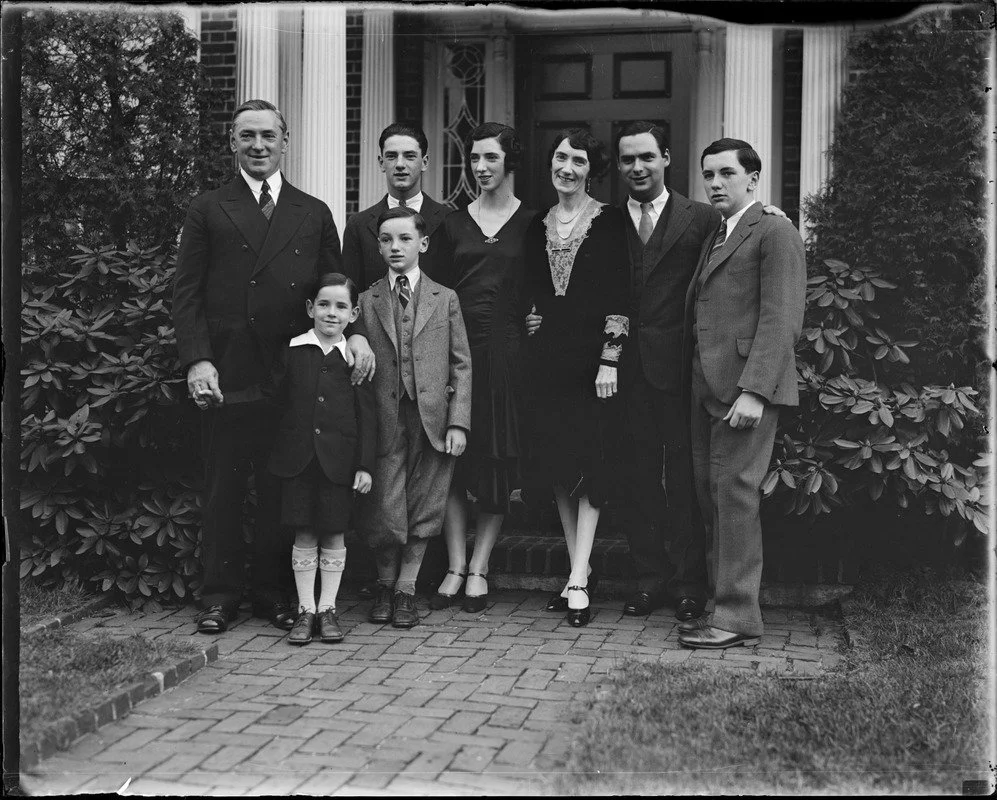
Mayor James Michael Curley and family had enjoyed a motion picture at the Bayside Theater on Thursday, September 3 and were riding peacefully back to their summer cottage at Waveland, Miss Mary Curley at the wheel, when they suddenly struck a parked car at the corner of D Street and Nantasket Avenue. Mrs. Curley suffered a broken nose, James, Jr., cuts and bruises and a swollen lip, and Mary, scratches all along her arms, plus numerous cuts and bruises about the body.
A passing motorist stumbled onto the scene and brought them all home. Three doctors descended upon the house – Harry Cahill, William G. Sturgis, and Martin English – and declared that the mayor’s leg had been twisted.
The mayor sent out word that he wanted to speak to the scofflaw who had left the car parked where it was, but never found out that person’s identity.
The summer of 1925 went out with a bang, but also with the whispering whimper of a proud seaside town seeing its future change before its eyes.