HRA elects officers, delays Urban Renewal Plan hearings until September

By Dolores Sauca Lorusso

At its first meeting since the annual town election results were finalized, the Hull Redevelopment Authority elected new officers and agreed to wait until September to schedule additional public forums on its draft Urban Renewal Plan.

On Wednesday, June 28, longtime chair Bartley Kelly nominated Dennis Zaia to become chair; Zaia nominated newly elected member Daniel Kernan to be vice chair. Adrienne Paquin, also elected this spring, is now the clerk, and Kelly was named treasurer. That position previously was held by state appointee James Tobin, whose recent death has created a vacancy on the five-member board.

Earlier this year, the HRA held public hearings to solicit comments on options for developing the property. Kernan suggested that the authority members reposition the workshops going forward.

“Right now, is an opportunity to pivot…let the community know there is not just one plan anymore, we will come up with alternatives,” Kernan said.

Zaia said “pivot potential is an opportunity to learn more,” adding the board needs to “further distill” what was captured at the previous public forums.  

“We don’t want to lose the information; they were great public sessions” said Kernan. “But we weren’t asking the right question; we were asking about the current plan… [We] needed to ask what they would like to see on the land.”

Zaia agreed. “We may have asked one question predicated on the fact the draft plan was the draft plan and we wanted feedback; the question might have been: What can we do, even if not on the plan?”

The HRA will use its next two meetings on Monday, July 10, and Monday, July 17, as working sessions.

“Many alternatives were presented…we need to take the list of ideas from the breakout sessions at the high school and consolidate into categories,” Zaia said. “Then we will start to see which ideas have greatest viability.”

Paquin agreed about consolidating the list based on the feedback the board has received so far. “There is no point in more meetings until we have options to bring to the town, and we need more time to research and explore other options,” she said. “Two working sessions are a great start; there are so many options that haven’t been looked into.”

Consultant Steven Cecil updated the group, which included more than 25 residents attending the Zoom meeting, that Keller Williams is using the draft ideas as a starting point to complete a financial feasibility study to provide some “solid financial information” in the next few weeks.  “In the midst of the ongoing community participation effort, it came out that the fiscal impacts of whatever is involved is key,” said Cecil, adding the group has been keeping residents informed via the website, a page in The Hull Times Summer Guide, and biweekly information boxes in the newspaper.

“A lot of ideas and information has been put on the table; now we are validating from a dollars -and-cents standpoint…then [we] need to vet ideas and strike a balance to find something that fits and accomplishes the goals at hand,” said Kelly.

The HRA encourages citizens to submit their “pitches” for the HRA land to its website, hra02045.com.

“The avenue to public input is the HRA website; we encourage people to do research and submit ideas there…the public forums will help prioritize what works,” said Kelly.

Paquin will coordinate the addition of functionality to the site so that images will also be able to be uploaded.

“As the plan advances, there will be opportunity for community input at each stage,” said Cecil. “[We] invite citizens in the meeting today to think about the ideas robustly…you all came to the meeting, so you must have ideas.”

Pamela Marlowe of Old Colony Road said she agrees the HRA should collect additional “pitches” from the public. She said that when the forums were held in February and April, a lot of citizens were “not informed and some didn’t even know what the HRA was. We had a lot less information…now that we are more informed, ideas may be different than what people had back then.”

Kevin Locke of Nantasket Avenue said he was “flummoxed” because there are a lot of projects in town and there “does not seem there is a clear strategy…Paragon Dunes, HRA plans and aquarium; can’t build without first looking at how it fits the plan. What do we want to accomplish?”

Kelly described the master plan as one giving an overall view of the town; however, it was narrowed to the beachfront because those areas needed the most planning. He added to make a “better development process,” the Nantasket Beach Overlay District was created.

“Zoning dictates what is developed, and the town can’t compel private property owners to do anything with their property…Paragon Dunes is going through the process allowed by law,” Kelly said.

Cecil further explained the master plan for a town creates infrastructure to set an overall framework, but it “doesn’t compel the town to comply; it is just there to provide guidance.”

Paquin pointed out that the link Town Planner Chris DiIorio posted in the Zoom meeting chat went to a Community Development Plan document dated 2004, making it nearly 20 years old.

“The master plan needs updating, and it is what provides the identity of a town, what we want it to look like,” said Susan Mann. “How can the HRA move forward without the identity of the town? There are frustrated citizens who do not know what direction the town is going in.”

Zaia agreed the town needs a “well composed” master plan to direct how the town can move itself forward. However, he made it clear the “master plan is not in our realm of purview.”

“The town has suffered and identity crisis for 30 years since we tore down Paragon [Park],” said Kelly. “If the town wants to update the master plan, it should do it, but it shouldn’t sideline what we [the HRA] are doing…we are working our part of the puzzle, and we will help with other pieces of that puzzle as we always have.”

One piece of that puzzle is the plan for a two-way road system, which will restore the flow of traffic to nearly what existed before the HRA land was taken by eminent domain.  

“Anything with roads is a town project…the two-way roads are an integral part of the HRA because it improves traffic flow; diffusing the traffic instead of funneling it to one bottleneck,” said Kelly.

In response to a desire by new HRA board members and citizens alike to understand the full scope of the two-way roads and how they are linked to the HRA land, a presentation by consultant Kevin Dandrade of TEC will be arranged for an upcoming HRA board meeting.

“It’s not a rush to get someplace,” Zaia said. “We are trying to do something that works for the community as a whole.”

Do you have an opinion on this issue? Click here to write a Letter to the Editor.
In response to complaint, Select Board loosens some limits on public comment

By Carol Britton Meyer

The select board last week adopted a temporary policy to allow public comment on individual agenda items, and members of the public wishing to speak on a particular item may do so after being recognized by the chair.

The temporary policy is based on guidelines provided by Town Counsel James Lampke and developed with input from retiring Town Manager Philip Lemnios. It is a work in progress that Lampke will revise prior to the board’s July 19 meeting.

The general consensus is that all board members support allowing public comment on specific agenda items rather than having a public comment period at either the beginning or end of each meeting.

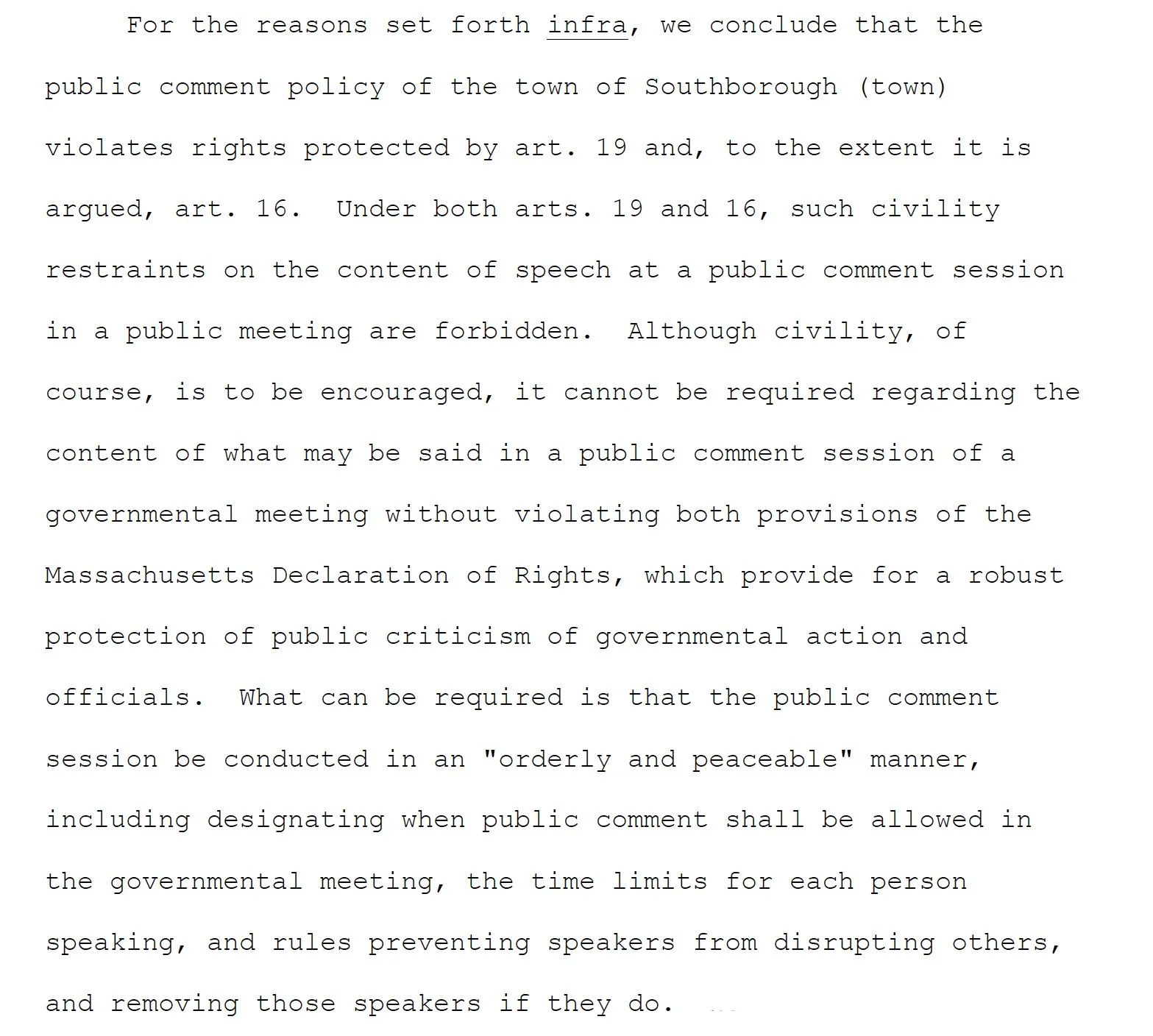
The discussion was prompted by a complaint from Atlantic Avenue resident Christopher Sweeney about board’s disallowance of resident participation at meetings other than public hearings. The policy is being drafted in response to a Massachusetts Supreme Judicial Court case that determined that municipalities could not prohibit “rude” public commentary at meetings.


In July, the subject will be addressed again and new Town Manager Jennifer Constable will be asked for her perspective. Under the policy, all public remarks must be addressed through the select board chair, and not all matters presented by members of the public speaking on an agenda item may be debated or acted on by the board at the time they are presented.

Under the temporary policy, members of the public wishing to speak would be encouraged to maintain order and civility and respect the views and opinions of others in making their remarks. This language will be reviewed and revised by Lampke as well.

“Jim will create a clean document that we will review at our next meeting in three weeks,” Chair Greg Grey said. The select board will go over the revised document at that time and take whatever action its members deem appropriate.

A member of the audience indicated an interest in speaking, but Grey said no public comment will be allowed until the temporary policy is crafted and approved.

In other business at the meeting, Hull Police Sgt. Stephen Glavin was appointed lieutenant upon the recommendation of Police Chief John Dunn.

Glavin, a Hull High School graduate, holds a master’s degree in criminal justice and according to Dunn is “a very capable officer who has taken on added responsibilities with a great attitude. He’s well respected by his peers and has been the officer in charge for a number of assignments.”

Glavin was promoted to sergeant in 2021 and has been awarded two lifesaving medals, among other recognitions.

The select board also approved a new library contract with the Hull Library Staff Association Local 4928 for the period of July 1, 2023 to June 30, 2026.

The contract calls for an annual salary increase of 3% and an evening differential beginning at 5 p.m. and on Saturdays of 20% of the hourly wage, effective July 1, 2024. In addition, $100 was added to each longevity category.

Do you have an opinion on this issue? Click here to write a Letter to the Editor.

Fresh from successful En Plein Air event, Hull Artists to host Open Studios July 8 & 9

This weekend, you have the opportunity to visit 30 artists showing their work during the 2023 self-guided Open Studios weekend!

The event takes place on July 8 and 9, from 10 a.m.  to 4 p.m., with free admission and parking.  A self-guided map guides you to 30 artists at 22 locations throughout Hull and neighboring towns. Featured media include painting (oil, acrylic, watercolor), mixed media, photography, fiber arts, encaustic, jewelry, drawing, collage, and more.

Since 1995, Open Studios has invited visitors into artists’ homes where you can chat with the artists, meet other art lovers, learn about art-making, get a unique perspective on Hull’s fascinating neighborhoods and remarkable natural beauty, and acquire art treasures along the way.

Details about each artist, and a downloadable map and guide, are available at Hull Artists/Open Studios. Also, be sure to visit Gallery Nantasket, the Open Studios headquarters, across from the beach – always free and always fun!

Last Saturday, despite potentially discouraging weather, 21 hardy artists painted “en plein air” (French for out-of-doors) throughout Hull. They stretched from the Weir River bridge overlooking the estuary up to Pemberton Point and the Gut.

Painting locations also included three private homes that provided excellent subjects to paint including, a “secret garden” recommended by the Hull Garden Club. The painting was concluded by 1:30 p.m. when artists turned in their “wet paint” art to be hung in the Hull Public Library’s upstairs gallery room. The public reception for the exhibition and sale was from 2:30-4:30 p.m., and quickly filled up the room with approximately 80 attendees viewing and purchasing the art. In the end, unsold art went home with the artists.

Cash awards were provided for the first, second, and third-place winners: Nensi Karanxha, Shannon Chiba, and Tina Watson, respectively. Additionally, honorable mention awards were given to Morgan Davis, Klarens Karanxha, and Susan Kerrigan. The show was judged by Kathy Mogayzel.

“From what I saw and heard, all the artists and the viewing public were thrilled with the event and everyone is looking forward to next year's event,” said Hull Artists President Bart Blumberg.

For photos of the event, painters on location, the art, and attendees visit the website: hullartists.com/pleinair2023.

Loss of state grant, higher operating costs mean Hull-O Trolley won’t run this summer

By Carol Britton Meyer

The popular Hull-O Trolley won’t be making its rounds this summer due to a lack of funding and higher operating expenses.

“In the past, we received [money from a state transportation grant], which we did not receive this year,” Adrian Muir, president of the Hull Nantasket Chamber of Commerce, which operated the trolley service, told The Hull Times.

GOODBYE, TROLLEY. A lack of funding and rising costs have prevented the operation of the Hull-O Trolley this summer. [File photo]

The state portion of the overall cost has amounted to roughly $25,000 a year in the past. Muir also noted that the cost to operate a trolley service has gone up substantially, and that there were competing requests from other grant applicants.

Last year, in addition to American Rescue Plan Act funding obtained by state Sen. Patrick O’Connor, the cost of this free-to-riders service was covered by $13,000 in funding from the Hull Redevelopment Authority, $10,000 from the Town of Hull, a grant from the Save the Harbor/Save the Bay Better Beaches Program, and support from local businesses whose advertisements were displayed on banners on the trolley. Rep. Joan Meschino was also involved with obtaining earlier funding.

“Senator O’Connor, Representative Meschino, the town, the HRA, and local businesses have always responded positively and have been very generous once we had the seed money,” Chamber Treasurer Jim Pitrolo told The Hull Times. “Even if we had received the usual $25,000 from the state this year, we would have had to ask the HRA, the town, and local businesses for further [support].”

In addition, he explained, the cost of running the trolley has “increased tremendously” due to rising gas prices and the higher costs charged by trolley companies to provide service on the weekends, when the Hull trolley normally runs.

“During COVID, several trolley companies were sold to two or three major operators, and they are asking higher prices to provide weekend service,” Pitrolo said. “Even if we had received a state grant this year, we might not have been able to raise enough money to provide trolley service. The cost of running the trolley operation the first year was $35,000, while last year the total came to $50,000. It’s simply a matter of finances.”

Pitrolo outlined a couple of possible steps for offering trolley service in future years.

“The first would be to try to get early bids from trolley companies, and once we had those in hand, we could begin the process of looking for grants and donations,” he said.

In a statement provided to The Hull Times, O’Connor said: “The summer trolley that the Hull Chamber of Commerce offered was a great way to see and travel in the community. It is my hope that this service can be offered again in the future so that visitors coming to Hull can see how special it is.”

O’Connor also explained that member-directed spending, or earmarks requested by state senators or representatives, are not permanent.

“Priorities vary from year to year,” he said. “A lot of times, and in this instance, they are ways to seed fund projects in the community to get them off the ground, with the hope that they’d be self-sustaining at some point.”

The Hull-O Trolley typically ran on weekends, transporting passengers from the Pemberton Point ferry dock to Nantasket Beach, with stops along the way, during the peak summer season to encourage visitors to leave their automobiles at home in order to reduce beach traffic and to increase tourism, which benefits local restaurants and other businesses. Residents also have free access to this service.

In 2022, Hull-based South Shore Cycles owner Bill Hennessey managed the service. In the first two weeks alone, he reported that more than 400 passengers had already enjoyed riding the trolley.

The year before during COVID, when there was no trolley service, the HRA ran a free Seaside Shuttle Bus with a set schedule from Pemberton Point to Nantasket Junction, with continuous loops on Saturdays and Sundays from the end of June to the beginning of September. This pilot program was not designed as a replacement for the Hull-O trolley nor for the MBTA 714 bus service in town, but rather to demonstrate the need for regularly-scheduled transportation services in town and to help mitigate the loss of the Hull-O Trolley in the summer of 2021.

Words of freedom: Hull man carries on centuries-old Fourth of July tradition

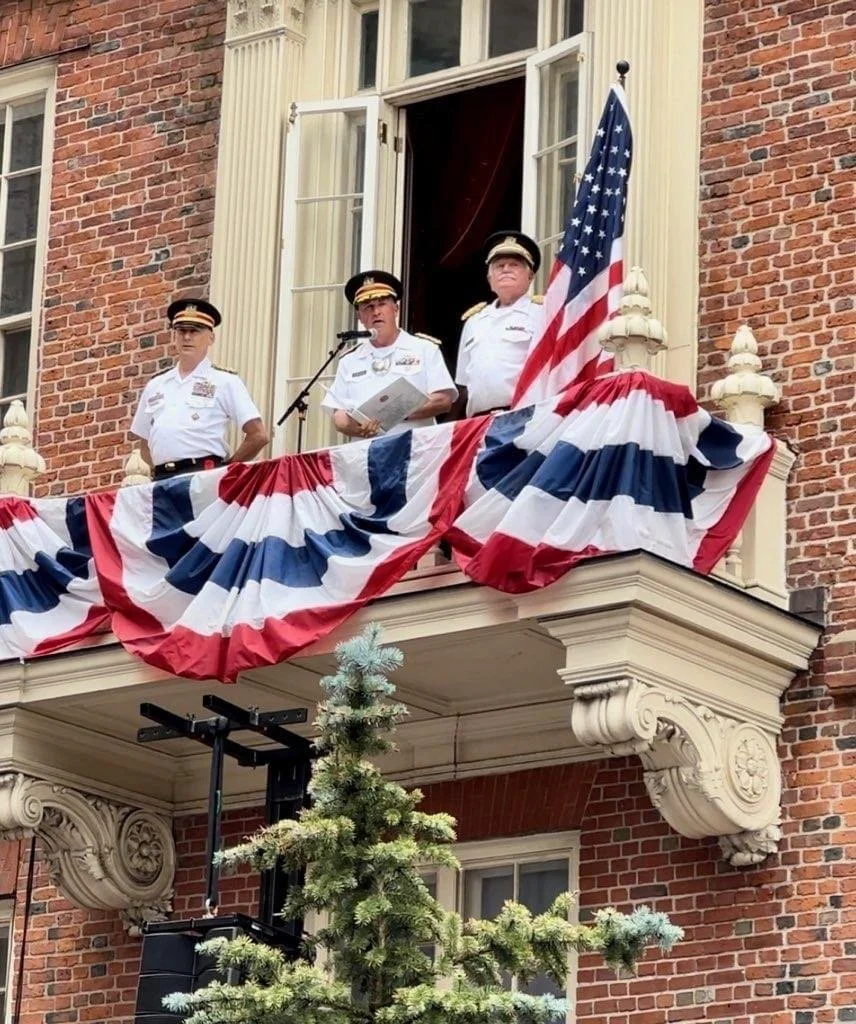
Hull’s Tim Haraden, Captain Commanding of the Ancient and Honorable Artillery Company, reads the Declaration of Independence to a crowd at the Old State House in Boston on the morning of Tuesday, July 4 to mark the city’s traditional celebration of Independence Day. This tradition has been carried out every year by the Ancients since 1776, and the group was joined in the occasion by dignitaries including Boston Mayor Michelle Wu.

‘Hull is a special place:’ Lemnios reflects on his 25 years as town manager

By Carol Britton Meyer

Town Manager Philip Lemnios, who retired June 29, is looking forward to his first summer off since he was a young boy.

“It’s the first time I won’t be working since age 12 – whether as a paperboy, at Brigham’s, or jobs I held in college. I’ll figure out next steps in the fall,” he told The Hull Times this week as he reflected on his future.

Lemnios said he is “very confident leaving at this juncture” after serving as town manager for a combined more than 25 years.

“The town’s affairs are in good order, and financially, organizationally, and operationally, the town is on a solid footing,” he said.

ALL SMILES. Hullonians have known about Town Manager Philip Lemnios’s impending departure for months, but we only recently discovered that the real authority at town hall, Administrative Assistant Nancy Allen, also will retire this week. We wish both of them well as they conclude their many years of dedicated service to the people of Hull. [Skip Tull photo]

This is a good time for Jennifer Constable, who was Hull’s select board chair until she resigned in February so that she could apply for the job, to come onboard as the new town manager, “bringing new energy and perspective,” he said. “With the addition of an assistant town manager, Jen will be able to leverage her skills to take the town to the next level.”

What Lemnios will miss most are Hull’s residents and fellow town employees.

“I’ve enjoyed working with the staff, who try hard to provide great service,” he said. “I will miss working with these very dedicated people day in and day out.”

Lemnios first served as Hull’s town manager from 1992-2002, at which time he accepted a position as Natick’s town administrator.

“In 2007, the then-selectmen asked me to consider coming back because the town was struggling financially and operationally,” he recalled. 

Lemnios, a former Hull resident, decided to return to his earlier role “because I truly love this town.”

During his second run as town manager, he was able to restore the town’s financial affairs to good order and to get a number of capital projects moving forward.

“I consider this to be my biggest accomplishment,” Lemnios said.

During his tenure, roughly $35 million in grants were awarded to the town for a number of projects, including significant seawall improvements at Crescent Beach and Fitzpatrick Way and extensive Atlantic Avenue road work, as well as funding related to hazard mitigation, sea-level rise, and engineering services for projects in the pipeline.

The town also received roughly $6.5 million in grants for sewer department work in collaboration with Director of Wastewater Operations John Struzziery.

Also, $10 million worth of local road projects were accomplished with town funding.

“Our town has been so very fortunate to have Phil as our town manager for all these years,” said Select Board Chair Greg Grey. “He made every effort he could his entire career – 365 days a year, 24 hours a day – to do what’s best for our community.”

“Over the last five years I have had the pleasure of serving our community and working with Phil and getting to see first-hand how hard he worked in following through with policies we put in place, and the many goals we set and accomplished along the way,” Grey continued. “He chased every grant there was out there along with state and federal money that was available for roads, seawalls, and infrastructure all to keep us in a good financial position.”

Lemnios said he considers integrity, a strong work ethic, a willingness to be on-call 24/7, the ability to “synthesize a great deal of information quickly and to work in a complex regulatory environment on the local, state, and federal level,” and attention to detail important qualities for a town manager.

“No two days are alike, and none of them go as planned,” he said. “On a given day, you will be dealing with a small matter and half an hour later a much larger one. You have to take the issues as they come, prioritize them, and be willing to say ‘no’ and to explain the rationale behind that decision.”

Among Lemnios’s biggest challenges was “the period of turmoil in the police department in the 2014-2015 timeframe. This was a difficult time affecting a critical department,” he said.

Another challenge was the economic downturn that occurred shortly after Lemnios returned to the town manager position.

“We really had to scramble, with six years of zero salary increases on the general government side, involving negotiations with six unions,” he recalled. “It was a difficult process, asking staff to do more with less, but town employees recognized that everybody had to pitch in, and they did, allowing the town to continue offering [the usual services] without layoffs.”

Lemnios holds a degree in political science from UMass-Amherst and a master’s in public administration from the University of Southern California, which he has put to valuable use in his work for the town.

He served as assistant to the Attleboro mayor from 1988 to 1992 before coming to Hull.

“This was a state grant-funded position to bring professional management to that city,” he said.

Lemnios points out, though, that perhaps the most formative time in his career was the couple of years spent in the Congo as a Peace Corps volunteer in the early 1980s before heading for graduate school.

“This experience taught me the value of public administration – how when a government doesn’t work, there are negative impacts on the lives of the residents,” he said.

During his first leisurely summer in many years, Lemnios plans to golf, which he took up last year at his wife’s suggestion. “I’m terrible at it but enjoy the sport greatly!” he quipped. He also plans to spend more time with his family and enjoys cooking “anything and everything.”

His favorite part of Hull, where he lived for about 12 years starting in 1992, is its people.

“This community pulls together whether after a storm or when someone is going through a difficult time, putting aside their differences to help one another,” Lemnios said. “It’s from the heart. Hull is a special place.”

Lemnios finds Hull citizens to be “interesting and passionate people, which I enjoy.” His open-door policy led to some interesting conversations.

“Hull residents are not shy about sharing their wants and interests,” he said. “They are very direct.”

As he heads into a bright future, Lemnios expressed appreciation for Hull residents, members of the various select boards with whom he served, all the town’s employees, “and for the opportunity to work in Hull. I tried to do my best for the residents of this community. I expect Jen to pick up the baton and take the town to the next level.”

Constable, who is currently the assistant town administrator in Rockland, praised her predecessor for his leadership in the community.

“I wish Phil all the very best in a well-earned retirement,” she said. “Phil’s subtle, but distinct leadership, and moreover, his mentorship to so many has helped shape the community, which will undoubtedly be his legacy in Hull and for so many who walk in his path or try to fill his shoes.”

Lemnios also praised those involved with the search for a new town manager.

“We had a qualified consultant working with the town, a great screening committee, and a process that included public interviews of the three qualified finalists,” he said.

Lemnios also commended Town Clerk Lori West for “successfully navigating” the May 15 and subsequent two-hour follow-up election process under what he called “an extraordinary set of circumstances.”

“He was a great leader with our department heads and staff, and you could clearly see the results of that throughout town with the great work they all accomplished daily,” Grey said. “I am forever grateful for all he has done for our town, and I wish him the best in his retirement.”

Police chief named acting town manager: Lemnios to be consultant during transition

By Carol Britton Meyer

The select board Wednesday night appointed Police Chief John Dunn acting town manager and approved a proposal by retiring Town Manager Philip Lemnios to provide interim consulting services until his replacement, Jennifer Constable, begins her duties later this summer.

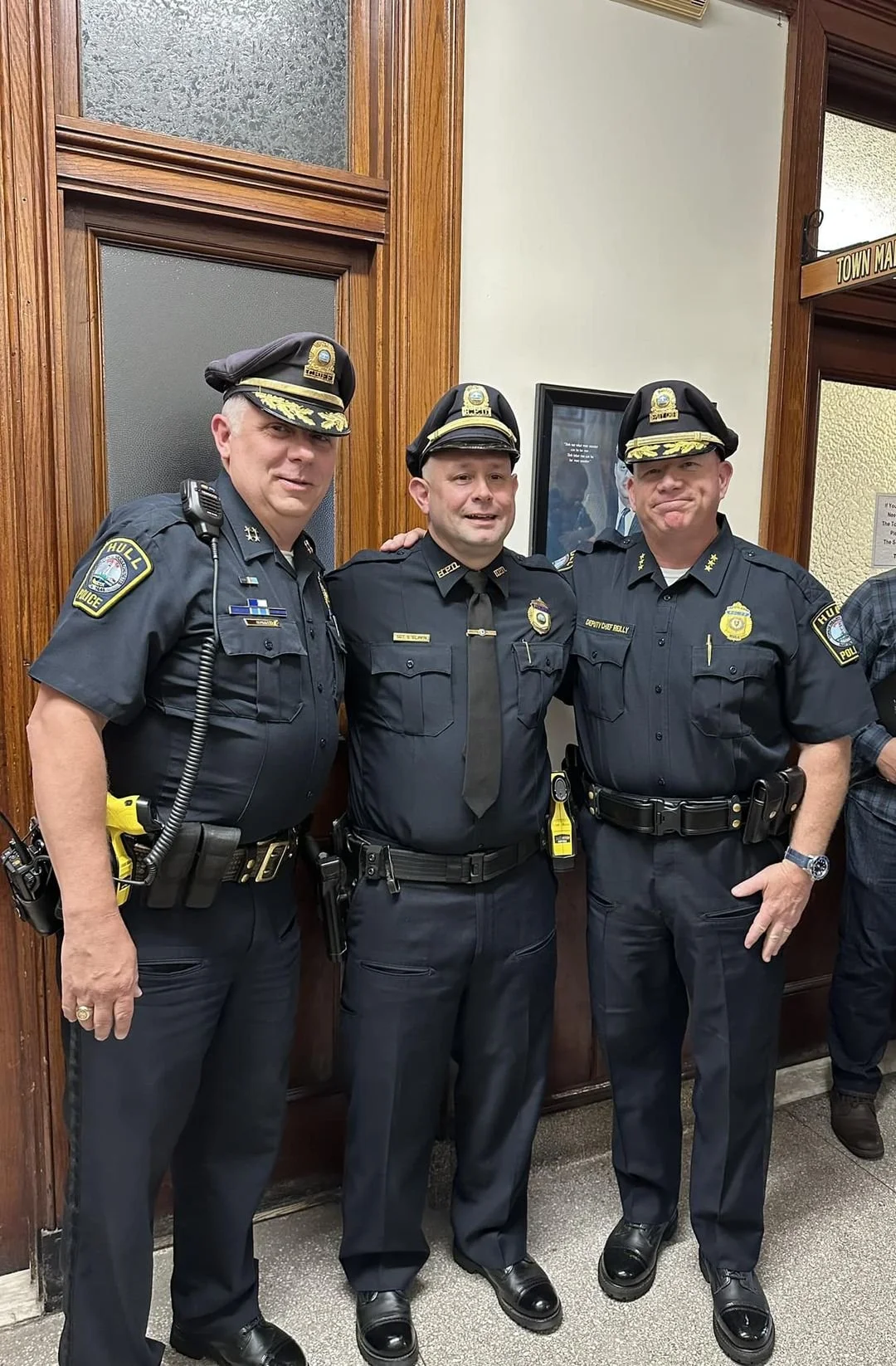
TOP BRASS. Hull Police’s Stephen Glavin, center, was promoted from sergeant to lieutenant on Wednesday. He is flanked by Chief John Dunn, left, and Deputy Chief Neil Reilly. Glavin previously served as a detective and is a crisis negotiator with the MetroLEC regional SWAT team. They are standing in the hall outside the town manager’s office, where Dunn will fill in as the Hull’s acting chief executive following Philip Lemnios’s retirement Thursday. [Courtesy photo]

Dunn’s appointment was made effective at midnight on Friday, June 30, following Lemnios’s resignation, which took effect the previous day.

Dunn will maintain the day-to-day operations of the town and attend select board meetings until Constable steps into the role.

“This is an opportunity for Chief Dunn to ensure that things continue on as they should,” Lemnios said during his final board meeting.

“I can’t think of anyone who would do a better job,” board member Irwin Nesoff said.

Dunn said he was “surprised and humbled” to be appointed to this temporary position and “is looking forward to being here as a caretaker between the time Phil leaves and when Jennifer Constable starts.”

When asked by board member Jason McCann how he will juggle both positions, Dunn said he has a capable deputy chief who can help run the police department.

Pending successful contract negotiations, Constable is expected step into her new role at the end of July or the beginning of August, according to Lemnios. Constable is currently the assistant town administrator in Rockland.

In his consulting role, Lemnios will work about 15 hours weekly and will be paid a flat fee of $2,250 per week. Following the meeting, the board held an executive session to negotiate revised employment agreements with the town manager designee/police chief and the deputy police chief.

Examples of Lemnios’s consulting duties include:

• Acting as resource with the acting town manager and staff members for questions, advice, and associated administrative tasks.

• Monitoring town manager’s email box daily and responding to or directing emails to the appropriate party for action.

• Being available 24/7 for phone calls regarding ongoing issues.

• Continuing to work on ongoing legal cases as determined by town counsel.

• Assisting the new town manager with the transition into her new role.

“This week I transferred my town hall number to my personal phone to ease communications and to be sure nothing falls through the cracks,” Lemnios said.

Nesoff thanked Lemnios “for helping us through this transition. Doing so wasn’t required.”

He further noted that the hourly rate for Lemnios’ services comes out to about $150 an hour, where most other consultants would charge far more.

“This amount may seem like a lot, but it’s an extremely discounted rate and speaks to your generosity,” Nesoff told Lemnios.

In turn, Lemnios said he and his family have appreciated the opportunity for him to serve the Town of Hull for many years.

“I want to remain involved without stepping on the new town manager’s toes,” he said. “[Jennifer Constable] is very competent, and I’m happy to help.”

Life-saving equipment installed at playing fields to help users in case of a medical emergency

By Carol Britton Meyer

A cooperative effort among town departments has resulted in the installation of potential life-saving equipment at several of Hull’s playing fields, basketball courts, and the high school walking track.

Automated External Defibrillators are now available at the Kenberma pickleball and basketball courts/playground, the L Street fields, and the high school turf field and walking track to provide emergency medical assistance at these widely-used locations.

A fourth AED will be installed soon at the Dust Bowl field at Pemberton. Signage has been ordered and will be placed at all the sites, with arrows pointing to the AEDs, which will be clearly marked.

AEDs are life-saving devices designed to treat individuals who experience sudden cardiac arrest, a medical condition in which the heart stops beating suddenly and unexpectedly.

The combination of CPR and early defibrillation is considered to be effective in saving lives when used in the first few minutes following a collapse from sudden cardiac arrest.

Installation of the AEDs is the result of a partnership among Hull High School athletic trainer Lexie Watkins, Superintendent of Schools Judith Kuehn, and School Business Administrator Diane Saniuk, Greg Grey and other members of the Parks and Recreation Commission, and the fire department, working with Chief Chris Russo.

“This was truly a group effort,” Watkins told The Hull Times. “Hull Public Schools split the cost with Parks and Recreation, and Hull Fire provided and mounted the cabinets for the AEDs.”

Watkins explained that after noticing that coaches don’t normally have access to the AEDs inside the high school on the weekends, she brought the issue to the attention of school administration.

“It seemed like a good idea to have an AED on site, because the field and walking track are used by student-athletes, community members of all ages, and sports groups who rent the field,” she said. “I took a look around and learned that most communities have AEDs at their athletic facilities. Given how widely used the high school field [and these other recreational areas are], installing AEDs made a lot of sense. They’re easy to use, and you can’t hurt anybody when using an AED while waiting for emergency personnel to arrive. That extra time saved means a lot when someone is unconscious.”

After reaching out to Kuehn and Saniuk and gaining their support, Watkins approached Russo, who connected her with Grey.

“Park and Rec [members] felt it was important to have AEDs at the L street facility and Kenberma Field especially since we added the pickleball courts,” Grey said. “Athletic Director Connor Duhaime was also at our meeting and knew there was a need for one at the high school, so we reached out to Chris Russo for guidance, and he jumped right in and followed it through –  procuring the AEDs and having his department install them. This was a great effort by all.”

Kuehn called this “an important project because this small device plays an important role in saving the life of someone who is in cardiac arrest.”

The AED device walks the user through what to do in the event of a cardiac emergency. With more AEDs available, “a life may possibly be saved,” Kuehn said. “This is absolutely a team effort and another example of a partnership between groups in the community.”

At the end of the playing season, Watkins will collect the AEDs and bring them to the Fire Department for storage until the spring. The company that provided the devices maintains them.

“It’s really nice when people from different town departments work together and get things done,” she said, expressing gratitude to everyone involved. “It was quick action on everyone’s part in recognizing the need. The process started last winter, and we ordered the AEDs this past spring and then installed them for the benefit of everyone.”

Music by the Sea summer concerts return to the Bernie King Pavilion

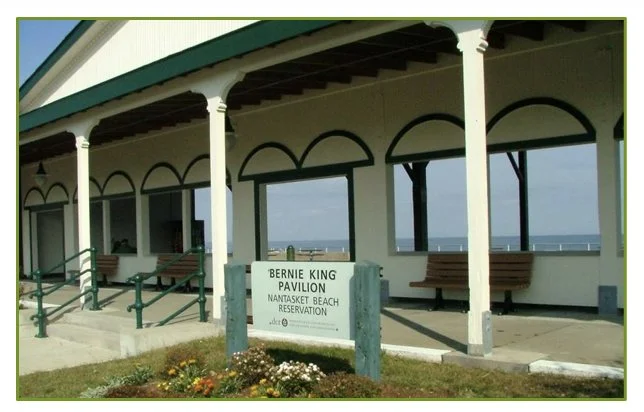
Music resumed Memorial Day Weekend at the Bernie King Pavilion, and it starts up again this Sunday, June 25 from 2 to 4 p.m. and every Sunday through Sept. 10.

Performers will feature everything from music from the American Songbook, to the 1950s,’60s and ’70s, so you can swing, foxtrot, cha-cha and waltz, or just listen to beautiful Music By The Sea. Join fellow music lovers at the beach under the breeze-swept, shaded Bernie King Pavilion to hear the bands play some of your favorites.

This activity continues a multi-year tradition which is enjoyed by many music and dancing devotees. These popular musical events are supported by donations, so your financial support and volunteer hours are welcomed.

All of the funds collected go toward paying expenses. This very ambitious schedule needs everyone’s financial support to pay the musicians. Consider making a donation and asking your local business to do so.

To donate, refer a donor, or volunteer to be a part of this endeavor contact Gina Pag (thesnippery.hairstudio@verizon.net) or Lou Altieri (altlou@msn.com). Checks can be made payable to Music By The Sea and mailed to The Snippery, 428 Washington St., Braintree, MA 02184.

2023 Schedule of Performers at the Bernie King Pavilion

Sunday, June 25: The Continentals; From Swing to Soft Rock

Sunday, July 2: Don Altobello Dance Band

Tuesday, July 4:  Judy and Barry De Rossi (Formerly of Four Guys In Tuxes)

Sunday, July  9: Gina and The Jazz Notes; A Run Down Memory Lane

Sunday, July 16: Ray Cavicchio and the Amazing Therese DiMuzio

Sunday, July 23:  Bob Sinicrope And His Swing Set Trio       

Sunday, July 30: Magic Moments Live Vocal Group; Music of the ’50s, ’60s and ’70s

Sunday, Aug. 6: DJ Armand Ramos Playing Your Favorite Dance Requests

Sunday, Aug. 13: Gina and The Jazz Notes; A Run Down Memory Lane

Sunday, Aug. 20: Play It Again Band; Songs from the past 100 years

Sunday, Aug. 27: Magic Moments Live Vocal Group; Music of the ’50s, ’60s and ’70s

Sunday, Sept. 3: Play It Again Band; Songs from the past 100 years

Monday, Sept. 4: Judy and Barry De Rossi (Formerly of Four Guys In Tuxes)

Sunday, Sept. 10: Dale And The Defenders Concert Corps 20-piece orchestra

Do you have an opinion on this issue? Click here to write a Letter to the Editor.

Calling her ‘the perfect fit,' board names former Chair Jennifer Constable new town manager

By Carol Britton Meyer

Former Select Board Chair Jennifer Constable is Hull’s first new town manager in 16 years.

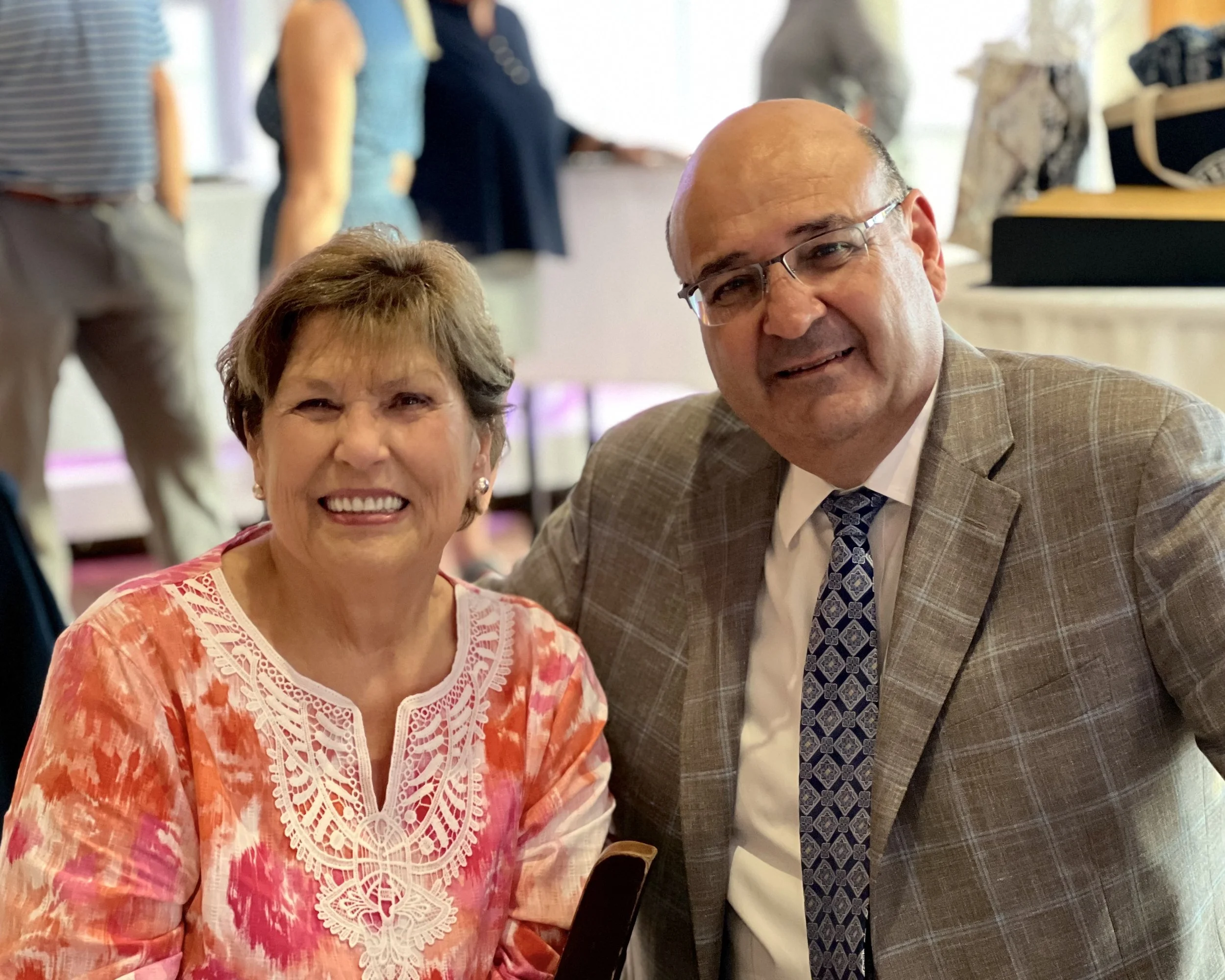
JENNIFER CONSTABLE, HULL’S NEXT TOWN MANAGER.

Following a more than one-hour interview on June 15, Constable was unanimously named to the position by the select board to replace Philip Lemnios, who is retiring at the end of this month.

The other two finalists, Peter Caruso and Thomas Guerino, also underwent extensive interviews during the four-hour meeting. (See related story.)

Chair Greg Grey called Constable, Rockland’s assistant town administrator since 2019, “the perfect fit and the best choice for the citizens of our town moving forward.”

Newly elected select board member Jerry Taverna could not participate in the interviews or vote since the new town manager will be his wife’s boss. Joan Taverna is currently Hull’s health director. He observed the interviews from the audience.

Grey announced before the interviews that no questions or comments from the public would be allowed.

While select board members Grey, Irwin Nesoff, and newly elected Jason McCann said that all the candidates were qualified, they said that Constable’s experience on boards and committees and as a member of the Metropolitan Area Planning Council, the MBTA Advisory Board, Massachusetts Municipal Association, and the South Shore Coalition – in addition to her discussions with the Department of Conservation & Recreation as a select board member – will enable her to “hit the ground running.”

Nesoff called Constable’s experience working with the DCR, which owns a great deal of property in Hull, a “significant plus.”

Constable, who resigned from the board in February shortly after Lemnios announced his retirement, said crafting a master plan for Hull would be helpful when addressing proposed residential and commercial developments.

McCann noted that there were “three strong candidates, with a lot of consistency from the perspective of being a strong manager, although they are three very different people.”

All the finalists had experience in grant writing. Constable listed many successful grant applications that she wrote and talked about her background with affordable housing, unions, and financial management.

Her role as Rockland’s assistant town administrator helped prepare her for this position.

“The town administrator and I work collaboratively on most if not all of the town’s [business], so I am part of the finance team,” she said. “I also am acting town administrator [when the current one is not available] and work with the police, fire, and all the other departments.”

Constable accepted that position during a challenging time when there was “a level of mistrust” and a need for more transparency, she explained. The town is now in a much better place due to enhanced communications, including a popular bi-monthly newsletter, that could be implemented in Hull, she said.

Constable’s service to the town over 20 years, including time on the planning board, affordable housing committee, and seven years on the select board, added to her appeal.

Other of her priorities includes understanding the needs of department heads, having a strong capital improvement plan and seeking grants to help finance projects, financial forecasting, and maintaining good communications with school leadership.

“In Hull, 60 percent of the town budget goes to the schools,” Constable noted.

McCann said that while all three candidates had similar management styles, including an open-door policy and a collaborative approach, Constable was “very organized” and gave a comprehensive overview of how her past experience would benefit her in the town manager position.

When asked what she envisions the role of the new assistant town manager approved at this year’s town meeting to be, Constable said it would be “somebody who complements me and is capable of filling in when I’m not available. My strengths are housing and economic development.”

An ideal assistant town manager would also be someone who could handle human resources matters and who knows how to pursue grant opportunities, she said.

During her interview, Constable explained that while her two-decade career has been in public service, she had not envisioned herself working in local government, but it has proved to be a good fit.

“I live here and love this community,” she said. “It’s financially stable and there are a number of focus areas for the future that I think I am well poised and experienced in to help move this community into and through its next chapter.”

While she had pretty much made up her mind to apply for the position, Constable said that community support for her doing so helped her make that decision.

When asked about serving as town manager in a community in which she resides, she saw no conflict.

“One of my strong qualities is wearing multiple hats and understanding those different roles,” she said. “I take my work very seriously and approach it thoughtfully and with honesty. Being a resident might hold me to a higher standard, but that’s OK. I hold myself to a very high standard anyway and am willing to take on that responsibility.”

Search consultant Bernard Lynch from Paradigm Associates noted that a number of communities have town managers who are also residents, and some even make that a requirement.

Constable also said that if chosen for the position, she “would take my experience, love, and understanding of the community and apply it every single day.”

When asked about her management style, Constable said being flexible is important as well as good communication and transparency.

“I would want the select board to set priorities on an annual basis and be sure that the board’s and town departments’[goals] are in alignment,” she said.

The select board interviewed each of the three town manager finalists in alphabetical order, with Lynch assisting with the process.

Caruso is currently the town administrator of Millville, a position he has held for the past four years, and Guerino served as Bourne’s town administrator from 2005 to 2019 and is currently the executive director of the Greenfield Housing Authority.

Following the interviews, board members briefly shared their thoughts about the three finalists, followed by a motion by Grey to hire Constable and a unanimous vote in favor of that recommendation.

Before the interviews, select board members, other than Taverna and Brian McCarthy, read letters they wrote related to the State Ethics Commission disclosing that they have interacted with Constable in a professional capacity in the past and that they would remain impartial and fair in making the new town manager decision.

McCarthy’s letter of disclosure indicated that he has not worked with Constable on any committees in the past and that he, too, would remain impartial and fair in making the final choice.

Grey thanked Lynch for his “above and beyond professional guidance” throughout the process and members of the search committee for their hard work.

“You guided us through a very open process that was transparent from step one, as it is now,” Nesoff told Lynch. “We came up with three incredible finalists from a much larger pool.”

After the decision was made, Nesoff spoke to “the elephant in the room,” referring to social media chatter claiming that “the fix was in” for Constable from the beginning, stating that was not the case.

“Jen is clearly the most qualified, with a smaller learning curve. She will be ready to jump in from day one,” he said. “For anyone with concerns who listened to her interview tonight and read her references and resume, she stands out above the other candidates.”

While Constable holds a master’s degree in public administration already, she considers herself to be a “lifelong learner.”

Constable’s hiring is contingent upon “any and all background checks and the successful negotiation of a contract,” Grey said.

Do you have an opinion on this issue? Click here to write a Letter to the Editor.