Familiar faces emerge from the shadows as crews begin demolishing former aquarium

By Christopher Haraden

As contractors began taking down the former Atlantic Aquarium building on Friday, two Hullonians closely associated with the short-lived venture made sure that artifacts from the landmark building were preserved.

Greg Sandonato and Skip Tull, who helped bring the aquarium to life 50 years ago, saved two large photographs that hung on the wall of the former dolphin tank from the wrecking crews.

And both men recognized themselves in the images.

Sandonato, who served as the assistant director alongside owner Kenneth Tong, is visible in the large photo showing employees and others lowering Lucky, one of the three performing dolphins at the aquarium, into the main tank. Lucky, Lady, and Sprite were flown from Florida just prior to the facility’s grand opening in May 1973. When they arrived in Boston, a State Police escort brought their specially outfitted truck from Logan Airport to their new home in Hull.

The photograph, mounted on wood, hung on the back wall of the aquarium and remained there, untouched for decades, even as the building was transformed from the aquarium into a restaurant, hotel, and charter school. Those other uses did not extend into all of the dolphin pool area, leaving that section of the two-story building a time capsule until the remaining stadium seating and marine-related equipment was cleared out to prepare the property for sale.


Tull, whose photographs are featured each week in The Hull Times, said he was involved in the early days of the aquarium and is very likely in the photo. However, the person bearing closest resemblance to him is not looking directly at the camera, so a positive identification is difficult.

Brookline developer Jonathan Leavitt, a principal of 120 Nantasket Avenue LLC, is constructing a four-story, 21-unit residential building on the existing aquarium foundation.

The aquarium was open from 1973 through 1975. After an eight-year dormant period through the early 1980s, the building was purchased by the Nardo family and converted into the Atlantic Inn and Elaine’s Seaside Restaurant. After the Nardos closed the hotel and restaurant, it was leased to the South Shore Charter School until 2004 and has been empty since then. Plans for a performing arts center and marijuana cultivation facility were proposed over the years but never materialized.

On Friday, Sandonato and Tull, with the help of Hull High graduate Sean Rafterty and other members of the construction crew, carried the photos out of the building and loaded them onto the bed of Sandonato’s pickup truck. He brought them to the Paragon Boardwalk for storage while plans are finalized for their restoration.

Do you have an opinion on this issue? Click here to write a Letter to the Editor.

HRA hears three alternate redevelopment plans for its property; 17 others to follow

By Dolores Sauca Lorusso

The Hull Redevelopment Authority last week began hearing presentations from citizens on ideas for the development of its property. The authority, which is working on its Urban Renewal Plan, requested resident input in response to feedback during public meetings earlier this year.

On Monday Oct. 2, pitches on how to best use the HRA land were heard from three of the 20 submission sponsors. Patrick Finn presented his concept of the HRA in three phases first, followed by Leonard Markowitz and others suggesting a mobile stage and open space, and Lisa French concluded with an idea for public recreation space.

HRA Treasurer Bartley Kelly said he could see pieces of many of the submissions becoming “part of an overall mosaic to move the town forward.

“We have a lot of submissions that have a lot of good ideas, and I think they ought to be looked at, some or all of them, as pieces of a puzzle,” he said. “That is kind of what the HRA is, a puzzle. How do we get from A to B to C and accomplish the goals and missions of the town while keeping the open space and making the public ways more beautiful and safer for pedestrians and cars?”

PARKS AND RECREATION:  Among the citizen proposals heard by the Hull Redevelopment Authority last week was a plan for public recreation space submitted by Lisa French, whose concept included an amphitheater, skating rink, outdoor fitness equipment for adults and children, and piers stretching into the bay.

Chair Dennis Zaia said the quality of the submissions has been “outstanding, and the fact community members have done that on behalf of the community is just wonderful.” Residents have offered the HRA information about “concept sourcing, potential funding opportunities, new ways of looking at previously discussed ideas, and other communities who have made similar improvements,” he said.

Finn said he proposed three phases “because you can’t wave a magic wand, make an Urban Renewal Plan, and then do everything in one shot. It is too much. So, one step at a time.”

He would like to see the first action step, possibly as soon as this winter, to be adding an extension to Edgewater Road between Nantasket Ave and Hull Shore Drive Extension; first as a driveway, then as a street.

“We build a driveway opening there, and then you have all the lots empty out at Edgewater Road Extension, so we won’t have to deal with the traffic jams at Phipps Street,” said Finn.

Finn said he likes the mission of development, which produces tax revenue, because funds are needed to “program all these other 10 acres of passive public recreational open space, and to fill them with all these great ideas out of the submissions… you can plug them in wherever you like.”

In his proposal, Finn also eliminated all the cottages proposed for the northern end of the property to allow for the HRA’s “number-one abutter, the Department of Conservation and Recreation, to meet the goals of their master plan, which the town supported eight to 15 years ago.”

“If you allow them (DCR) to build a 10- to 12-foot boardwalk, and then another 10-foot raised two directional bicycle lane, then you have an eight-foot travel lane and a 24-foot standard two-way road. This fits within the layout,” said Finn.

Finn said the parcel at the corner of Edgewater Road and Nantasket Avenue, next to the Hull Municipal Lighting Plant, should be deeded to the town, possibly for a community center, and public meetings should be held to decide what to do with the land.


Toward the middle of the property, although not blocking the central vista, Finn envisions four buildings with 15 to 18 units each, which would create a neighborhood and replace the 70 housing units that were demolished in the 1970s, leaving a “big hole in the tax base in the town.”

Finn said a key part of his plan for development is to include the “15% affordable units the HRA already voted.” He explained the affordable units could be in “linkage, and if you can’t fit them or decide not to build any units at all on HRA land, they can be in linkage, like in Boston where you could build the affordable units off site.” He suggested a partnership with the Hull Housing Authority.

“We need lots of affordable housing, but elsewhere,” Lisa French said in her presentation. “It is really important, but this is not the space for it.”

As part of her proposal, French said she would “like to see the HRA parcels as town-owned and for public use…I think the town should own all structures and operate all revenue-generating enterprises, especially parking, and all revenues should go to the town.”

French pointed out there are not any other redevelopment authorities that have lasted as long as the HRA.

“It is really wild it hasn’t disbanded,” she said.

“Having this revert back to the town and be town-owned property with revenues going to the town, that very much resonates with me,” HRA Clerk Adrienne Paquin said. “Not dumping it on them (the town) right now and saying build this, but giving them something that could generate revenue for the town.”

Some features incorporated into French’s proposal include an outdoor amphitheater, which would sit below grade with a stage at sidewalk level and seating on a gradual slope created by building a hillock, an arched pedestrian bridge from the bluff to the sidewalk along the beach above the crosswalk, a below-grade (fenced) rink for winter ice skating and summer roller skating, and outdoor fitness equipment for adults and children. The remaining parcel would be ground level and flat (wheelchair accessible), with a permeable surface that allows for vehicles, amusement rides, a giant slip-and-slide or bounce house, inflated obstacle course, bonfires, picnic tables, and seating for large community gatherings, a permanent marketplace structure for rotating concessions, and an observation dock in the mud flats.

Kelly applauded the “modular” and “phased” approaches for developing the HRA property.

“It is just beautiful; it touches on so many of the ideas that have been shared by people in different ways…it is an inspiration,” Vice Chair Dan Kernan said of French’s presentation.

“It is great to see the ideas in physical form; incredible visualization, absolutely stunning, I love the creativity here, Paquin said. “If we even take one or two of these ideas, what a success – because you have given us a smorgasbord.”

Leonard Markowitz presented the mobile stage proposal, which he created with Mindy Markowitz, Andrew Thorburn, and MJ Walsh. The presentation focused on seven key points: open space principles, the mobile stage along with events, activities, funding, revenue, parking, and next steps.

Markowitz said the proposal “encourages endorsement of open-space principles that preserve natural landscapes for future generations.” The flexible mobile stage would be a platform for community engagement and revenue generation designed for rapid deployment, community benefit, and financial sustainability.

“Open space brings out the intrinsic beauty of our town’s natural resources in a densely populated area. HRA parcels where nature takes the spotlight [are] unburdened by obstructions or permanent structures,” Markowitz said. “It is a sustainable landscape that blends nature and community, resulting in an environment that is conducive to working with the many proposals offered here as well as the DCR Nantasket plan.”

Zaia complimented the group for introducing the open space principles.

“I believe they [open space principles] will, in some shape or form, end up in an Urban Renewal Plan because they will resonate, no matter who reads it at the state level,” he said. “This is a way to use one gadget that will have multiple functions. Pretty clever.”

“Personally, the most important thing for me to come out of this is recognizing and highlighting open space as community space.,” said Paquin. “I agree with you, Dennis, that is something I hope makes its way into any draft Urban Renewal Plan we create.”

“What I love about this is you really created a generator for all the businesses in Hull. The (mobile) stage isn’t going to serve food, it is going to send people to restaurants,” Steven Greenberg said. “The stage will get visitors down here for dinner or to stay for a weekend…this helps give Hull an identity based around an open space environment.”

According to Markowitz, following open space principles can transform the HRA parcels while “utilizing the mobile stage as a dynamic platform for events and activities that will allow a diverse revenue and funding stream, with the aim to become self-sustaining in just four years.”

“Really good, solid foundation in how to go about managing, developing, and funding a community space,” Kernan said. “You chose the mobile stage as your idea, but everything else is deep, thick, and extraordinarily valuable…your supporting work will help everyone else who has come up with ideas.”

The mobile stage/open space proposal outlined direct revenue sources including ticket sales, concessions, and rental fees. Along with these revenue streams, the team asked the HRA to advocate for three new revenue streams: a real estate transaction fee, development assessment fee, and a dog passport initiative.

The consensus was that the presentations were striving to meet the goals of the HRA, which is charged with “creating a sense of place in our community through development that provides tax revenue, open space recreation, job growth, improved business environment, event venues, and parking for Nantasket Beach within an effective and efficient traffic pattern for Hull citizens and visitors.”

Zaia said the community has come forward and demonstrated it is “fully invested in helping the Hull Redevelopment Authority to craft an Urban Renewal Plan that will benefit and enhance the economic vitality of our community … Each of these presentations reflect the work of local Hull citizens who have worked independently and or collaboratively with other Hull citizens to help the HRA look at how the HRA property may be improved.”

For all the details about these proposals, and the others that will be discussed at future meetings, visit the submissions tab at HRA02045.com. To watch the presentations, check Hull Community television online at hulltv.net and on either Comcast or Verizon.

Do you have an opinion on this issue? Click here to write a Letter to the Editor.

Committee seeks partnership with Habitat for Humanity to build affordable housing

By Carol Britton Meyer

In a step toward increasing the town’s supply of low-cost homes, the Affordable Housing Committee this week sought select board support to work with South Shore Habitat for Humanity to identify buildable town-owned land.

While that is a work in progress, SSHH already has a presence in Hull, as the organization has already helped two low- to moderate-income seniors age in place under the grant-funded Critical Home Repair program.

In one case, this work involved replacing a roof and windows before the senior’s house insurance was canceled, and the other time, repairing a deck that was about to collapse and fixing leaky windows. Referrals come from the council on aging or someone who notices a fellow resident’s need.

The AHC submitted a pre-application for $100,000 in Community Preservation Act funding to move forward with a Habitat for Humanity Workforce Homeownership Opportunity project in Hull.

However, as AHC Chair Cynthia Koebert explained to the board, “Not surprisingly, the Community Preservation Committee deemed the request premature since no site has yet been identified.”

That said, the AHC “feels comfortable with that decision,” she told the board. “We’re ramping it up and happy to be able to identify an organization that has done such good work locally and has a brand and a history. We’re asking for select board support to work with SSHH toward that goal [of creating more affordable housing in Hull].”

The AHC will continue to work with the town and SSHH to identify a buildable parcel of land for a single- or two-family home.

“We would rather err on the side of transparency and early engagement with the community,” Koebert said.

At the same time, the AHC is working with town officials and residents to identify town-owned properties that could be developed into affordable housing units through a recent grant and to create new housing opportunities for residents over 65 years of age, who comprise 23.3 percent of Hull’s population.

While the board stopped short of taking a vote as requested by the AHC because a site has not yet been identified for affordable housing, its members recognize the need for more of this kind of housing in Hull.

This is considered a high priority since more than 37% of Hull residents pay more than 30% of their income on housing, according to the 2022 housing production plan.

The CPA funding request, if it had been recommended by the CPC and approved by town meeting voters, would have been used to gain site control and to enhance affordability, energy efficiency, and the resiliency of the home being constructed.

Hull’s current affordable housing comprises about 1.6% of the town’s overall housing stock, and much of it is under the control of the housing authority. The state’s affordable housing threshold for Massachusetts communities is 10%.

SSHH has “a successful track record of raising funds and working with community volunteers to build and sell properties to income-eligible, low-income buyers,” the CPA application states. This would be deed-restricted housing that would be added to Hull’s subsidized housing inventory. 

“We work with the state to ensure that affordable units remain affordable,” said SSH Director of Project Management Noreen Browne, who attended the meeting with other SSHH staff.

SSHH homes are built with volunteer labor and “sweat equity” by the future homeowners, and after a community engagement process to come up with the best option.

Select board member Jason McCann, who served earlier on the CPC, was pleased to hear of the AHC’s recent efforts.

“[Developing affordable housing] has been the biggest challenge for the [CPC] committee,” he said.

Board member Irwin Nesoff thanked the AHC for its efforts “to reenergize the committee” and expressed appreciation for SSHH’s interest. “We can do great things together,” he said.

Do you have an opinion on this issue? Click here to write a Letter to the Editor.

Focus groups, screening committee are next steps in superintendent search

By Carol Britton Meyer

The New England School Development Council consultant hired to help facilitate the process of searching for a new superintendent of schools will lead several focus groups on Thursday, Oct. 19, to gather input from parents, students, principals, teachers, and community members about what they are looking for in the next superintendent.

Superintendent judith kuehn will retire at the end of the current school year.

During this week’s regularly scheduled school committee meeting, Dr. Margaret Frieswyk provided an orientation of the search process from beginning to end, emphasizing the importance of the community having a voice in the process.

Judith Kuehn, who has served as superintendent since May 2020, is retiring at the end of the current school year.

The school committee’s Monday, Oct. 23, meeting was canceled and replaced with a public meeting the evening of Oct. 19 at 6:30 p.m., at which time Frieswyk will share a summary of information and input gained from the focus groups throughout the day in the form of a community profile. Then the school committee will provide input.

Frieswyk emphasized that the role of the school committee at that at that time is “not to make a judgment” on what the stakeholders shared during the focus groups, but rather to suggest enhancements or other details.

“Community outreach is a critical factor,” Frieswyk said.

The purpose of the focus groups in “to hear from the community what kinds of skills they are looking for in the next superintendent – their level of expertise and experience,” Frieswyk said. “We will also learn what [participants] feel is the task or tasks that need to be accomplished in year one of the new superintendent’s tenure.”

NESDEC will advertise the position and has a pool of candidates interested in superintendent positions. Frieswyk expects a number of applications.

“Hull is a very desirable place to work,” she said.

Those who can’t make it to the focus groups will have another opportunity to participate in the process through a community survey.

Next steps include the formation of a screening committee, followed by two workshops presented by Frieswyk and then candidate interviews between Dec. 11-15.

The school committee will interview the finalists chosen by the search committee after Frieswyk talks with them about what they are looking for in the superintendent position and their salary and benefits requirements to help ensure a good match with the town.

The school committee will participate in another orientation by Frieswyk before interviewing the finalists at public meetings between Jan. 10 and 19. The candidates’ names are confidential until this phase of the process.

“I expect that by Jan. 22, the school committee will be able to offer and negotiate a contract,” Frieswyk said. “You won’t have a new superintendent without a signature.”

The expected start date is July 2024.

Do you have an opinion on this issue? Click here to write a Letter to the Editor.

Dog park, housing study, pickleball upgrades among requests for CPC grants

By Carol Britton Meyer

Seven preliminary applications for the next round of Community Preservation Act funding total $202,700, ranging from a dog park feasibility study and resurfacing the Kenberma pickleball courts to upgrading Paragon Carousel light bulbs to LED to installing veterans memorial grave markers at Hull Village Cemetery.

If all the proposals are approved, there would be $385,213 to put into reserve for future projects from Fiscal 2023 CPA revenue, not including the expected partial state match in November.

The Community Preservation Committee considered all of the proposals at its meeting Monday night. However, the likelihood of the CPC recommending $100,000 to the most costly proposal submitted – a Habitat for Humanity workforce homeownership opportunity proposed by the affordable housing committee – is low.

While there are merits to the proposal, CPC members agreed, a site has yet to be identified, although a grant received by the town is paying for a feasibility study to find a suitable location for affordable housing.

So far, Hull has collected $3.5 million from the tax surcharge approved by voters in 2016 and a partial state matching grant, with a remaining fund balance of $2.7 million.

CPA funds may only be put toward historic preservation, open space, community housing, and certain recreation projects, with restrictions.

The deadline for preliminary applications was Sept. 28; the final deadline is Oct. 31.

Proposals include:

• A dog park feasibility study ($10,000) proposed by the town to find a location;

• Mariners Park enhancements ($20,000) proposed by the town that could include picnic tables, Adirondack chairs, and other amenities to make the area near Allerton Harbor more user-friendly.

• Resurface pickleball courts at Kenberma ($20,000), proposed by resident Paul Newman and other pickleball players, to replace the cracking asphalt surface and protective coating. “More than 1,000 people, many of them seniors, have signed up for the pickleball app,” Newman said. “The courts are used all hours of the day. We need to be proactive, because the courts’ useful life will deteriorate very quickly otherwise.”

The surface was applied two years ago and is supposed to last between four and eight years. Yet to be determined is whether this work is still under warranty, why the surface deteriorated so quickly, and whether CPA funding can be used for what appears to be maintenance, rather than a rehabilitation project. A next step is for Newman and other proponents to meet with the select board and parks and rec in an attempt to win their support of the application.

Guidance form the Community Preservation Coalition will also be sought regarding whether the proposal would qualify for CPA funding.

• Shade structures ($20,000) proposed by the town, possibly at the Dust Bowl and other locations.

• Paragon Carousel LED light bulbs ($25,000), proposed by the Friends of the Paragon Carousel Executive Director Jon Ericksen. Friends board member Tim Reynolds spoke on behalf of the proposal.

“We want to get rid of the 1,060 incandescent bulbs, which are the original ones and have heavy electricity usage, and move to historical-style energy-saving LED bulbs,” he said. The carousel is on the National Register of Historic Places.

The bulbs, which are installed on the carousel itself, generate a lot of heat.

“LED bulbs would help in the summertime,” Reynolds said. The Friends plan to consult with the historical commission and look into the possibility of MassSave funding.

If the CPC recommends this project and town meeting approves it, the goal would be for staff to change all the lightbulbs by the end of 2024.

• Veterans Memorial grave markers at Hull Village Cemetery ($7,700). David Irwin, representing American Legion Post 140, advocated for project funding.

“We would like to dress up the cemetery with markers that also hold a flag in place,” he said. “Joshua James and a number of Civil War veterans are buried there.”

Select board approval of this proposal is required for it to move forward in the process.

• Habitat for Humanity workforce homeownership program ($100,000). Because the feasibility study is a work in progress and a site has not yet been identified, CPC Chair Rachel Kelly told AHC member Kelly Reilly, who shared some of the details with the CPC this week, that the project is not “shovel ready.

“We’d all like to see some affordable housing, but I think this proposal is putting the cart before the horse,” Kelly said.

CPC member Jim Richman suggested that perhaps this project “could happen next year.”

Do you have an opinion on this issue? Click here to write a Letter to the Editor.

We’re grateful for our readers and advertisers this week, and every week

If you are reading these words, you are someone who understands the value of local newspapers. And we are grateful for you.

This is National Newspaper Week, an annual celebration of the value that local news sources provide their communities. For many years, newspapers were the only way that people could understand what was happening in their cities and towns without directly participating in the process. The Hull Times has been around since 1930. And in those 93 years, these pages have seen many of the same issues debated annually, as well as many good ideas implemented and even some terrible ideas take root.

During all of this time, the Times has been staffed by people who care about this community and want to share it with you. Whether you grew up here – like many members of our staff – or if you are new to town and are still learning about what makes our peninsula unique, we hope you find something valuable in each edition.

The fact is, despite the national trend of community news sources being absorbed by larger operations or shut down entirely, Americans are still looking for reliable, accurate information, as a 2023 study by the America’s Newspapers Foundation concluded.

The survey of 5,000 people found that eight out of 10 Americans still get news and information from local print or digital sources every month. Nearly three-quarters of those interviewed said a local newspaper is important, and 43% said local newspapers or their websites are the most accurate source of news and information. Or, as the study’s authors wrote: “Local news is critical to the well-being of a community.”

The Times has adapted to our readers’ changing habits by providing content online and promoting news and events on social media. We want to be where you are, giving you information that you need to make sound decisions about navigating life in Hull. We also want to give you a trusted place where you can find comprehensive coverage of important issues, not the tangled mess of speculation and rumors that seems to dominate online discourse.

Like any business, however, there are inevitable costs. None of us can afford to work for free, and the human hours it takes to write, edit, photograph, draw, design, sell, print, label, deliver, upload, promote, share, interpret, analyze, and publish each week are daunting. Not having to answer to a national parent company allows us some flexibility, but being independent presents its own challenges. Keeping this show on the road often keeps us up at night.

We’re so grateful for our supporters – our regular subscribers, those who buy the paper on the newsstand every week, and our advertisers whose consistency provides a strong foundation for growth.

Our message during National Newspaper Week is one of thanks, but also a request for your help. As we mentioned above, if you are reading this, then you understand the value of a local news outlet. We need more people like you. We need Hullonians to support us with subscriptions, newsstand purchases, and advertising. We need others who may not be subscribers or advertisers to join you on this journey and become part of the family.

And speaking of families, we also want to encourage all of our readers and advertisers to send us news about Hull’s families – births, engagements, marriages, graduations, job promotions, awards, and other accomplishments. Share your good news with your neighbors!

The Times is stronger when there are many voices contributing, and with our committed group of staff members and supporters like you, we plan to celebrate National Newspaper Week as an independent news organization for at least 93 more years!

Do you have an opinion on this issue? Click here to write a Letter to the Editor.

If you would like information about advertising in the Times, click here.

To purchase an annual subscription, click here.

Demolition of former aquarium under way; construction of 21-unit building to start soon

By Dolores Sauca Lorusso 

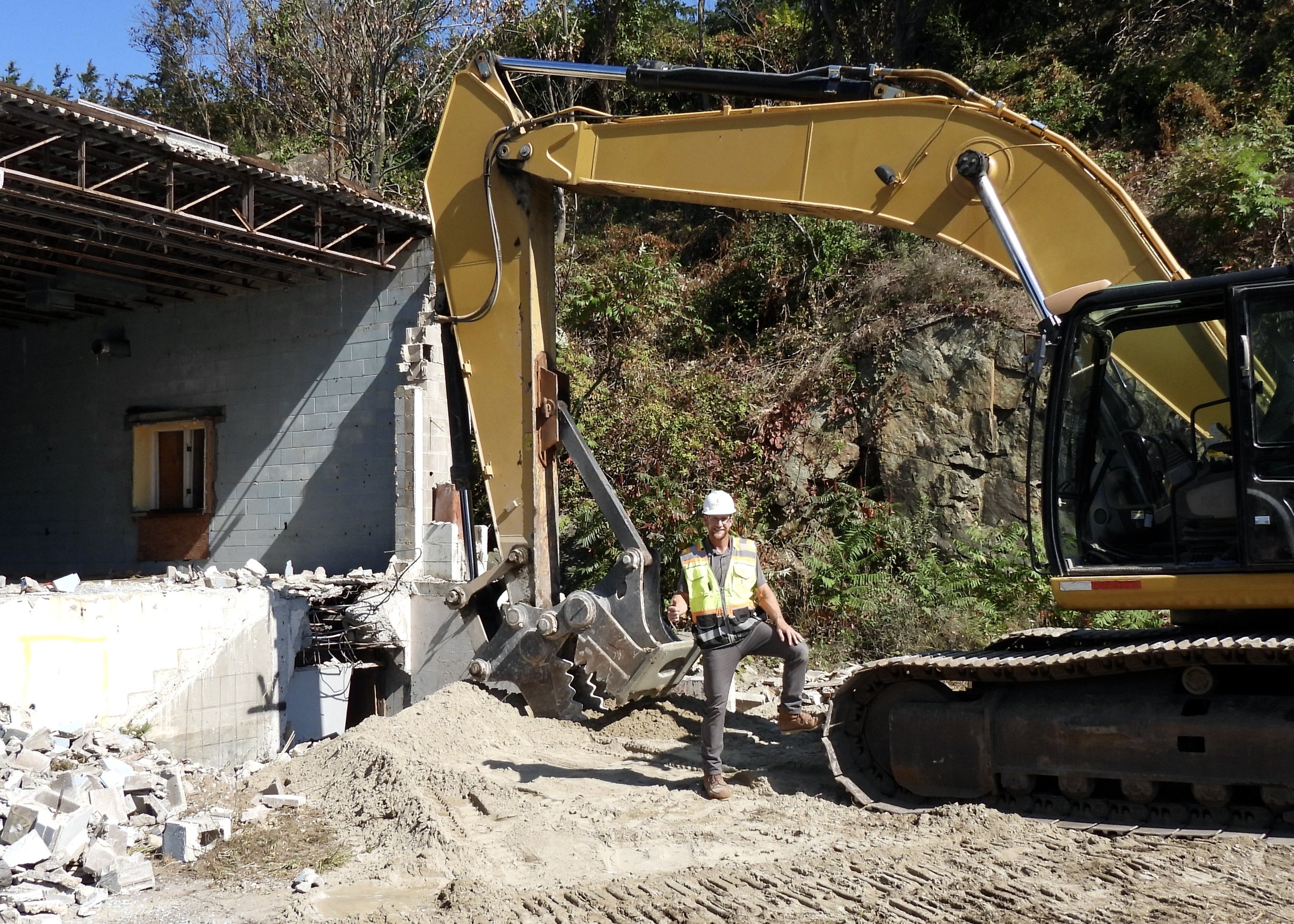
Demolition of the former Atlantic Aquarium at the foot of Atlantic Hill is under way and construction of the 21-unit residential building that will replace it is moving forward. The developer said a building permit is expected as early as next week.

Demolition of the former atlantic aquarium has begun. A construction fence was installed for safety.

Contractors have begun demolishing the concrete-block building, constructed in 1972, from the inside out. Jonathan Leavitt, a principal of 120 Nantasket Ave LLC, said there was a lot of work in the ground first, such as breaking the slab floor in the basement, crushing it, and subsequently putting it in the hole to bring the level of the basement higher.

“The demo is under way even though the walls are not collapsed in yet,” said the Brookline architect and developer. “The roof has been removed and a geotech engineer examined the soil to be sure it can accept footings.”

Leavitt plans to take down the existing structure and build on the original foundation.


“It is a complicated build to preserve the foundation and build on top,” he said. “Normally we knock down the existing building and build new.”

On Sept. 27, the planning board approved a definitive subdivision plan for the development, which Leavitt described as “protecting the property from any adverse bylaw impacts.” Filing a subdivision plan doesn’t fundamentally change the property’s layout, but locks in current zoning for eight years.

A four-story, 21-unit building will replace the former aquarium.

“We filed the preliminary subdivision with the sole purpose of freezing the zoning via a subdivision plan freeze, because at the time several zoning articles were coming to Hull town meeting that were of concern to us,” said Leavitt’s attorney, Adam J. Brodsky of Drohan, Tocchio, and Morgan.

The property’s units will be rented or sold at market rate, and because of the zoning freeze, none of the units is required to be designated as affordable.

Brodsky addressed the planning board’s previously voiced concerns about the project not going forward and Leavitt selling the property with the benefit of the zoning freeze by noting that the developer filed for a building permit on June 27, and assured the board the building will be constructed.

“The developer has arranged with the DCR (Department of Conservation and Recreation) for a construction easement,” said Brodsky. Construction fencing has been installed on the DCR-controlled sidewalk in front of the building.

Leavitt explained the owners are answering some questions for the building department regarding the building permit.

“An extensive analysis for energy consumption is required; we are finalizing the energy model for certain criteria,” he said. “We are set to meet all required criteria.”

Leavitt said he is working out the building schedule with the contractor, saying that typically he “would expect the build to take one and half years…whether it will take longer or shorter I do not know. There are a lot of pieces to the puzzle.”

The building will include a mix of one-bedroom, two-bedroom, and three-bedroom units, with a parking garage on the ground level. The plans also include an outdoor swimming pool and deck.

“The building is not a cookie-cutter design,” Leavitt said. “There are terrace effects with balconies providing Hull with a premier entrance to the town.”

The facade of the building will feature walls glass facing the ocean, each story receding backward, creating the effect of “rippling flags or sails.” The rooftop can also accept solar panels if an owner wants them.

“There is a lot of privacy and views from each unit,” said Leavitt, adding, “You see the beachgoers, the sand, and the ocean…it faces west, so you see the sunset as well, and the city of Boston in the distance.”

Leavitt said he is “not pushing to presell” and would like to have the building completed before any units are sold.

The developer said that recessions usually last eight to 18 months, so that if one is ahead, “we will probably be out by the time the building is completed.” However, he also acknowledged “anything can happen, look at COVID.

“The project is coming at a time when Hull is being more discovered,” Leavitt continued. “I have found there is increasing interest in living in Hull and retiring there.”

Do you have an opinion on this issue? Click here to write a Letter to the Editor.
Hampton Circle neighbors say playground reconstruction will worsen flooding in area

By Dolores Sauca Lorusso

As work progresses on reconstructing the Hampton Circle playground, neighbors are raising concerns that the project will worsen flooding in the area.

A meeting at the playground on Tuesday evening drew a sizable crowd that said the higher elevation of the play structure will spread negative impacts from flooding and pooling rain. Abutters from the streets surrounding the playground – Marginal Road, Moreland Avenue, Hampton Circle, and Bay Street – attended the meeting called by Director of Community Development and Planning Chris DiIorio to voice their experiences with flooding and drainage.

“They changed the topography of the playground. After all the landfill, water can’t move through and is flowing into all the other yards,” said Ellie Destito, who has lived on Marginal Road for 28 years. “When the waves from the bay come in, it is almost like the grand rapids.”

The playground is dedicated to U.S. Navy Lt. Joseph D. McLaughlin, who died in World War II. McLaughlin’s family lived on nearby Lincoln Avenue for decades. The playground is the beginning and ending point of the neighborhood’s annual Fourth of July parade.

According to DiIorio, when the town was forced to remove the playground due to the condition of the equipment, there was “an outcry from the neighborhood to construct a new playground.

The neighbors, parks and recreation, the select board, the community preservation committee, and town meeting were all in favor of moving forward with a new playground there.”

Jim Richman, who was present at the meeting as a citizen, although he is a member of the CPC, said they were never told the height was being raised and the memorial monument would be moved.

DiIorio said the CPC is not a permitting authority, nor does it review specific details of each project. The CPC makes recommendations to town meeting for funding of projects based on the purpose of the project and what it will provide for the community.

“Flooding is not a volume issue, there is not more water as a result of the fill,” Gary James, civil engineer of Beta Group, told the neighbors.

However, the abutters disagreed. The group stressed even with drainage, all their homes are in “jeopardy.” Destito said the abutters were told to “wait and see storm impacts… but what about people who own homes? Are we not more important than a playground?”

DiIorio told the Times the engineers were aware of the flooding, but told him, “raising it (the land) would not cause the flooding to get any worse.” He explained the playground was elevated due to the water, to prevent consistently flooding the equipment and pour-in-place playground surface.

“We wanted to protect the playground for sure, but are absolutely concerned about people’s houses,” said DiIorio.

Some abutters believed the elevated height was to protect the warranty, but DiIorio confirmed in an email that rainwater or saltwater touching the structure or poured-in-place surface does not void the warranty.

“However, if it’s under water every month, I think the companies issuing the warranty would be able to make an argument that that it is not a proper environment for the structure,” he said. “Elevating the playground will significantly reduce the number of times the playground is inundated as opposed to the first design.”

“I am not a direct abutter, but came out to support my neighbors,” said Dan Kernan, resident of Hampton Circle and vice chair of the redevelopment authority. “The water flow wears away at the little beach, I watch the water flow over the cement wall… the area turns into a big lake. The neighbors come out with kayaks.”

Beth Chapman of Moreland Avenue said she likes the playground, but is having a major drainage issue.

“All the stormwater is directed to the storm drain in front of my property and it does not work,” she said. “It comes down the hill and bypasses the catch basin and ends at the front of my house…all the water goes under my house and the foundation is eroded.”

Bryan Fenelon of Bay Street questioned whether anyone truly understood how the drainage works and why a study was not done.

“Water bypasses the drain and goes down the other side of the fence… the water is finding the easiest way to go and that is into the yards of abutters,” he said. “Reality is much different from paper.”

“There is a difference between lived experience and technical experience,” said Liz Kay of Hampton Circle. “Even if it is only 1% of the time, when it is acting like a river between Marginal to Moreland, the impacts on abutters make addressing the issue more important than the playground.”

DiIorio said a drainage study was not needed at the time because the town was not changing the drainage and the ground was graded to work with the existing drainage system. Abutters disagreed, and said they believe the drainage system was impacted because fill was added to change the elevation.

“All the water that went to the drainage system before will continue to go to the drainage system,” said DiIorio, who also recognized the drainage may not be working as well as it should.

“DPW tried to fix the problem with a catch basin. That is not our part of the project,” said Dave McKinley, landscape engineer from Beta Group. “The drainage pipes are dead flat; the pitches are miniscule… [We] need to do some drainage studies; when we did the project, we did not survey all the way to the other end toward the bay.”

“The town has an approved grant to provide funding to contract with an engineering consultant to do an existing-conditions analysis and make recommended improvements to the drainage system in that area,” said DiIorio, who expects the report to be completed by the middle of next year.

Some abutters said they were frustrated with what they saw as “double standards” because local rules that prohibit them from making changes to their property that have been made at the playground.

“The conservation commission would not allow me to put tar in my driveway, like they have here (playground), because it could not drain,” said Larry Robicheau of Moreland Avenue. “When it is pouring the park is protected, not our homes, but there are no kids here in the pouring rain.”

Linda Dunphy of Andrew Road articulated her “disappointment” in the process.

“As beautiful as it is, I don’t think they heard one word we said, not one word,” she said. “We want to not have water in people’s yards and houses and want to move the memorial monument back to where it originally was.”

Although the memorial monument to Lt. McLaughlin was put in facing in toward the park and will not be moved back closer to the road so passersby can more easily view it, DiIorio confirmed that the inscription will be made double-sided so it can be read from the street.

Some, like Richman, are concerned that kids will climb on the memorial.

“Shifting the memorial was secondary and how they treated it is unsettling…it is a memorial park and not just a playground,” Kay said.

“Our concerns are falling on deaf ears…The playground is trumping our homes,’ said Eileen Weisslinger of Hampton Circle.

Do you have an opinion on this issue? Click here to write a Letter to the Editor.

Want to help hire Hull’s next superintendent? Schools seek screening committee members

By Carol Britton Meyer

The school committee is seeking parents, students, school staff, and representatives from the community to join the recently-created committee to perform the initial review of applications for the superintendent of schools.

Current Superintendent Judith Kuehn will retire at the end of this school year; the new superintendent is expected to be named in early 2024, with an anticipated start date of July 1.

The New England School Development Council will facilitate the search process at a cost of $13,760. The final hiring decision rests with the school committee.

Member Kyle Conley and other school officials are working closely with NESDEC with the goal of a thorough and inclusive search process.

“We want to be sure the screening committee is made up of people with lots of different perspectives and levels of expertise,” she said.

School committee members will not be represented on the screening committee, which will make its recommendations to the school committee. The screening committee may also include a member from the select board and the advisory board.

Conley this week outlined significant steps in the process:

⦁ Tuesday, Oct. 10: During the regularly scheduled school committee meeting, NESDEC representative Dr. Margaret Frieswyk will provide an orientation of the search process “from beginning to end,” Conley explained. “This will be a big part of the agenda, and the public is welcome to attend.”

Frieswyk “is optimistic that we will have some fantastic candidates, because Hull is a very desirable district to work in,” according to Conley.

⦁ Thursday, Oct. 19: Frieswyk will lead focus groups in Hull to gather input from parents, principals, teachers, and community members. More information will be available at a later date.

“We want to make the process as inclusive as possible,” Conley said. “There will be lots of opportunities for those wishing to offer their insights about what they think the profile and skills of our next superintendent [should look like].” An online survey will be available during the week of Oct. 19.

• The school committee’s Monday, Oct. 23 meeting was canceled and replaced with a meeting the evening of Oct. 19, at which time Frieswyk will share a summary of the information and input gained from the focus groups throughout the day. Then the school committee will provide input. This also is a public meeting.

“This won’t be a time for us to discuss the feedback but to listen, add our thoughts, and make sure we have an inclusive candidate profile,” Conley said. The window for submitting applications is Oct. 30 to Nov. 27.

“Casting a wide net is fantastic,” school committee member Ernest Minelli said. “Hopefully we will have an abundance of applicants.”

In response to Minelli asking Conley what her “best sales pitch” for seeking screening committee members might be, she responded: “We’re looking for a group of people to listen to the profile information gathered on Oct. 19 and to do the first look-through [of the applications and resumes from] those wishing to be our next superintendent. We’re seeking members who will be available on the dates the screening committee is scheduled to meet and who have the interest and commitment to finding the next great leader of our schools.”

The screening committee is scheduled to meet in late November into early December to review resumes, with interviews by the school committee with the initial candidates recommended by the screening committee planned for between Dec. 11 and 15.

On Jan. 2, the school committee will receive an orientation prior to interviews with the final candidates, which will take place between Jan. 8 and 12.

Conley asked the school committee and members of the community to mark their calendars with these dates and to share them with others who are interested in participating in the process.

Do you have an opinion on this issue? Click here to write a Letter to the Editor.

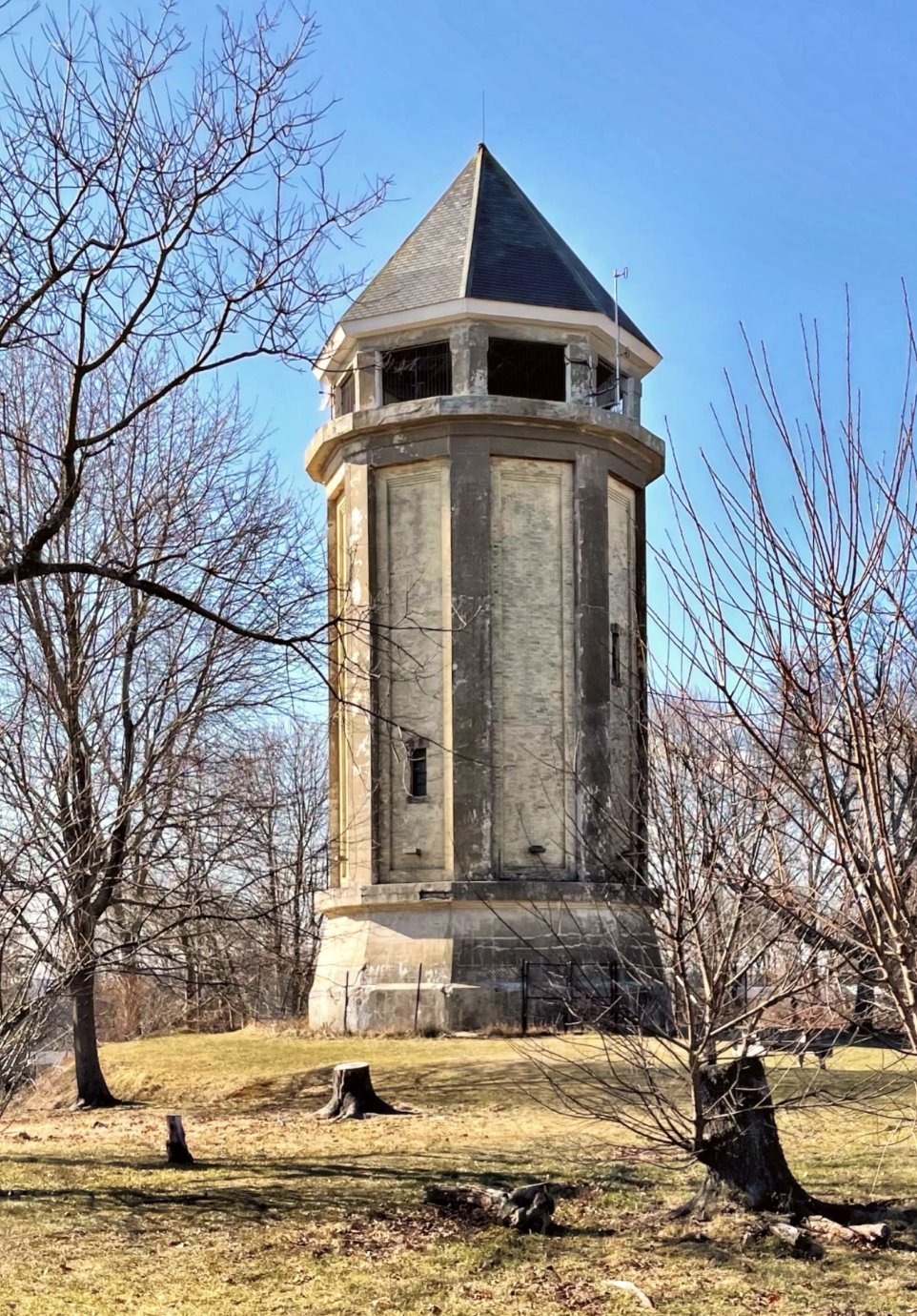
Town accepts anonymous donation for Fort Revere water tower restoration

By Carol Britton Meyer

The select board this week accepted with thanks an anonymous donation of $1,500 toward the cost of restoring the Fort Revere water tower, with a condition that if the work does not begin before September 11, 2026, the money will be donated to Hull’s Council on Aging, 

“Either way, this is a really nice donation,” Chair Greg Grey said.

In the meantime, the town received a donation of paint “through Benjamin Moore and Hingham Lumber to perform restorative work” at Fort Revere at a date to be announced, according to Town Manager Jennifer Constable.

The town is looking for volunteers to help with the work. The project will be coordinated by select board member Jason McCann, contingent on Department of Conservation and Recreation approval.

The town owns the tower and some of the bunkers, and the DCR, others. This is because the site was sold off by the federal government after World War II and acquired by the town and state in stages as the individual private owners agreed to sell.

“The fort is a patchwork of ownership between DCR and the town,” Constable said.

During a recent visit to Fort Revere with Hull officials, new DCR Commissioner Brian Arrigo agreed with Constable’s comment that “the site speaks for itself” with regard to its deteriorated condition.

Arrigo also acknowledged the need for discussion about safety and security at the site when a town official pointed out those issues.

McCann suggested a Fort Revere committee, which Grey said would be considered, adding, “It’s long overdue.”

Voters at the Aug. 31 special town meeting defeated, 219-169, a warrant article requesting approval to appropriate roughly $600,000 or more to cover the increased cost of restoring the water tower beyond the 2022 town meeting appropriation of $2.2 million. A two-thirds majority among the more than 400 voters was required for the article to pass.

Before the vote, Director of Community Development & Planning Chris DiIorio was asked what would happen to the $2.2 million earlier appropriation if the article didn’t pass. His response was that the funding would remain in place “and we could look at how we might change the scope of the project and then go out to bid again.”

Do you have an opinion on this issue? Click here to write a Letter to the Editor.