By Carol Britton Meyer
The Hull Municipal Light Board is expected to vote next week on a resolution introduced by Commissioner Jake Vaillancourt at the board’s April 16 meeting opposing the proposed joint DPW/municipal light plant facility and related grant activity.
The resolution’s grant activity refers to three consecutive Coastal Zone Management Coastal Resilience grants totaling $524,805 that affect HMLP property and operations, and another grant application that the light board believes was submitted to the state recently.
The vote is expected to take place at a special light board meeting on Tuesday, April 28 (originally scheduled for April 23).
Town Manager Jennifer Constable, who also serves as light plant manager, was not present at the April 16 meeting.
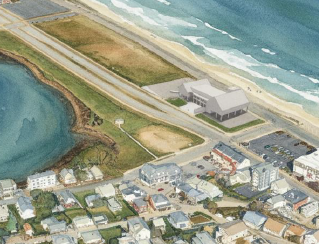
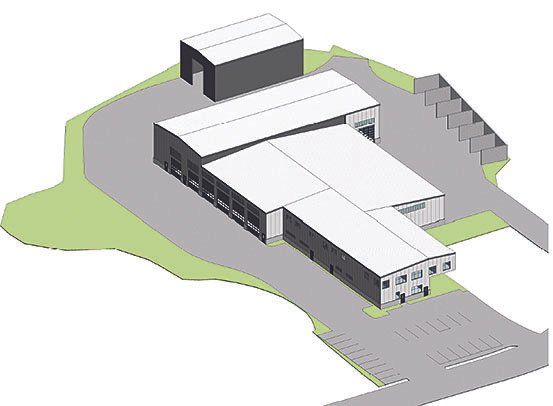
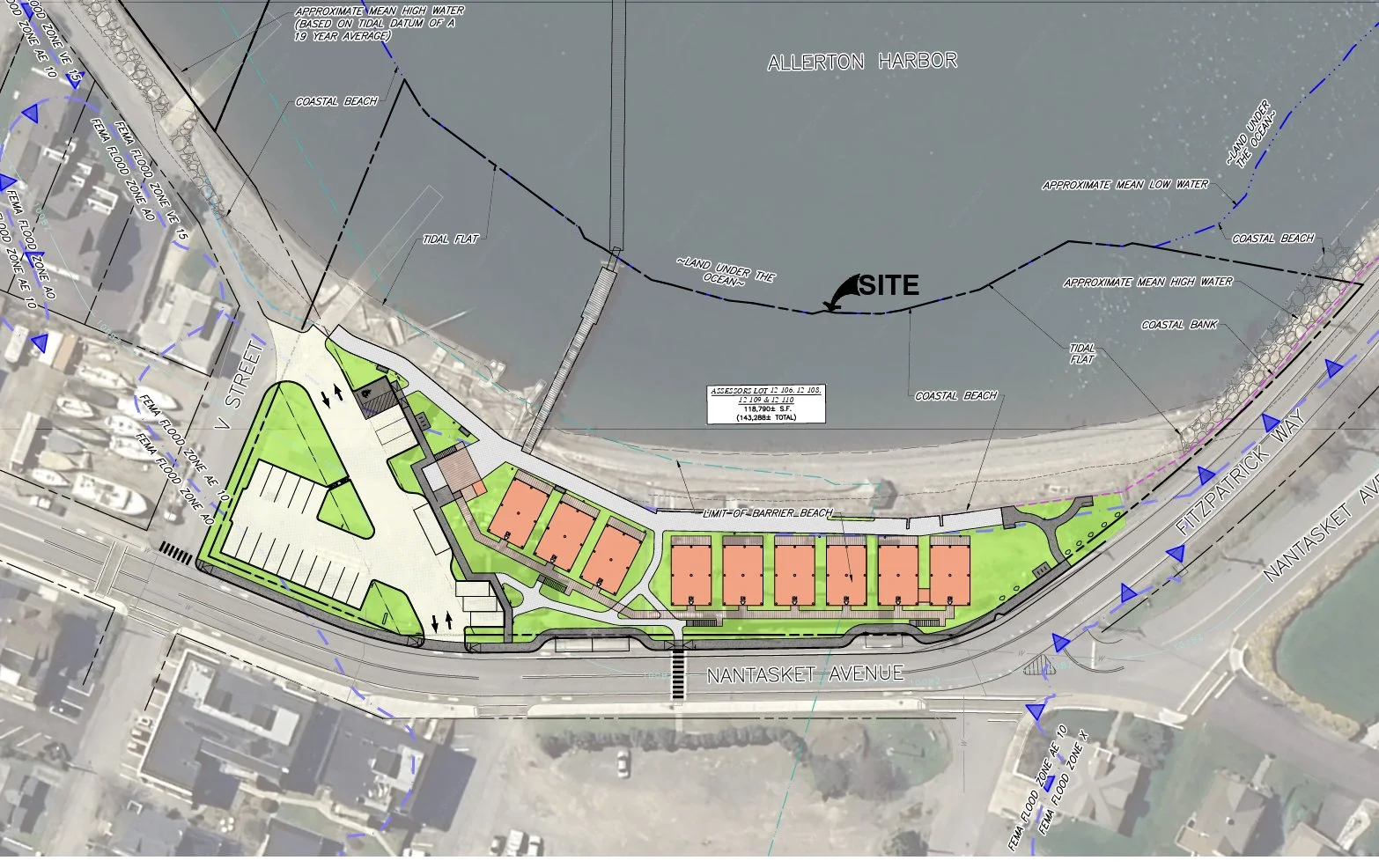
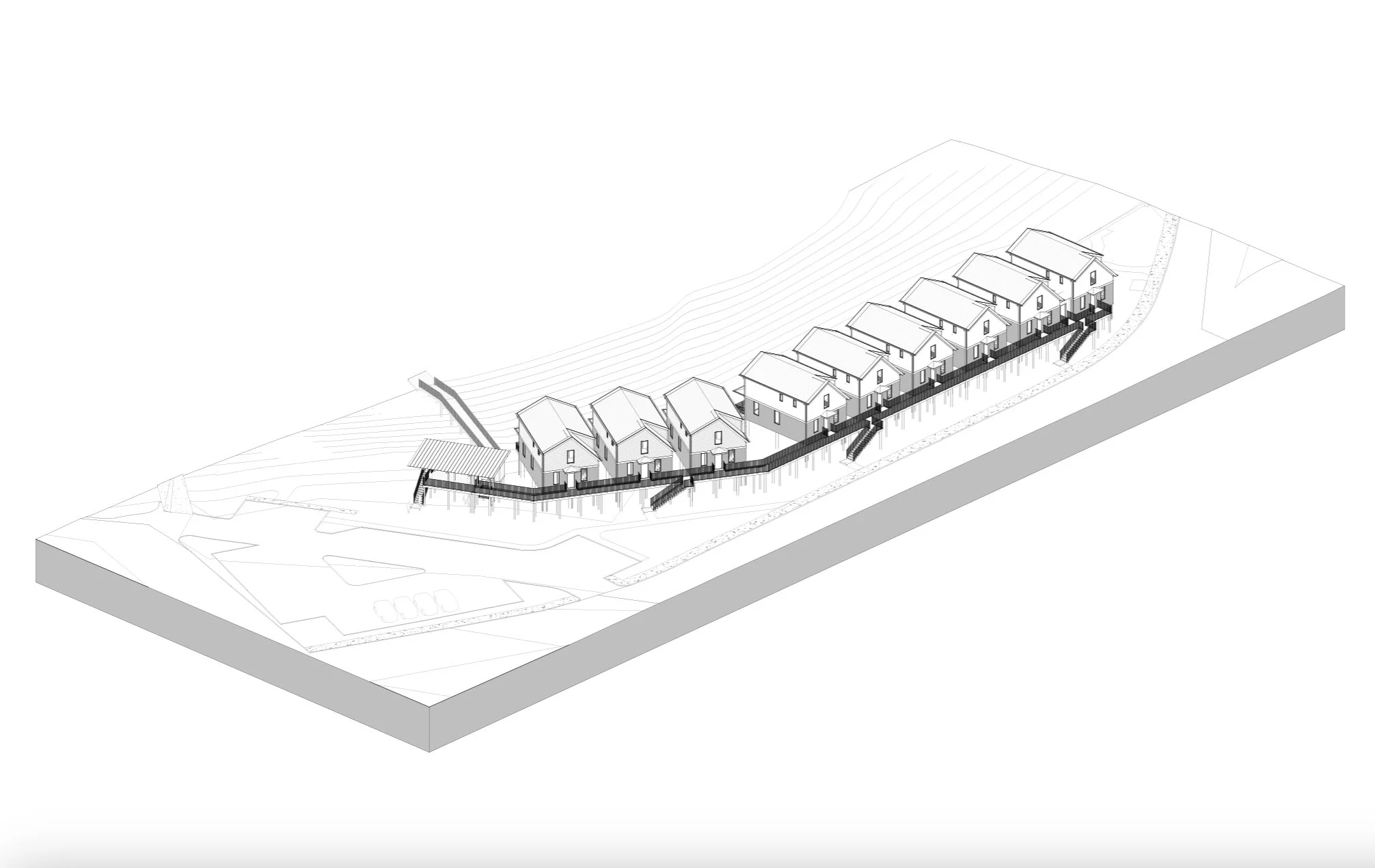
Vaillancourt’s resolution objects to the proposed relocation of the current Hull Municipal Light Plant at 15 Edgewater Road and its consolidation with the DPW at a joint building at 9 Nantasket Avenue at West Corner. The light board instead has indicated its preference to build a new garage at its current location.
The light board, under Massachusetts General Laws Chapter 164, has authority over the construction, operation, and maintenance of the plant, according to the resolution.
Click here to read the full text of the resolution introduced on April 16
In response to emailed questions from The Times, the town manager disputed the light board’s characterization of the ownership of the Edgewater property.
“The facility is a town-owned property and under the care, custody and control of the town,” Constable wrote. ”The project is currently in the third phase and in receipt of an excess of $500,000 in state funding. Consistent with the town charter, ‘#10-The town manager shall manage and be responsible for all town buildings, properties and facilities, except those under the jurisdiction of the school committee, unless requested by that agency.’ That being said, this project has not been approached in a vacuum and the light board and staff have and will continue to have ample opportunity to provide their feedback on the project.”
During the April 16 discussion about the proposed resolution, it was stated that despite the board’s unanimous December 2025 vote against the joint facility, the town manager continued to advance grant applications without notifying the state of the board’s opposition.
Following the discussion, Commissioner Daniel Ciccairello moved to table the resolution to a special meeting to be held on Thursday, April 23 in order to allow all members adequate time to review the resolution and to consult with the light board’s counsel. The meeting was later rescheduled to Tuesday, April 28 at 6:30 p.m. at town hall.
After Vaillancourt agreed to Ciccariello’s friendly amendment, the board directed that a copy of the resolution be distributed to all board members and to the town manager in advance of the meeting.
In a telephone conversation with The Times, Constable said she had no advance notice of the content of the resolution.
“Once again, this was something not discussed with me prior to being brought up at the meeting,” she said. “I was unable to attend, and the proclamation was forwarded to me the morning after the meeting. I have serious concerns about the misinformation in the proclamation and about the damage that a board can do to established professional relations with state agencies, which is detrimental to the entire town.”
Last May, town meeting adopted Article 37, on a 116-83 vote, which called for “removing the town manager’s ex officio role as HMLP manager and authorizing a home rule petition to restore standard Chapter 164 governance of the HMLP, reflecting the voters’ judgment that this board – and not the town manager – should exercise managerial authority over the plant,” according to the resolution.
According to the resolution, the three CZM grants include: Phase 1 (FY24): $120,000, announced October 2, 2023, titled “Climate Adaptation Pathways for Critical Facilities Design Alternatives Analysis: Managed Retreat or Retrofit?;” Phase 2 (FY25): $152,805, announced October 16, 2024, titled “Adaptation Pathways for Critical Facilities Phase 2 – Detailed Site Assessment and Public Outreach for DPW and Municipal Light Plants;” and Phase 3 (FY26): $252,000, announced October 6, 2025, titled “Adaptation Pathways for Critical Facilities Phase 3: Design Advancement of Hull’s Resilient Facility for Critical Town Services.”
The light board believes that a fourth (Phase 4) grant was submitted to the state around March 27 of this year through the FY27 Environment & Climate One Stop consolidated grant round, which permits CZM Coastal Resilience awards of up to $2 million per project – “a potential step-change in scale from prior phases – and that this application was prepared by or with the involvement of Climate Adaptation and Conservation Director Chris Krahforst, DPW Director Chris Gardner, and the consulting firm Weston & Sampson, without authorization from or notice to this board,” the resolution states.
According to the town manager, “The CZM Resilient Grant was initially filed in response to the light plant’s expressed need for new garages at HMLP and under previous town and light plant management. … HMLP staff have been part of the project meetings from the inception of the project.”
Also during the April 16 meeting, the board directed the town manager to provide to the board, no later than its next regular meeting, a written accounting of the details of every grant awarded to the town since 2022 related to the light plant.
Following the light board’s earlier vote of disapproval regarding the joint DPW/HMLP facility concept – it “has instead directed that HMLP facility needs be addressed at 15 Edgewater Road – a site at approximately 15 feet above sea level – through construction of a four-bay accessory garage currently in design with JCBTR Architects of Quincy, Massachusetts.”
The board has a “fiduciary duty to its ratepayers to ensure accurate accounting of any public funds tied to HMLP property or operations, and the design-completion milestone targeted by Phase 3 and any Phase 4 application remains unclear to this board, with the town manager having represented the target as 60% design at the March 19, 2026 board meeting,” the proclamation further states. “This board has been unable to verify whether any grant application or scope of work states a different target such as 75% design.”
The board “has been advised” that public input on this project will take the form of one-directional “community outreach” rather than a public hearing with binding effect, and that “repeated commitments made at board meetings in December 2025, January 2026, and February 2026 to schedule such outreach have not been fulfilled as of the date of this resolution.”
In response, Constable said that “public meetings on the project were held” in April 2025 and January 2026, during which “presentations were made by both the engineers (Weston & Sampson) and town staff. Community engagement is a component of the Phase III work and is upcoming.”
According to the resolution, because none of the three awarded grants – nor any pending Phase 4 application – was authorized by a vote of the light board, “and the acceptance of grant funds affecting a Chapter 164 municipal light plant by a town officer acting without the consent of the plant’s governing board raises serious questions of legal authority,” the board formally opposes the proposed consolidation “and reaffirms its prior vote that the HMLP facility needs shall be met at its current location at 15 Edgewater Road.”
Also through such a resolution, the board declares that “no prior statement, action, or silence by the town manager, any town employee, any consultant, or any grant applicant shall be construed as representing the support, endorsement, or consent of this board for the joint facility project or for any grant application advancing it – including but not limited to the Phase 1, Phase 2, Phase 3, and any Phase 4 applications to CZM or the ECO One Stop program. Any representation of HMLP support made to the Commonwealth, to any state agency, or to any consultant is hereby disavowed.”
Subject to resolution approval, formal communication would be made to state agencies and others involved with the proposed project on behalf of the board, including a certified copy of the resolution and a cover letter opposing the joint facility proposal – including: the Executive Office of Energy and Environmental Affairs; Massachusetts Office of Coastal Zone Management; Department of Public Utilities; Office of the Attorney General, Municipal Law Unit; State Senator Patrick O’Connor and State Representative Joan Meschino; the select board; and the town manager.
The intent of the cover letter in part would be to request that CZM decline to award any further grant funding – including any pending FY27 Phase 4 application – related to the relocation, consolidation, or redesign of HMLP facilities without the written consent of the light board; to request that the scope of the existing Phase 3 grant be reviewed by CZM in light of the board’s opposition; and that no further disbursements under that grant be made for work affecting HMLP property or operations without the board’s authorization.
If approved, the resolution would also request confirmation from CZM as to whether any grant application for this project represented that the HMLP board supported or consented to this project.
Other parts of the resolution relate to refusal to commit any light plant resources as a match for any current or future CZM Coastal Resilience or other grants supporting the joint facility project and reservation of the board’s rights under Chapter 164.
If adopted by the board on April 28, the resolution would take effect immediately and be posted on the HMLP and town websites, included in the minutes of the meeting, and made available to the public.
Comments from the public at the April 16 meeting related to historical preservation restrictions on the current light plant that might limit exterior alterations; what the board’s course of action would be if the town manager responded to the resolution by asking for more time (in that event, the board would proceed with a vote); and urging the board to proceed without delay.