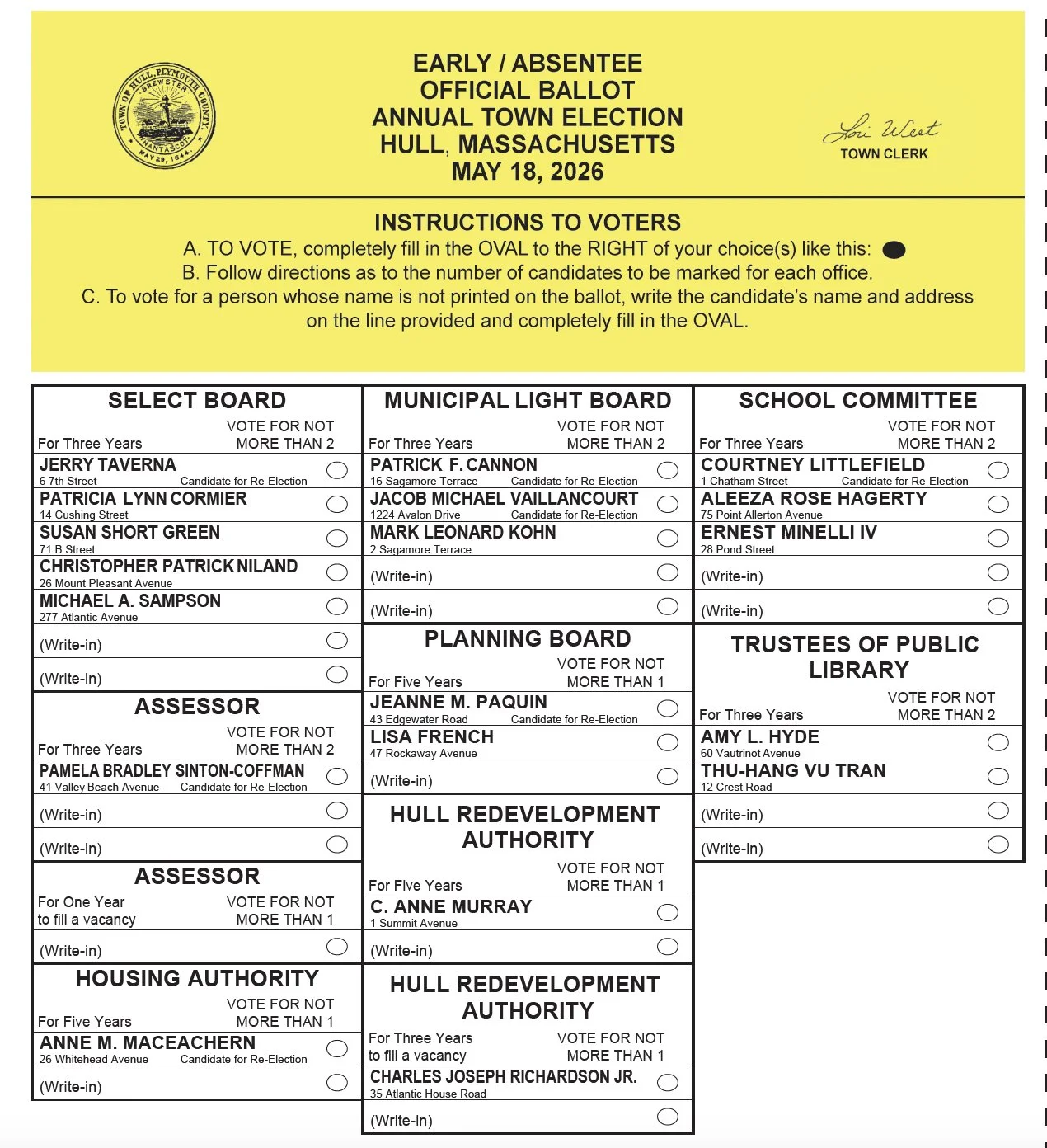
Select board (three-year term) Vote for 2
• Incumbent Jerry Taverna. With many of his family members in attendance, he commented: “I report to my family, who have a lot of concerns like [our] citizens do. [If re-elected,] I can promise I will continue to ask as many questions as I feel are necessary.”
He also said he believes that “a strong town manager form of governance is something that needs to, and can be, fixed.”
Taverna also said a new public safety facility is “long overdue” but does not support the proposed combined DPW/light board facility.
He also places top priority on “leveling out the budget. I’m not sure how to do it, but we have to stop spending so much,” he said, noting that this is an affordability issue.
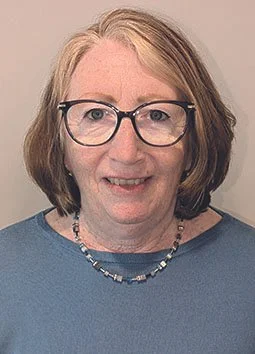
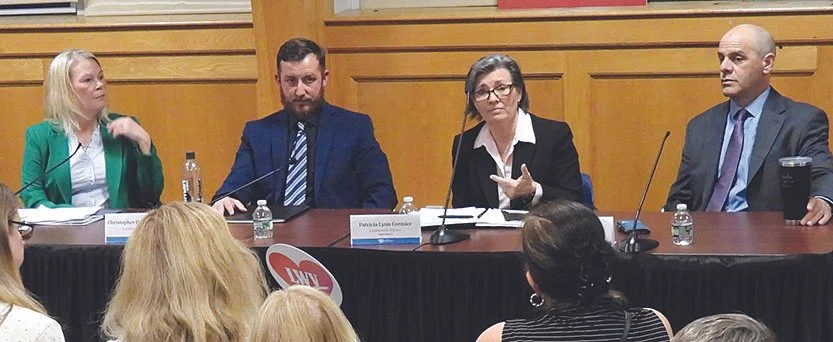
• Patricia Lynn Cormier. A current member of the advisory board, she feels serving on the select board is a natural progression.
Cormier also listed two-way communication and dialogue involving the community as important in building trust and transparency, and placed priority on getting the master plan process up and running again. “A master plan drives everything else,” she said.
She said that it is up to the select board to let citizens know about the tradeoffs involved related to various projects and issues and to explain the process while involving the community.
“We need to bring people together,” she said.
• Christopher Patrick Niland. Making sure the voice of the people is heard is one of his top priorities. “I’m someone who listens” to residents of all ages, he said. “The disconnect when some residents feel they are not being heard is disheartening.”
Niland said that if elected, he thinks the select board should focus on the future of the Hull Redevelopment Authority property, “which has been sitting idle for many years. If the land is to be developed, it has to be done in ways that make sense, [focusing on] open space before anything else.”
He also said the town should focus on infrastructure needs. “They can’t be ignored until they become unrepairable and become a burden on everyone.”
Niland said the “heartbeat of the town” is the different generations who have lived, and continue to live, in town. “I want to do right by every member of the community,” he said.
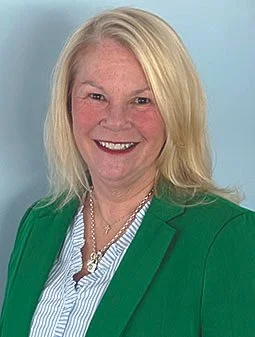
• Susan Short Green. She said she believes that her civic and community service experience has prepared her well to serve on the select board. Green called for “increased transparency,” including with regard to the town budget.
“I’ll champion for [citizens’] voices to be heard,” she said.
She also said that if elected, she would advocate for full meeting agendas, including detailed information about each item to inform citizens ahead of time so they can decide which meetings to attend.
Green considers affordability and accessibility as two major issues facing the town. “Affordability affects [citizens’] quality of life, and the budget is the engine that drives the taxes and fees.”
Citing the importance of elected leaders being available to discuss issues with citizens in a “two-way conversation, and for them to know they are listening to, and hearing, us,” she said.
Green also noted that she thinks the select board should share regular project and budget updates at its meetings, “and if there are cost overruns, citizens need to know about them right away and know why they happened.”
• Michael Sampson. He was unable to attend the forum, but a provided statement was read by Foster-Nolan. In part, he said as a lifelong (36-year) resident of Hull, he cares deeply about the community. “Citizen involvement is what keeps the town strong,” he said.
Sampson pointed to “rising costs” and issues related to infrastructure needs, public safety, traffic, and parking – among others – that affect Hull residents.
“I want to create opportunities for young families to want to remain here,” he said. “[It’s important] to make wise decisions with tax dollars.”
Municipal light board (three-year term) Vote for 2
Candidates were asked questions about Article 40 on the May 4 town meeting warrant – a citizen’s petition calling for the removal of the town manager “from the operation of the municipal light plant” and to restore the statutory authority to the light board, and whether they support the proposed combined DPW/light plant facility.
• Incumbent Patrick F. Cannon. The light board’s mission “is simple – to provide reliable power at a fair and reasonable cost,” he said.
Cannon said is he not in favor of Article 40, but that if it passes, he “will learn to live with it.” He also opposed the proposed combined facility. “The light plant building is in pretty good shape and could be repaired,” he said.
• Incumbent Jacob Vaillancourt. “The ratepayers all own the light plant together,” he said.
He “strongly supports” Article 40. “It was my idea last year,” he said.
Vaillancourt opposed the combined facility, calling the idea “utter stupidity” and a “symbol of a deeper issue [based on] a bad governance model.”
With regard to capacity planning, he said the town needs a “grid-scale battery – 5 to 8 megawatts – that would give us a few more years to come up with a long-term solution. Otherwise, we could run out of capacity as early as the summer of 2027.”
• Mark Kohn. Running “to reduce electrical rates” is one of his top priorities. “Hull has [one of the] most expensive electrical rates in the state,” he said.
He also opposes the proposed combined facility. “The DPW and light plant are two different entities,” he said. “I think the light plant should stay where it is and be raised out of the flood plain as its own entity.”
In addition, Kohn said he is a strong supporter of solar and battery power and said he feels his expertise “in solving problems and managing personnel and assets would be good for the community.”