
Light board, town manager clash over proper authority for studies of building sites
/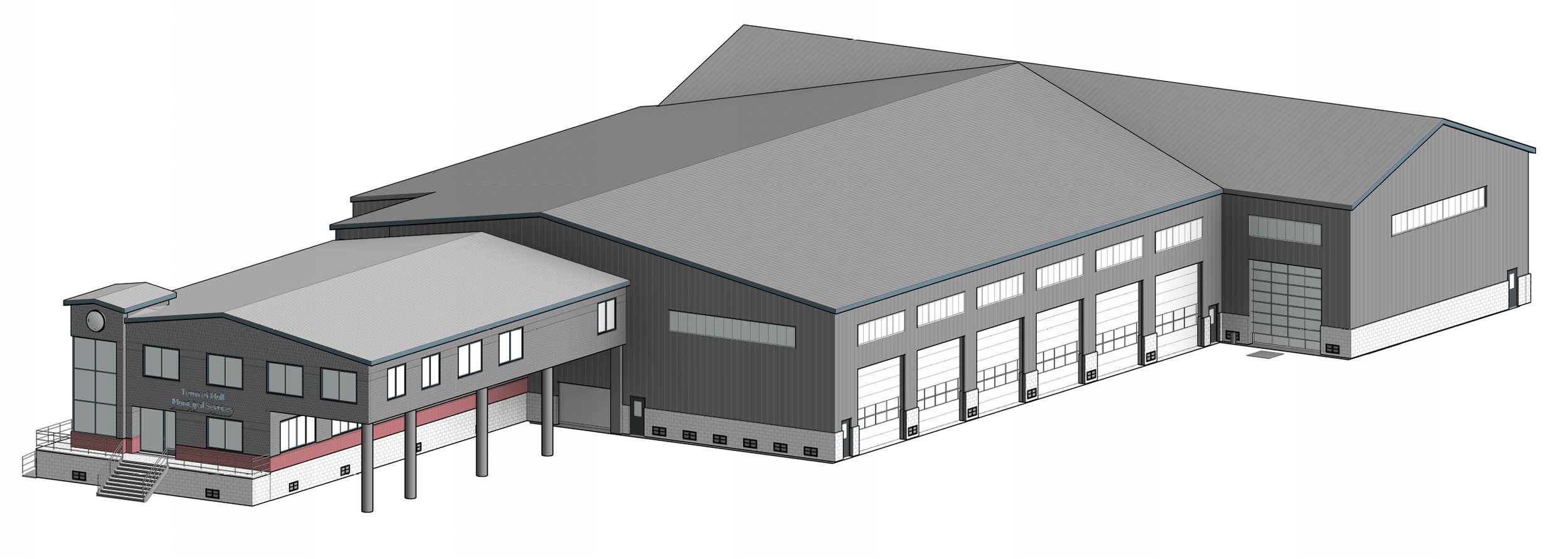
A rendering of the combined light plant/dpw building proposed for west corner. [Source: town of Hull]
By Carol Britton Meyer
Following the light board’s earlier vote to commission a study of the feasibility of constructing a garage at the existing Hull Municipal Light Plant site on Edgewater Road, Town Manager/Light Plant Manager Jennifer Constable last week told the board that the project has not yet gone out to bid, pending further clarification about the scope.
Following a lengthy conversation, the board voted to create a subcommittee comprised of Burns and member Jake Vaillancourt, who was not present at the meeting – to talk with Constable and light plant Operations Manager Mike Schmitt to develop a more defined scope of work that will be presented to the full board at its next meeting for discussion.
“Then we can submit a bid proposal we can all agree on,” Burns said. “This current scope was the first cut, and the subcommittee [will refine it].”
Constable said there are a number of unanswered questions, including whether the board has talked with neighbors about the potential new garage. The board had authorized up to $110,000 for the study.
Interim truck storage location identified
In the meantime, a location has been decided upon for interim storage of the light plant’s expensive new truck – at the garage at 6 A Street, with an expected beginning date of mid- to late-October. The property is owned by Hollie LLC, of which Tyler Grey, son of select board member Greg Grey, is listed as manager.
With regard to a Phase 4 Coastal Zone Management grant received by the town for the proposed joint Department of Public Works/light plant facility at the current DPW site at West Corner, Burns noted that the light board voted unanimously, and the select board on a 3-2 vote, supported having the light board taken out of this joint study. The light board unanimously opposes the joint facility.
In an effort to clarify the select board’s authority over the town manager/light plant manager, Town Counsel Brian Winner recently shared a seven-page analysis of the July 22 select board vote to remove the light plant from the planned joint project at the site of the current public works garage.
The select board also recently voted to direct Constable to approve the $110,000 requested by the light board to fund a feasibility study concerning construction of a garage at the existing Hull Municipal Light Plant site on Edgewater Road.
Constable had asked Winner for his opinion as to whether the board had the legal authority to direct Constable to take these actions.
In summary, Winner said the select board “appears to have the authority to direct Constable to remove HMLP from the CZM grant application.”
However, he said, the board’s authority to compel approval of a specific $110,000 expenditure “is less certain” because there’s a risk of “intruding upon the manager’s assigned authority.”
When Burns asked Constable this week if she had requested a modification to the grant application to remove the light plant from the application, she said no – stating that it is the select board’s charge “to set policy.”
Lengthy, heated debate
There was a lengthy, sometimes heated, debate between Constable and Burns, who said repeatedly that he was disappointed and also found it hard to fathom that after the two boards’ votes to remove the light plant from the grant application, it still hasn’t been done.
Burns asserted repeatedly that the current light plant, if expanded, is the most viable and cost-effective option and that this what some have referred to as a $50 or $60 million project would raise ratepayers rates “astronomically.”
However, Constable said it is too early to be talking about possible costs, and that no final figures have yet been determined.
Constable said the project is important because the DPW and light plant sites are considered the two most vulnerable town-owned properties and that the DPW site was deemed the best of the two for the combined facility.
Peer review suggested
Near the end of the discussion, Constable suggested the light board consider having a peer review done of the findings that already exist from current studies – “for far less money than a feasibility study would cost.”
She also said that the ultimate decision of whether to fund the project, which option to approve, and other considerations rest in the hands of town meeting voters.
“The select board is aware of everyone’s position, and we’re not going to throw the baby out with the bath water,” Constable said.
At one point, she accused Burns of using this topic “as a red herring,” to which he disagreed.
Constable tried to bring an end to the conversation a few times, and finally that was accomplished.
“You know how both boards feel, and I don’t know why you continue to pursue this dual facility,” Burns said. “I’m not happy, and I don’t think anyone here [other commissioners] is happy.”
This topic will be on the light board’s next agenda, “and hopefully we will get some clarity on what the right move is. Everyone knows that the light board is vehemently against this project,” he said.
Board member Stephanie Landry said the board should take into account “how we came to support this decision” for the light plant to be taken off the application.
“The previous operations manager asked us to support him, because he didn’t agree about merging both facilities, and we did support him,” she recalled. “Maybe we should have this discussion with the current operations manager.”
One more presentation
Constable noted that the previous operations manager “didn’t want any state or federal funds.” Constable also suggested “one more presentation” on the joint facility to ensure everyone understands all the details.
Resident Polly Rowe encouraged citizens to keep an open mind until more is known about the actual costs associated with either option and how much might be funded by state or federal grants to lessen the tax impacts of such a project.
“It’s a question of whether [the joint facility] is a good idea or not, regardless of potential funding,” light board member Dan Ciccariello said.
Burns said he is of the opinion that “any large capital expenditure should be put into “the $10 to $15 million third feeder line” to improve reliability of the town’s electrical service.
The newly created Hull Municipal Light Board subcommittee will meet in person on Wednesday, October 7, at 3 p.m. at town hall regarding the Edgewater Road feasibility study scope, to report to the full board at its October 15 meeting.
Like what you’re reading? Stay informed and support our work with a Hull Times subscription by clicking here.
Do you have an opinion to share? Click here to write a Letter to the Editor.
© 2026 The Hull Times. All rights reserved.