
Open-space experts discuss potential for ‘community green’ on part of HRA land
/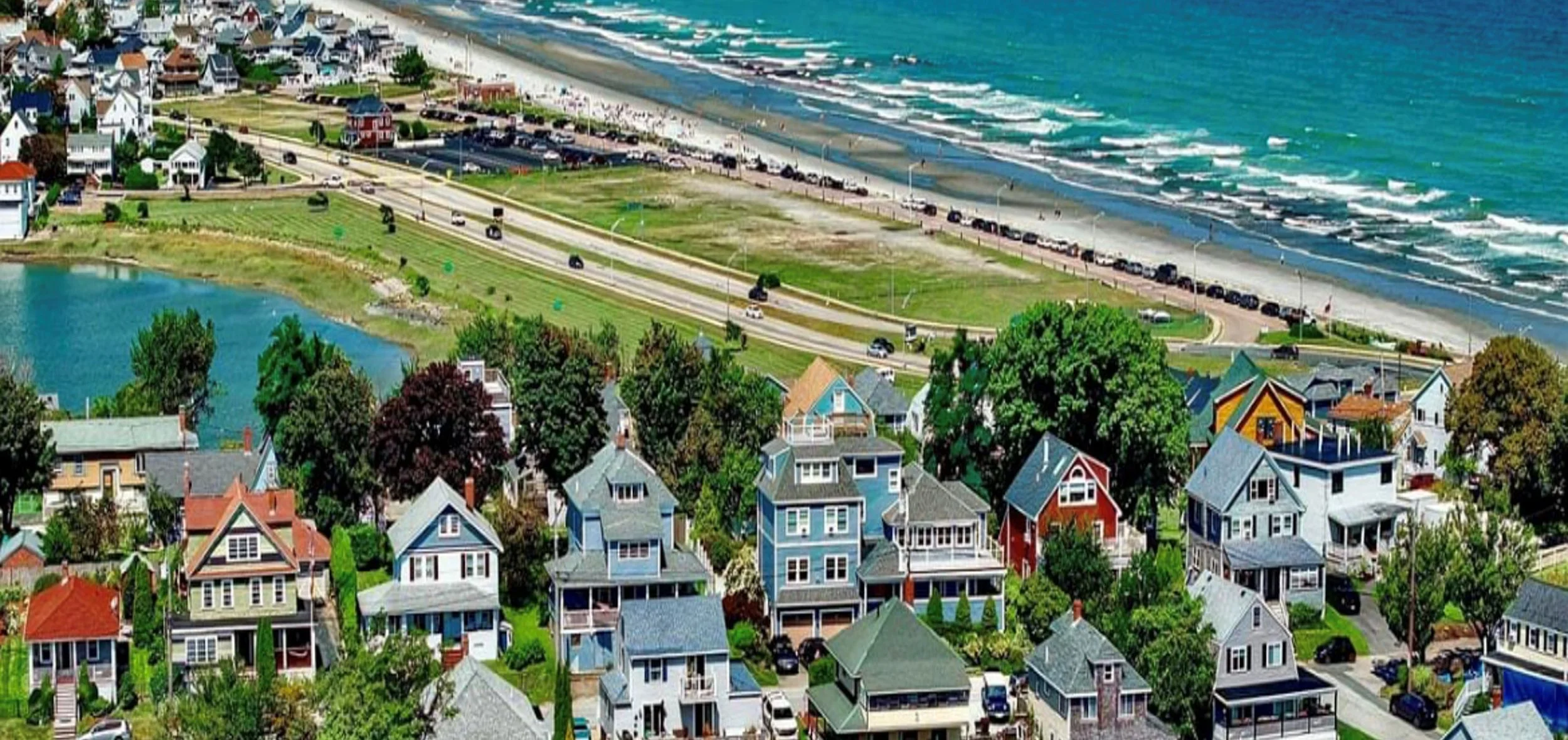
THE HULL REDEVELOPMENT AUTHORITY PROPERTY FROM SAGAMORE HILL. [PHOTO BY SOS HULL]
By Carol Britton Meyer
More than 40 people tuned into a virtual discussion of the potential for creating a “community green” on the Hull Redevelopment Authority property last Thursday night. The meeting was hosted by Save Our Space (SOS Hull).
SOS Hull Steering Committee member Jim Ianiri called the “Imagining the Nantasket Community Green: A land-use planning virtual session” what he hopes will be “the first of many conversations” about envisioning a park stretching from the ocean to the bay on part of the HRA land. Ianiri moderated the meeting.
SOS Hull champions “a strategic, sustainable, and community-centered land-use planning vision for the development of the HRA land,” with a focus on development that prioritizes open space, according to the group’s website, www.soshull.org.
At the start of the session, Ianiri gave a “shout-out to the many people who have already worked hard to preserve [open space] in Hull.”
Referring to the nearly 13-acre HRA property as “precious land in the [heart] of our peninsula,” he noted that “what happens there will affect everyone” and that amidst the “the openness and beauty of where we live, imagine a green [on which] to do all the things we love,” including special events and a number of other possibilities.
“This wouldn’t be an idle space, but rather vibrant, with hopefully a lot of action throughout the year,” he said.
Trust for Public Lands Senior Parks and Conservation Economist Jennifer Clinton and Wildlands Trust Executive Director/President Karen Grey shared their expertise on a number of topics related to such a vision – from land ownership and management options to coastal resiliency issues and the important value parks play in communities – as well as funding for any such project.
Grey went before the HRA last May at its request to talk about how the Wildlands Trust could play a stewardship role for the HRA property.
Dozens attend virtual meeting
The turnout of more than 40 participants included members of the steering committee and HRA, select board Chair Irwin Nesoff, Climate Adaptation & Conservation Director Chris Krahforst, and residents. No one from the HRA who was in attendance – including members Adrienne Paquin and Dan Kernan – spoke during the 90-minute session.
“The invitation to the meeting went out to all HRA board and select board members ahead of time,” SOS Hull Steering Committee member Susan Vermilya told The Hull Times in response to a follow-up email.
“The HRA was not involved in putting this together. The HRA has had it on their to do list to bring Wildlands Trust back into one of their meetings, but they haven’t done that yet. Hopefully hearing this presentation gives them some valuable information as they look at next steps,” she said.
In response to an inquiry from The Hull Times after the meeting, HRA Chair Bartley Kelly confirmed that the meeting “was not arranged in consultation with the HRA board. I saw the notice on Facebook and signed up, but was unable to attend,” he said. “Currently the HRA board is concentrating on the survey” to gauge citizens’ preferred uses for the property.
“Once we have the results, the board will try to reach a consensus,” he said. “Elected HRA board members will make the decisions” on what to recommend, based in large part on input from the community.
Clinton, who said she recognizes Hull as “a very special place,” explained the role of the Trust for Public Lands in partnering with communities to turn their shared visions for green space “into lasting reality.”
She noted that parks “help build social connections and deepen our sense of place.”
Clinton outlined ways in which parks can provide economic benefits to the communities in which they are located, according to Trust data:
• Cost savings as a recreational activity because they are free or low-cost;
• Improved public and mental health due to increased physical activity, “which reduces annual healthcare spending” – and reduced air pollution and carbon emissions;
• Enhanced property values – homes near high-quality parks and trails “have an increased value compared to the same home without nearby parks or trails,” Clinton said.
Other benefits, according to information gathered by the Trust, include reduced flooding impacts to public and private property, tourism, and small business spending by visitors and residents attending special events, concerts, and festivals on the proposed community green.
Nature-based solutions possible
Clinton also discussed the “green infrastructure” concept of nature-based solutions that protect or restore ecosystems by “relying on the natural environment to manage environmental, social, and economic challenges.”
Grey, who said she has visited Hull a number of times since she was approached by SOS Hull, said the role of the Wildlands Trust is to work with communities throughout Southeastern Massachusetts to permanently protect native habitats, native farmland, and “lands of high ecologic and scenic value that serve to keep our communities healthy, and our residents connected to the natural world.”
She expressed appreciation for SOS Hull members’ thoughtfulness in trying to do” what’s best for the HRA property.
She said the Wildlands Trust works in partnership with communities to “help them pursue their own open space priorities.” Community input plays an important role in the process.
Master plan creation is important
Grey also talked about the importance of creating a master plan for the portion of the property proposed as a community green as the first step in any such process.
“There absolutely should be plenty of seats at the planning table, including HRA members, town committees, [and citizens] to help determine what happens to this landscape,” Grey said.
The expected outcomes of such a planning process include a “community-wide shared vision for the land and the project that meets the objectives of the HRA, the Town of Hull, and its residents; a plan for future land ownership and protection; a project budget; an understanding of funding opportunities; and a road map for moving forward,” according to Grey.
During the public comment time, Paul Newman stressed the importance of having complete information available to share with the HRA, citizens, town officials, and others about the proposal – including potential funding.
He added that it’s important “to demystify [this proposal] for the HRA board and for them to know that this is a viable project, and to explain what we want.”
In closing, Ianiri noted that residents “are really concerned about this property and care about it, noting the “phenomenal turnout. I look forward to continuing this conversation.”
SOS Hull Steering Committee member Liz Kay mentioned “taking a leap of faith” and moving forward with the idea the “we can do this together and bring in a network to make it happen in collaboration with the HRA and the community. It’s not about what we can’t do, but seeing what we can do together,” she said.
Another resident mentioned the possibility of seeking Community Preservation Act funding to pay for part of any such project.
A recording of the meeting is posted on the SOS Hull website at www.soshull.org/imagining-nantasket-green-event-details.
“We will then invite all HRA board members to review it and welcome continued discussions on it,” Vermilya said.
For more information about the Wildlands Trust or the Trust for Public Land, visit www.wildlandstrust.org and www.tpl.org. The HRA maintains a website at www.hra02045.com.
Like what you’re reading? Stay informed and support our work with a Hull Times subscription by clicking here.
Do you have an opinion to share? Click here to write a Letter to the Editor.
© 2026 The Hull Times. All rights reserved.