
Survey reveals residents’ preference for open space, low-impact uses for HRA
/
SOURCE: HULL REDEVELOPMENT AUTHORITY
By Carol Britton Meyer
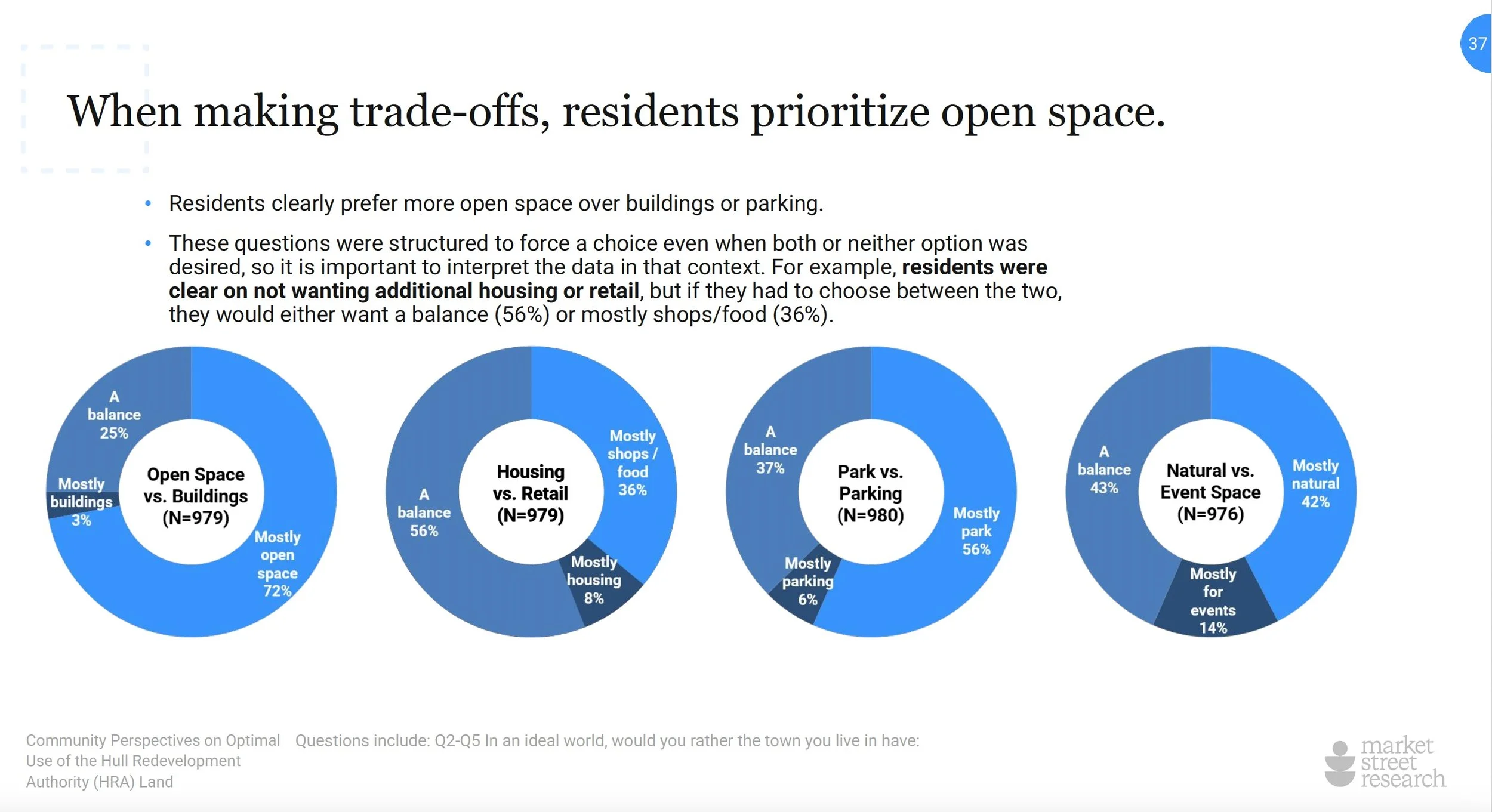
Most Hull residents responding to the Hull Redevelopment Authority’s survey about future uses of its property said they are not interested in large development and highly interested in open space, according to the consultant hired to conduct the townwide poll.
Market Street Research President Stephanie Gonthier this week presented the results, indicating the community’s preferred uses for the HRA property as an opportunity for the board and the public to make comments and ask questions.
At the beginning of Monday’s meeting, 38 people were participating in the Zoom call, including board members.
MSR – a marketing research firm that utilizes a customized approach – was hired to conduct the survey.
“This was obviously a complex topic,” Gonthier said. “The use of the HRA land is not simple.”
There were about 1,000 responses from among the approximately 9,000 registered voters with Hull addresses that the survey was mailed to – which is considered to be a very high response rate.
The key takeaways from the 37-page “Community Perspectives on Optimal Use of the Hull Redevelopment Authority Land” report included a preference for no intensive use or development of the property; maintaining open space with public access; and protecting the natural beauty of the property.
Click here for the full presentation of the survey results
The survey results are key to moving forward with the long-in-the-works Urban Renewal Plan to guide redevelopment of the parcel.
A survey goal was to understand current perceptions of Hull and the HRA property, including “familiarity with the land and general desires for Hull” and to assess residents’ priorities and concerns with the HRA land by measuring both broad goals (general character of the area) and specific goals (particular land uses), as well as how potential land uses may work together.
While most respondents indicated they are familiar with the HRA property, just under 1 in 4 residents “feel very familiar with the current HRA planning process.”
SOURCE: HULL REDEVELOPMENT AUTHORITY
Ready for the end of this process
The results revealed in part that residents are “ready for the end of this process with the HRA land, not interested in large development, and highly interested in open space that supports community and nature.”
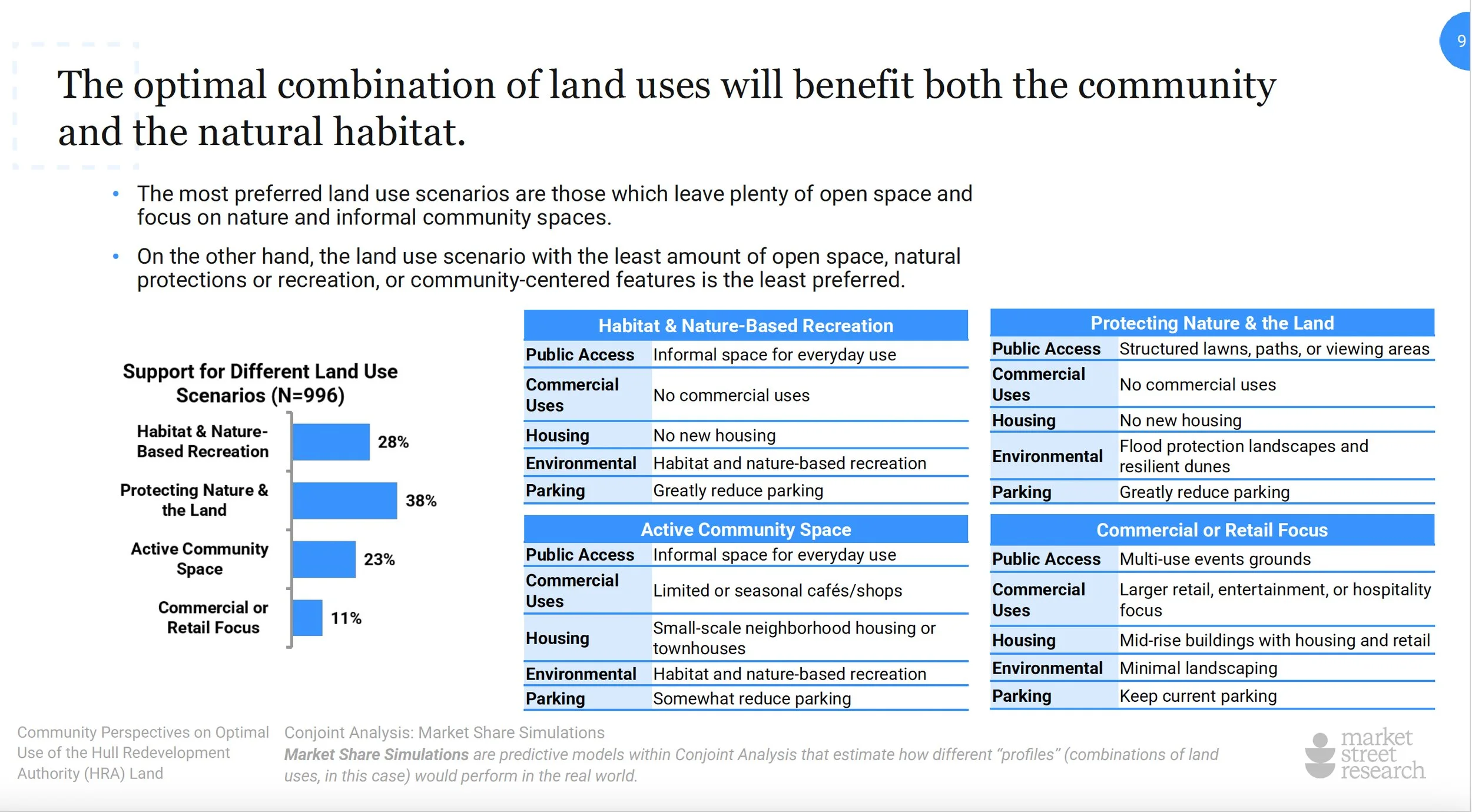
On the other hand, “the land-use scenario with the least amount of open space, natural protections or recreation, or community-centered features is the least preferred,” according to the report presented to the authority.
Beyond just the HRA property, some residents consider commercial – especially larger retail, entertainment, and hospitality – or new residential buildings as “diminishing the character of their community,” and sizable buildings and housing “are not appealing to residents.”
The survey results also show that respondents are overall against private ownership of the HRA land “because they doubt that would lead to decisions made in the residents’ best interests.”
Public open space and year-round community uses are among the most appealing to survey respondents, as well as protecting the dunes, natural habitat, and green space.
Maintaining neighborhood character
“Neighborhood character is important to residents; they don’t want to lose what they feel makes Hull unique or a desirable place to live,” the report states. One comment expressed interest in maintaining “the traditional character of our quirky little seaside gem of a town.”
There’s also a preference for open space that can serve multiple purposes, including gatherings, and a desire for natural open spaces and environmental protection.
“The least appealing use was adding new housing,” Gonthier said.
When Gonthier asked the board for feedback or whether members had any questions, member C. Anne Murray said she would like to hear Chair Bartley Kelly’s reactions and thoughts as a longtime HRA member.
“The responses were pretty much what I thought they would be,” he said. “Now the board has to grapple with how to balance the wants and needs,” including how to fund the cost of maintaining open space and other priorities outlined in the survey results once the board decides on next steps and what direction to take heading into continuation of their work on the urban renewal plan for the property. This project has long been delayed for a number of reasons, including waiting for the survey results.
The first priority, Kelly said, is to “take the data we know in our hearts and from the community and as a board decide what direction we should go in. We’ll need to fit the pieces of the puzzle together so we have some kind of plan moving forward to accomplish different objectives, especially the ones pointed out in the survey results.”
Hiring a consultant a possibility
The board also talked about possibly hiring an urban planner, landscape architect, or other consultant once a consensus is reached to provide guidance through the URP process, based in large part on the survey results.
Resident Susan Mann called the results “good news” and agreed that hiring someone to help with the planning is a good idea. However, she questioned whether hiring an urban planner would be the right decision since the URP requires approval by the state – which might be looking for certain things in an urban plan that you might not be able to give them at this point, she said.
It was also noted that there are various groups such as the Wildlands Trust and others that the HRA could partner with, and grants that the HRA might be able to access.
MSR’s recommendations based on the survey results included keeping the land open, supporting a sense of community by using the HRA land as a space that everyone can enjoy, and protecting nature.
“We have our work cut out for us as we move on to the next steps,” Kelly said.
MSR submitted the lowest bid of $22,000 and aligned most closely with the solicitation of services for a townwide survey design and analysis issued by the HRA earlier.
Services included working with HRA members on the design of the survey questions and format, survey response optimization features, analysis of response data, and submission of the survey report this week.
Like what you’re reading? Stay informed and support our work with a Hull Times subscription by clicking here.
Do you have an opinion to share? Click here to write a Letter to the Editor.
© 2026 The Hull Times. All rights reserved.