
Citing high cost, light board votes to discontinue rental of rarely used winter generators
/
Richard w. green photo
By Carol Britton Meyer
As part of a four-hour meeting July 16, the light board voted 3-2 against installing generators as a townwide backup for the upcoming winter in the event that both National Grid circuits feeding the peninsula from Hingham are out of service.
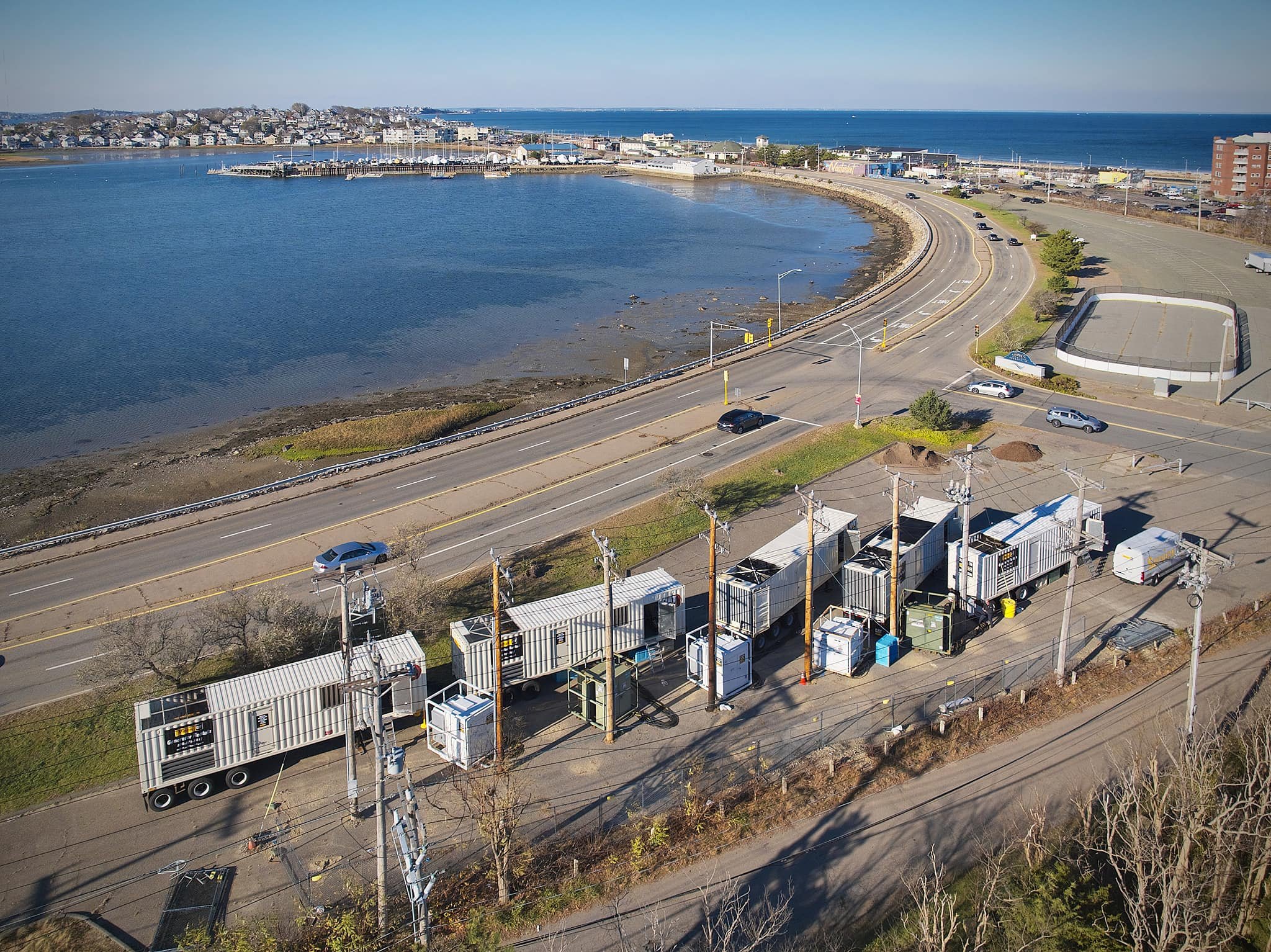
The rented generators, which were installed in December 2020 during the pandemic emergency and every winter since, are located at the Department of Conservation and Recreation parking lot at the end of Rockland Circle and can take up to four hours to start and come online, depending on conditions and the status of the light plant’s internal system, according to Operations Manager Mike Schmitt, who made a presentation to the board.
“The generators allow residents to shelter in place safely during winter storms,” he said during the lengthy discussion. “They also protect vulnerable populations such as the elderly or medically dependent as well as maintain critical services – water, heat, and medical facilities.” The generators aren’t utilized during short outages because of the time it takes to get them up and running, and cannot be used for spot outages.
The generators have operated only twice since they were installed – for a total of about seven hours – at a cumulative cost of $4.8 million.
The cost to install the temporary generators for the 2026-27 winter season would be roughly $1.3 million due to additional equipment and price increases, compared with a cost of $860,000 last winter.
“There’s strong competition for these generators – they can’t be built fast enough to meet the demand,” Schmitt noted.
This would have increased the ratepayer generator surcharge from $10.43 to $17.60 per month for 12 months – or about $211.20 per year – in addition to the $9.11 monthly customer service charge, which is in place with or without generators.
With the majority of the light board voting not to install the generators this winter, the $10.43 surcharge will come off ratepayers’ bills at the end of September.
Schmitt told the board that the risk of a multi-day outage remains possible.
“We’ve been lucky so far,” he said. “It’s a gamble.”
Before the vote, Town Manager/Light Plant Manager Jennifer Constable noted that ratepayers would need some time to digest “all [this] new information” if the board approved the installation of generators.
Commissioner Stephanie Landry – who along with Commissioner Dan Ciccariello voted in support of continuing the use of temporary generators this winter – suggested surveying ratepayers before making the decision, but with the August deadline looming, that was not considered to be a viable option.
Commissioners Jacob Vaillancourt, Mark Kohn, and Chair Thomas Burns voted to discontinue the use of generators for this year.
Burns said that he is “not in favor of governing by survey. We’re elected to make decisions. Sometimes they’re easy, sometimes not quite so easy. Nearly $5 million is gone for seven hours of generator usage. The cost of a new feeder line would be in the range of $5 to $10 million.”
A number of other factors also weighed into the board’s decision to discontinue generator use, including what Schmitt called the “good news” that National Grid has done some significant tree trimming, pole raising, and hardware work to help minimize the risk of a future outages, and the withdrawal of the light plant’s legal action against National Grid and the resulting inability to seek recovery of generator costs.
Public feedback at the meeting related to the age and condition of the National Grid conductors serving the town; the potential outage duration if generators are not installed this winter; the exposure of businesses and town departments during an extended outage as well as homeowners; the history of the generators’ performance over the past few years; potentially redirecting program funds toward longer-term resilience investments such as new feeder lines or local generation; and the value of peace of mind when the generators are installed.
“The board is not here to give everyone a soft, fuzzy feeling that everything will be fine,” Burns said in response to the last comment.
In other business
• On a 4-1 vote (with Landry in opposition), the board approved testimony in support of the home-rule petition to submit town meeting-approved Article 40 to the state Legislature for action. The purpose of the article was to remove the town manager from the light plant manager role.
Both Article 40 in the spring town meeting – which was approved by a 236-82 vote – and Article 37 of the 2025 town meeting (approved by a 116-83 vote) would revert to the light plant management setup that was eliminated in 1993 when town meeting amended the town’s charter.
The charter change requires approval by the Legislature; last year’s proposal remains in a committee at the state level.
• Schmitt reported on interim storage options for the incoming line truck expected in October and said that a solution will be in place before the truck arrives. Under discussion are two potential rental locations in Hull, and reconfiguration options at the light plant location at 15 Edgewater Road – including relocating a door, removing shelving, and modifying a garage overhang – are being evaluated. Costs for these changes is not currently available.
• Burns and Vaillancourt presented an analysis of the 15 Edgewater Road site following the board’s unanimous vote of November 20 to propose a capital project to fund a garage at that location to store fleet vehicles, designed for solar orientation and to complement the historic nature of the existing light plant building.
Board members have repeatedly voiced opposition to the proposal currently under consideration to combine the light plant’s headquarters and the Department of Public Works into one building at the current DPW site.
Also last week, the light board authorized a professional feasibility study, at a cost not to exceed $110,000, covering a cost estimate and conceptual site plan for the garage; flood protection and preservation feasibility for the historic Edgewater Road building; a determination of the applicable historic preservation requirements; and a like-for-like comparison of protecting operations in place against relocation, and other considerations – with findings to be presented to the light board for further action.
Like what you’re reading? Stay informed and support our work with a Hull Times subscription by clicking here.
Do you have an opinion to share? Click here to write a Letter to the Editor.
© 2026 The Hull Times. All rights reserved.