
Battery storage at former dump could supplement operation of Hull’s aging electrical system
/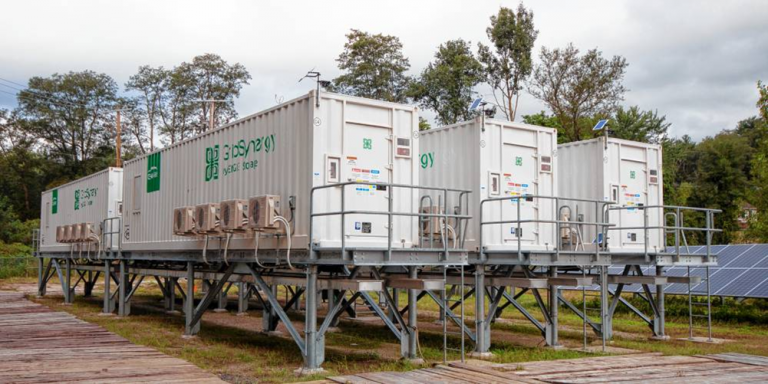
Holyoke Gas & Electric’s Mt. Tom Energy Storage System, which was developed in partnership with MMWEC, is similar to what is being considered for the former hull town dump.
By Carol Britton Meyer
The light board this week voted to further explore building a battery energy storage system to supplement the town’s electrical system, which could include installing a “microgrid” at the former town landfill.
On Monday night, the Massachusetts Municipal Wholesale Electric Company presented an analysis of potential battery energy storage and the timeline for such a project. MMWEC assists Massachusetts municipal light departments like Hull’s with their needs to contract for energy and is pursuing several similar projects with other municipal light departments across the state.
Without mitigation, the Hull Municipal Light Plant faces increased risk of outages and brownouts before or by 2027, according to light board members.
A representative from MMWEC, Jason Viadero, suggested the presentation be made in executive session during the board’s Zoom meeting, with a recap for the audience once the meeting reconvened. The Open Meeting Law and Massachusetts General Laws, Chapter 164, which governs the light plant, allow for private meetings on competitively sensitive energy and financial matters.
Light Board Chair Tom Burns’ update to the audience (about five citizens) after the lengthy executive session was brief: “The board voted to authorize the light plant manager to enter into negotiations with MMWEC to continue pursuing battery energy storage systems as outlined. As more information becomes available, we will release the specifics necessary for the public [to know].”
MMWEC’s presentation Monday night was a follow-up on a report presented by the light board’s electric capacity planning task force last fall that included recommendations for near-term reliability and capacity mitigation. The task force reported that a battery allows staged load pickup and a clean resynchronization, rather than relying on diesel generators during an outage.
Feeder line failures
Past failures of the feeder lines, which pass through remote areas of Hingham, led the light plant to rent townwide generators to supply electricity during an outage caused by failure of the National Grid lines – beginning in 2020 through last winter.
However, the light board recently voted 3-2 to not install the generators this winter for a number of reasons, including expense and the fact that they were used for only about seven hours during that time at a cumulative cost of $4.8 million.
According to the agenda, the lengthy executive session discussion included “proprietary financial information,” including MMWEC’s analysis of the responses to the light plant’s request for information regarding battery energy storage and “trade secrets or commercial or financial or confidential, competitively sensitive or other proprietary information, the disclosure of which would affect HMLP’s ability to conduct business pursuant to [Massachusetts General Laws], Chapter 164, and which the HMLP board has determined . . . will adversely affect the HMLP’s ability to conduct business in relation to other entities making, selling, or distributing electric power and energy pursuant to [Massachusetts General Laws].”
At the time of their presentation last fall, the task force recommended exploring the possibility of installing a battery-backed “microgrid” at the former landfill to “shave peaks and hold to under 17.5 MW until feeder upgrades are made, and to provide enhanced storm resilience with safe, staged load pickup and clean re-sync.”
Hull is served by two National Grid feeder lines (10 megawatts and 7.5 megawatts). MMWEC was then asked to assist the board in addressing this issue and the availability of funding.
In other business
The light board tabled a motion requesting light plant financial records from the light plant manager until their next meeting, including:
• Complete monthly statements – not just summaries – for every bank, depository, or investment account in the plant’s name or held for its benefit, including the operating cash account, the depreciation fund, and any customer deposit account;
• Monthly statements for plant funds held in pooled or commingled town accounts, with the town treasurer’s cash book entries and allocation schedules showing the plant’s monthly share;
• Monthly account or participant statements for all plant funds held by or through MMWEC, including the purchased power working capital, rate stabilization, pension reserve, PASNY (Power Authority of the State of New York – financial mechanisms managed by MMWEC) and Other Post Employment Benefits trust funds.
• Monthly reconciliations of the plant’s general ledger cash and fund balances for specific records;
• A registry of all transfers of plant funds to or from the town or between plant accounts, showing date, amount, purpose, authorizing official, and warrant or voucher reference; among other requests for information.
The light board also requested that moving forward, Town Manager/Light Plant Manager Jennifer Constable provide the items in the first four bullets above monthly, within 10 business days of receipt or preparation, and that compliance with these requests appear as a standing item on the light board’s agenda “until production is complete.” The account numbers on the accounts will be redacted.
Constable said she thinks the requests are “excessive” and suggested that any light board member with specific questions about light plant records arrange for a meeting with her and the finance director.
“It would be helpful to have a conversation about what and why information is being sought so it can be narrowed down,” she said. “This is not a small request and would be taxing on town staff,” noting that some financial information is already provided to the board.
Tabling the motion to request the above records will allow time for Burns and member Jake Vaillancourt, Constable, Operations Manager Mike Schmitt, and the town’s finance director to meet to discuss which of these requests could be more easily met and which would require more time.
The idea is to hold that meeting in time to report their findings at the tentatively scheduled August 6 light board meeting.
Vaillancourt said looking over the 2024-25 light plant minutes raised questions in his mind about payments to a particular vendor.
“I want to see that history … I haven’t seen a regular cadence of financial reporting, and that is what [these requests are] getting to,” he said.
There were no comments or questions during the public comment period at the meeting.
Like what you’re reading? Stay informed and support our work with a Hull Times subscription by clicking here.
Do you have an opinion to share? Click here to write a Letter to the Editor.
© 2026 The Hull Times. All rights reserved.