
Beach traffic, Prohibition, and political intrigue – how Hull celebrated the summer of 1926
/By John J. Galluzzo
For the first time ever, no Civil War veteran attended the Hull Memorial Day ceremonies. It had been 61 years since the end of the war and with the death of John W. Jordan of Kenberma in 1925, an era had come to an end. World War I veterans from the Oscar Smith Mitchell Post, American Legion, took the honor in the parade, joined by members of their Auxiliary, Sons of the Veterans of the Civil War, and the local Girl and Boy Scouts. The Memorial Day ceremonies typically heralded the coming of grander summer festivities throughout the beachside community.
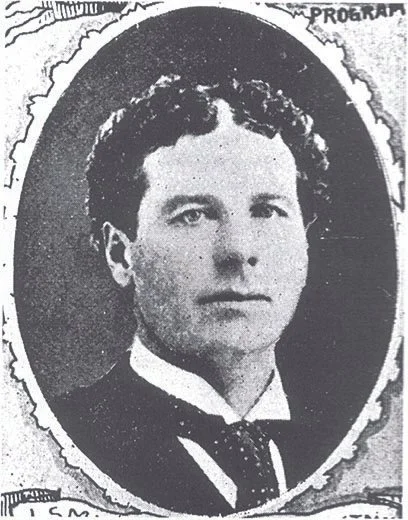
THE OLD BOSS: In July 1926, Hull selectman and political boss John Smith died. He had been a member of the board of selectmen since 1893, and led the political organization known as the Citizens Association, known informally as the ‘Old Ring.’ [Photo courtesy of the Hull Historical Society]
Hull summers, though, had become more volatile of late. The constant sting of liquor raids had put a label on the Nantasket resort businesses. For some, of course, the notion that liquor could be found at the beach at the height of Prohibition made it a destination. Crowds surged each summer, with many individuals gambling that they wouldn’t be the ones to get caught with booze on their breaths. As the 1920s progressed, it became an increasingly risky game.
Still, on June 1, 1926, prospects for a healthy summer season looked good. Houses were selling, at Holbrook Avenue, S Street and Hillside Road. All along the peninsula, real estate transactions hinted that Hull was still a desirable place to be.
School was still in session. Robert Brown, son of Mr. and Mrs. Fred Brown of Nantasket, was having a breakout season for the Hingham High School baseball team. In years to come, he would be known as “The Hull Howitzer” Bobby Brown, ace of the Boston Braves, but for now he was just Robert, a freshman making a splash. As he did, the Boston papers began reporting on the long list of summer arrivals from all around Greater Boston. Houses were unshuttering, sunlight shining on rooms long locked up.
David Stone announced that his Paragon Park ballroom would hold a special dancing social the first Saturday in June, but most Hull news remained confined to the Village throughout the month. The most shocking news of all was that Bob Smith’s barbershop had closed and become – gasp! – an ice cream parlor. The old landmark had been in place for as long as anyone could remember; when the town’s Civil War veterans returned home from the fight in 1865, they went to Bob’s for haircuts and shaves. So, too, did the Spanish-American War soldiers and the Doughboys of World War I. And now, Bob’s was gone.
The Commonwealth of Massachusetts announced that work on the “Nantasket Road” would begin immediately. The road in question was not in Hull but started in Quincy and passed through Weymouth and Hingham on the way to Nantasket Beach. It had become increasingly congested during the summer months as more Americans took to automobiles for day trips to the beach from Boston and the surrounding towns. Why the state decided to complete the widening project between June 5 and September 1, when traffic would be at its heaviest, was not explained. Road closures began immediately.
Hull was reachable by other means, though, and none was more pleasurable than steamboat excursions. Boston companies and clubs had long been planning their summer outings to Nantasket Beach and oftentimes their journeys started at city wharves. The Proparvulis Club, a nonprofit women’s organization founded in 1922 that would volunteer at the Sunset Camp for more than 90 years, announced they would hold their informal supper dance at the Pemberton Inn on June 14. “Proparvulis” meant “for the little ones,” and all proceeds from the dance would go to support “delinquent children of Boston” through the Catholic Charitable Bureau. By the time they arrived, the American Mutual Liability Insurance Company’s 500 employees would already have visited the beach.
The Boston Automobile Dealers’ Association, of course, chose to brave the roads on June 9. Each year, the Association paraded 2,000 children to Nantasket Beach in between 10 and 80 brand new cars in what was one of the most high-profile publicity stunts of the summer season. Decorating the cars, they even gave the kids noisemakers to draw more attention. The children, gathered from orphanages, hospitals, and other places in Boston, spent the morning at the beach, gathered for a five course “shore dinner” at the Nantasket Hotel, then returned home, exhausted, before the sun was down.
As a rash of unexplained fires broke out at as-yet unoccupied summer homes, Fire Chief Henry J. Stevens unveiled the town’s new motor ladder truck, the latest model, at the Central Fire Station. News dropped that the state would not open its Nantasket bathhouse until July 1, with Revere opening on June 12; it was yet another sign that Nantasket’s allure was slipping away. The Hull Athletic Association began lining up its baseball schedule for the summer and something even newer was added. Jimmie Gallagher and his orchestra, Ray Stewartson and his orchestra, Doc Eisenberg and his orchestra and the Paragon Park Military Band would begin broadcasting weekly dance music programs live from Nantasket Beach on WNAC radio. For the first time ever, if you couldn’t get to the beach, you could listen in and pretend you where there.
Or you could just read the Boston papers. Mid-June saw the eruption of a scandal, the likes of which had not been seen in years. A group of Cambridge High and Latin seniors left their prom on the M.I.T. campus, drove to Hull, broke into a summer cottage, started a fistfight and got caught with a pint of gin in hand. The next day, the school’s superintendent admitted that “for about a year there has been a suspicion in the minds of many that gin has been and is being sold in the corridors and coat rooms of the Cambridge Latin Building.” Students uncovered the details, fingering five boys who worked on commission, selling gin at $2 a quart. Some even went as far as saying that students were known to get drunk in school. The federal government took notice.
On June 13, Nantasket Beach witnessed the first big beach day of the season, as 150,000 people thronged the sands, with 70,000 automobiles passing in and out of town. The Hull Police took closer notice of speeders. The Nantasket Beach Steamboat Company added additional trips to the Boston-Pemberton-Nantasket route for upcoming Saturdays. On June 17, 175,000 people and 80,000 cars reached the beach. On June 18, a sixth unexplained fire broke out in a summer cottage, this one on Edgewater Road. Hull Lobstermen that same day lauded their first great hauls since 1917.
The liquor raids started on June 20. Hull Police Chief Frank Reynolds, Sgt. William Armour and patrolmen Glawson, Sousa, Manley and Bergan charged into two cottages owned by Joseph Ykainos and seized 100 gallons of beer, two gallons of whiskey and a copper still. That day, more than 85,000 cars carried 100,000 people to Nantasket Beach. Despite what the state said, Hull’s summer was under way well in advance of July 1.
So, too, felt the Massachusetts Society of Certified Public Accountants, which threw a bash at the Pemberton Inn, and the Travelers’ Insurance Company, which chose the Atlantic House. The Maryland Casualty Company brought more than 100 to the Atlantic House the following day and the R.H. Stearns Company of Boston just told its employees to get on a boat for a sail to an unannounced destination. When they landed at Pemberton, the crowd was overjoyed.
As July approached, the locals celebrated the graduation of young Lillian M. Jacobs from Hyannis Normal School, ready to embark on a career as a schoolteacher on Martha’s Vineyard. The concept of zoning – new to Massachusetts in 1918 – forced a special town meeting for Hull’s year-round residents. Disgruntled Hingham Water Company customers gathered in Temple Israel Community Hall to voice their opinions and, in fact, start a petition. The water company countered by saying that if their estimates no longer worked for their customers, the company would install water meters at each home. That was bad news for the K Street Zouaves, the volunteer fire company, who figured they could no longer practice their craft with garden hoses lest it become too expensive.
On June 28, Sgt. Armour and Officer Titus O. Jacobs raided a cottage on Berkley Road and nabbed “a large quantity of moonshine and other hard liquor.” That same day Chief Reynolds and a squad of men raided a home “in the Bay Street section” and arrested two men and nine women. The women claimed the men broke in and refused to leave. The men were detained and booked, the women allowed to walk free.
The state bathhouse opened on July 1, and the summer officially began.
On July 3, Sgt. Armour pulled over a car of five young men he’d been watching closely for several weeks. Finding a loaded .45 caliber revolver in the automobile, he arrested them all. That night, Fourth of July festivities began with a “night before ball,” with word that the next day Louis E. Timson, a Swampscott resident, would swim from Nantasket Beach to Blaney Beach in his hometown, a journey of about 18 miles.
That night, between 2 and 6 a.m., Hull police, aided by Metropolitan District Policemen, arrested 39 people on drunkenness, disturbing the peace, disorderly conduct, operating while under the influence of liquor and keeping and exposing liquor. The owners of 20 Hillside Road and 266 Nantasket Avenue were taken into custody with evidence of the liquor charges against them. That day 125,000 cars headed for Nantasket Beach. The next day, 300,000 people hit the sands.
Chief Reynolds said that in his 30 years of service to Hull, he had never seen such a large and disorderly crowd as he had that weekend. More than 50 people were arrested. Sixteen false fire alarm pulls and deliberately-set fires kept the new Hull engine running around town. Three men beat traffic officer George Eaton unconscious at Gunrock Beach. Numerous people reported to the Hull and Metropolitan District police that they had been held up at gunpoint. No one was ever captured to face those charges.
All of this led to Arthur Crowley Night at the Palm Garden. Arthur, the son of Boston Superintendent of Police Michael Crowley, had served in World War I and befriended a young ballplayer of the time, Babe Ruth. The Babe promised that he would get special dispensation from his manager with the New York Yankees, Miller Huggins, to break free from the regular season grind and attend the party at Nantasket with Governor Alvah Fuller, Ex-Mayor James M. Curley, sheriffs, senators, lieutenant governors and radio personalities from WEEI. Judging by the box score, he didn’t make it. He did, though, hit his 27th home run of the season that day, in Cleveland. Perhaps he pointed toward Nantasket Beach and called his shot for Arthur.
On July 11, 180,000 people visited Nantasket Beach, 2,000 of them utilizing the enlarged state bathhouse. Buses joined the parade, with special “flyers” dispatched from as near as Wollaston and as far as Fitchburg. As congestion worsened, news broke that federal officials were targeting “gambling and bootlegging” at Nantasket Beach.
Five days later, Miss Irene Spellman, 18, “a bobbed-haired beauty of 159 Western Av., Allston,” said The Boston Globe, won the title Miss Nantasket at Paragon Park, standing out from 300 other contestants. Band concerts started at the state reservation pavilion on Thursday, Saturday, and Sunday afternoons and evenings.
On July 18, the news came hard and fast. Two hundred and fifty thousand people choked the beach, 50,000 of them entering the water. More than 150,000 cars lined the streets. Thirty children lost their parents in the crowds, the local police reconnecting them. Chief Reynolds led his second raid on 266 Nantasket Avenue, again arresting the owner, seizing 84 quarts of Canadian ale and an undisclosed amount of whiskey. At 6 p.m., lightning struck the electric train of the Nantasket Branch at Allerton, terrifying the hundred or so passengers, but causing no injuries.
That night, Boss John Smith died.
Smith, elected to the Hull Board of Selectmen in 1893, had led the formation of the Old Ring, a political machine that held every office in town for the past quarter century. During his tenure, Hull became famous for its roads, a project he personally undertook. Behind the scenes, out of sight of the vast majority of the community, the members of the Old Ring would fight to replace him.
Smith’s foresight had built the streets on which the cars bow traveled, bringing thousands of dollars into the community each summer. The Brockton Enterprise, meanwhile, exposed what that truly meant in 1926. “‘Wet and wide open is the report of the federal agents who have been mingling with the crowds,” read the paper’s editorial entitled “Nantasket Needs Scrubbing” on July 19. “Not the moisture of the rolling surf, nor the open door of hospitality, but the wetness of the bootleggers and the vicious arrogance of gambling and vice, if the agents tell the truth. At Nantasket, as everywhere, these elements are in the minority. They thrive only because of indifference or assent. Tolerance of this sort isn’t good business, apart from other reasons which readily suggest themselves, for unless the blackguards are driven out Nantasket will decline in popularity and prosperity.”
The descent had already begun. Ironically, Deputy Superintendent Thomas F. Goode of the Boston Police Department suffered a nervous breakdown trying to work out the nightmare traffic situation in the city. His doctor told him he could use some time off in a nice quiet place, somewhere like Nantasket Beach. On July 22, which proved to be the hottest day yet of the summer, the Globe reported that “Never in the history of Nantasket were so many automobiles parked at the open grounds bordering the state reservation highway.” Each week brought a new record.
And still the groups came: the Clinton Chamber of Commerce, the Framingham Rotary Club, the Caecilian Guild, the Omar Grotto, the Chickering Piano Company, the Rose Rat Exterminator Company. Some wanted out; the Surfside Amusement Company, midsummer, put their large dance hall, bowling and billiard room, flying horses, stores, stands, 16-room house and cottage, and 33,000 feet of ocean front land, up for sale. State Representative Thomas J. Griffin of Abington wanted to double down, calling for state funding to rebuild the Nantasket Reservation roads.
As August arrived, the Hull Citizens’ Association, the Old Ring, posted Henry John Stevens, chief of the fire department, for the empty selectmen’s seat. No matter who opposed him, he would win, even when that “who” was John L. Mitchell. Mitchell, Stevens’ predecessor, and a former partner in a coal business with John Smith who had fallen out of favor with the Old Ring, had served two terms as state Representative. James Griffith, former manager of newspaper titan Floretta Vining’s estate at Stony Beach, suddenly reemerged in town, indicating his intent to run for Boss Smith’s seat as well. Mysteriously, Mitchell pulled out of the race the day papers had to be filed.
Tides turned at the beach. Numerous bathers found themselves in strong undertows in early August or knocked down by enormous breakers. Rescue stories abounded. On Saturday, August 7, fog engulfed the harbor tightly, steamers running hours late. The next day, as if to make up for lost time, 275,000 people invaded the beach in 190,000 cars, with the local police once again declaring it “the biggest day of traffic yet recorded here.” Strong tides – the strongest witnessed in years – deposited kelp in unheralded quantities on the beach. “The beachcombers and others who find delight in gathering driftwood and other gifts of the sea,” said the Globe, “have been in their element, for much has been tossed along the coastline.”
As summer would down, several new projects reached their happy conclusions. Mrs. Bowen Tufts of Winchester and Allerton Hill presented a play with a cast of summer residents, “A Mid-Summer Night Surprise,” at the Municipal Building with more than 1,000 attendees. On August 17, Prince Toumanoff, a member of Russian royalty living in Hull Village, presented a concert of Russian and American music performed by the Balalaika Orchestra on WBZ radio. Paragon Park joined the beauty pageant business, crowning Miss Rella Harrison of 258 Warren Street, Roxbury, Miss Paragon on August 20. On August 21, the Catholic Charity Bureau staged training camp work and boxing exhibitions featuring George “Kid” Lee, Lou Bogash, Rocky Stone, Johnnie Vacca and Ray Cross to raise money for the Sunset Point Camp.
On August 23, Henry Stevens soundly defeated James Griffiths for selectman, winning 748 of the 787 votes at the first-ever special election held in Hull history.
Summer rapidly drew to a close. On Friday night, August 27, the 19th Annual Hull Gala Day committee arranged a “night before ball” at the Pemberton Inn for 1,200 dancers, coincidentally the same night that 1,000 party-goers attended the annual Firemen’s Ball at the Municipal Building. As both celebrations swung into the night, a severe electrical storm arrived. The Firefighters’ Ball closed early as an alarm sounded and all eyes suddenly turned toward the bay, where the USS Nitro was loading munitions from the Hingham Ammunition Depot on the Back River. Suddenly, its presence caused Hull residents to start counting down the days until its departure for Yorktown, Virginia.
The Hull Gala Day celebration took place on August 28 with races, junior baseball games, golf putting, quoit pitching, tennis, field events, free movies and gifts for children. Aquatic events took place at high tide, in the afternoon, with an illumination of Quincy Bay sponsored by the Boston Yacht Club punctuated by Gala Day fireworks. On Sunday the 29th, 280,000 revelers took their turn at Nantasket Beach.
All that was left was one last fling. One last rumrunning story floated throughout town. A well-known bootlegger sadly told of how he had passed through Hull Gut and past the Coast Guard ships all dolled up for the harbor illumination, figuring that a drop off while the Coasties were otherwise engaged would be wonderful strategy. Out he went offshore to pick up the goods; in he came to the prearranged drop site. No sooner had he pulled ashore than hijackers held him and his men at gunpoint, absconding with the booze. Labor Day parties might be drier than usual this year in Hull, he lamented.
On Thursday, September 2, 60 Massachusetts State Policemen descended on Nantasket Beach, raiding 16 different establishments: the Worrick Inn, Randolph House, Pacific House, Foster House, Straits Pond House, the Randolph Club, Checker’s Lunch, Checker’s Garden, Porrazzo’s barbershop, the Surfside House, the Marlboro House, the Kearns House, the Piedmont House and, of course, 260 and 266 Nantasket Avenue. They arrested 15, six of them women.
Labor Day weekend arrived and The Boston Globe reported that fewer than 3,000 people visited Nantasket Beach. Throughout the weekend, Hull police continued their raids, cleaning up what was left of the illegal booze.
As the Globe poignantly stated in its Labor Day article, “The ‘No Business’ sign was hung out today at Nantasket.”
Like what you’re reading? Stay informed and support our work with a Hull Times subscription by clicking here.
Do you have an opinion to share? Click here to write a Letter to the Editor.
© 2026 The Hull Times. All rights reserved.