Meet the life-saving Hullonian whose decades of blood donations add up to more than 27 gallons

NEWSWORTHY: Scott Belgard met WBZ News Anchor Lisa Hughes at the annual 9/11 blood drive at Fenway Park. His blood donations total more than 27 gallons. [Courtesy photo]

Submitted by Mike Milner, Blood Donation Coordinator

Knights of Columbus Council #4865

“Wow, this is huge!” – that was my reaction to one of our Hull neighbors who was checking into our recent blood drive the end of May.

In my 50+ years of working with blood donation programs, I have never seen someone who had recorded 222 units of blood given on my check-in roster! I knew that I had to let everyone know about this milestone, so I asked Scott to tell me a bit about his journey to 27+ gallons of donated blood. I also had to tell my contacts at the regional office of the American Red Cross to get their reaction.

As Scott shared with me that day in May, his 50+ year blood donation journey started when he was 18 years old when he joined his father at his Jewish War Veterans Post 302. His Dad had asked him to come along to meet his fellow veterans and so they traveled to a donation center on Huntington Avenue off the Jamaicaway.

His Dad said to him, “Hey son, you’re 18 now and eligible to donate blood. Go ahead and give it a try.” So he climbed aboard one of those very comfortable, green contoured benches and made his first blood donation. He didn’t know that this first donation who become a lifetime commitment to give the “gift of life.”

Scott also said that in 1978, his commitment became very personal as his Dad was undergoing bypass surgery. He offered up a unit of blood to the blood bank at Beth Israel Hospital in case his Dad needed it! His Dad didn’t get his blood, but Scott knew that someone in the hospital that day was helped.

He donated on a regular basis over the years, setting a goal to donate the maximum amount of whole blood he was allowed. He got to know the staff of the Weymouth Red Cross blood donation center well and even got to meet some of the local Boston radio personalities who were promoting local drives. The WBZ Blood Brotherhood events gave him the chance to also meet WBZ news anchor Lisa Hughes at the annual 9/11 drive at Fenway Park.

In my role as a local blood drive coordinator, I have made some connections at the American Red Cross headquarters here in Boston. Knowing that Scott had just donated his 223rd unit to help our blood drive meet our local goal of 40 units, I just had to tell someone.

“Scott’s commitment to blood donation is truly inspiring,” said Kerrie Ann Jack, regional donor services executive. “Reaching more than 27 gallons is an incredible milestone, but what makes his story especially meaningful is that he began donating at 18, encouraged by his father to give back to others. His lifelong dedication is a powerful reminder of the impact one person can have, and we’re grateful for Scott and all the donors who help ensure blood is available for patients in need every day.”

As a reminder, a single whole blood donation can be separated into components that benefit patients in various ways. Whole blood, like what is collected at our town blood drives, is often used to help save those involved in traumatic accidents. Packed red cells help replace lost blood during surgery, platelets aid those with blood clotting disorders, and other blood components provide specific clotting factors for inherited conditions such as Von Willebrand’s Disease and hemophilia. White blood cells can also be processed and given to individuals struggling with difficult infections. In essence, one blood donation can save multiple lives.


The Hull Knights of Columbus Council #4865, under the leadership of John Barbuto, holds blood drives every two months at St. Mary of the Assumption Parish/St Ann Church on Samoset Avenue. Thanks go out for continued support from parish leaders including Father Scott Evuard, our dedicated K of C members, and to local Hull volunteers like Craig “Wolfie” Wolfe and Mary Ann Hunter. Also, Tara Grasso at Hull High School has helped recruit and involve an average of 6-10 student volunteers each drive during the last two years. These students greet donors, serve refreshments afterward, and assist the Knights in cleaning up. It’s truly a team effort in Hull. Appreciation goes out to everyone who donates and those who help run these events.

If you’re interested in donating blood or have questions about eligibility, visit the American Red Cross website at www.redcrossblood.org or call 1-800-RED CROSS. If you’re interested in learning how you can help in other ways, please give me a call at 646-812-1139.

Thanks, Scott, for your lifetime of giving and for allowing us to share this milestone with our neighbors. You make us all proud, and we can believe that your Dad is super proud of you, sir!


Like what you’re reading? Stay informed and support our work with a Hull Times subscription by clicking here.

Do you have an opinion to share? Click here to write a Letter to the Editor.

© 2026 The Hull Times. All rights reserved.

Lifesaving Museum to light up the night on July 25 with annual Harbor Illumination

Continuing a tradition begun in 1881 along the town’s miles of shoreline, the Hull Lifesaving Museum will present its annual Harbor Illumination on Saturday night, July 25.

Volunteers will light flares that have been purchased to honor, remember, or celebrate loved ones along the two-mile stretch of the bay from A Street to Hull Village. Information on purchasing flares is available on the museum’s website, www.hulllifesavingmuseum.org.

The collective celebration and personal remembrance event begins Saturday at 5 p.m. at the Hull Village Cemetery, where the legacy of Captain Joshua James and the lifesavers who patrolled the shores in the late 1800s and early 1900s will be honored. This will be followed by an open house at the lifesaving museum beginning at 6 p.m. The Forever Flare memorial ceremony will begin at 8 p.m. near the A Street Pier. The general lighting of the flares begins at 8:30 p.m., as the community and visitors gather along Hull Bay from the A Street Pier to James Avenue in the Village.

In Hull, lighting the harbor with candles and torches began as an end-of-summer celebration, with the first illumination organized by the yacht club in 1881. By the next year, The Boston Globe reported that the locals had ironed out any wrinkles, and the second annual event cast a bright glow from the verandas of local hotels and cottages along the shoreline.

“The residents of the charming village of Hull, as a rule, entered heart and soul into the preparation for the illumination… seen from the landing at the Hotel Pemberton, the many-colored lights decorating the cottages on the hill were mirrored in the surface of the water below, the twinkling lights reflected in the bay producing a most charming and delightful effect,” the Globe reported on the morning of September 5, 1882.

Individual flares are available for purchase, while Forever Flares – which the museum will display every year to remember loved ones – are an extra-special way to honor someone. Visit www.hulllifesavingmuseum.org to buy flares or to purchase T-shirts and sweatshirts to support the museum’s diverse programming calendar throughout the year.

To prepare for the harbor illumination, staff members place the flares along the shoreline, and area captains are responsible for lighting them on cue.

Volunteers are always needed to help the captains in each neighborhood ignite the flares to ensure a consistent glow. Email maureen@hulllifesavingmuseum.org for more information.

The Hull Harbor Illumination was an annual event in the late 1800s and early 1900s before being discontinued. The museum brought the tradition back for several years in 1989 as part of Joshua James Heritage Days, and in recent years the event has become part of the lifesaving museum’s annual fundraisers and community-building efforts.

Proceeds from the event support programs for children, adults, veterans, and underserved individuals throughout the year, including the new Maritime Apprentice Program, boat building and rowing programs

The Illumination is a favorite event of photographers on land and sea throughout town, and with favorable weather in the forecast, the museum staff is looking forward to a repeat of the Globe’s assessment of the 1882 illumination: “The scene was one never before witnessed in this vicinity, and rarely surpassed by the display upon any similar occasion elsewhere. It was a picture of striking beauty, and one that, once seen, will not easily be forgotten.”


Like what you’re reading? Stay informed and support our work with a Hull Times subscription by clicking here.

Do you have an opinion to share? Click here to write a Letter to the Editor.

© 2026 The Hull Times. All rights reserved.

Survey reveals residents’ preference for open space, low-impact uses for HRA

SOURCE: HULL REDEVELOPMENT AUTHORITY

By Carol Britton Meyer

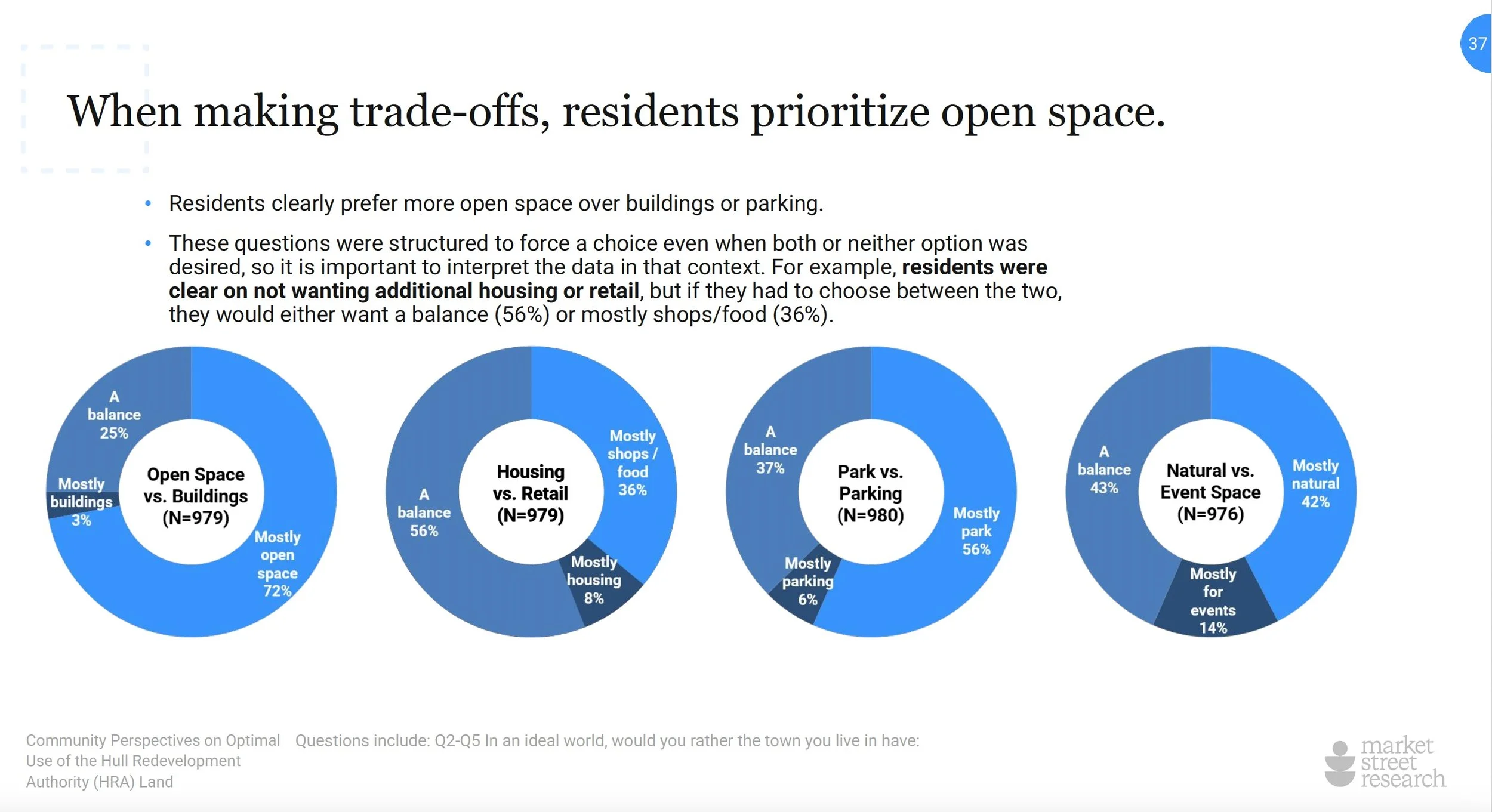
Most Hull residents responding to the Hull Redevelopment Authority’s survey about future uses of its property said they are not interested in large development and highly interested in open space, according to the consultant hired to conduct the townwide poll.

Market Street Research President Stephanie Gonthier this week presented the results, indicating the community’s preferred uses for the HRA property as an opportunity for the board and the public to make comments and ask questions.

At the beginning of Monday’s meeting, 38 people were participating in the Zoom call, including board members.

MSR – a marketing research firm that utilizes a customized approach – was hired to conduct the survey.

“This was obviously a complex topic,” Gonthier said. “The use of the HRA land is not simple.”

There were about 1,000 responses from among the approximately 9,000 registered voters with Hull addresses that the survey was mailed to – which is considered to be a very high response rate.

The key takeaways from the 37-page “Community Perspectives on Optimal Use of the Hull Redevelopment Authority Land” report included a preference for no intensive use or development of the property; maintaining open space with public access; and protecting the natural beauty of the property.

Click here for the full presentation of the survey results

The survey results are key to moving forward with the long-in-the-works Urban Renewal Plan to guide redevelopment of the parcel.

A survey goal was to understand current perceptions of Hull and the HRA property, including “familiarity with the land and general desires for Hull” and to assess residents’ priorities and concerns with the HRA land by measuring both broad goals (general character of the area) and specific goals (particular land uses), as well as how potential land uses may work together.

While most respondents indicated they are familiar with the HRA property, just under 1 in 4 residents “feel very familiar with the current HRA planning process.”

SOURCE: HULL REDEVELOPMENT AUTHORITY

Ready for the end of this process

The results revealed in part that residents are “ready for the end of this process with the HRA land, not interested in large development, and highly interested in open space that supports community and nature.”

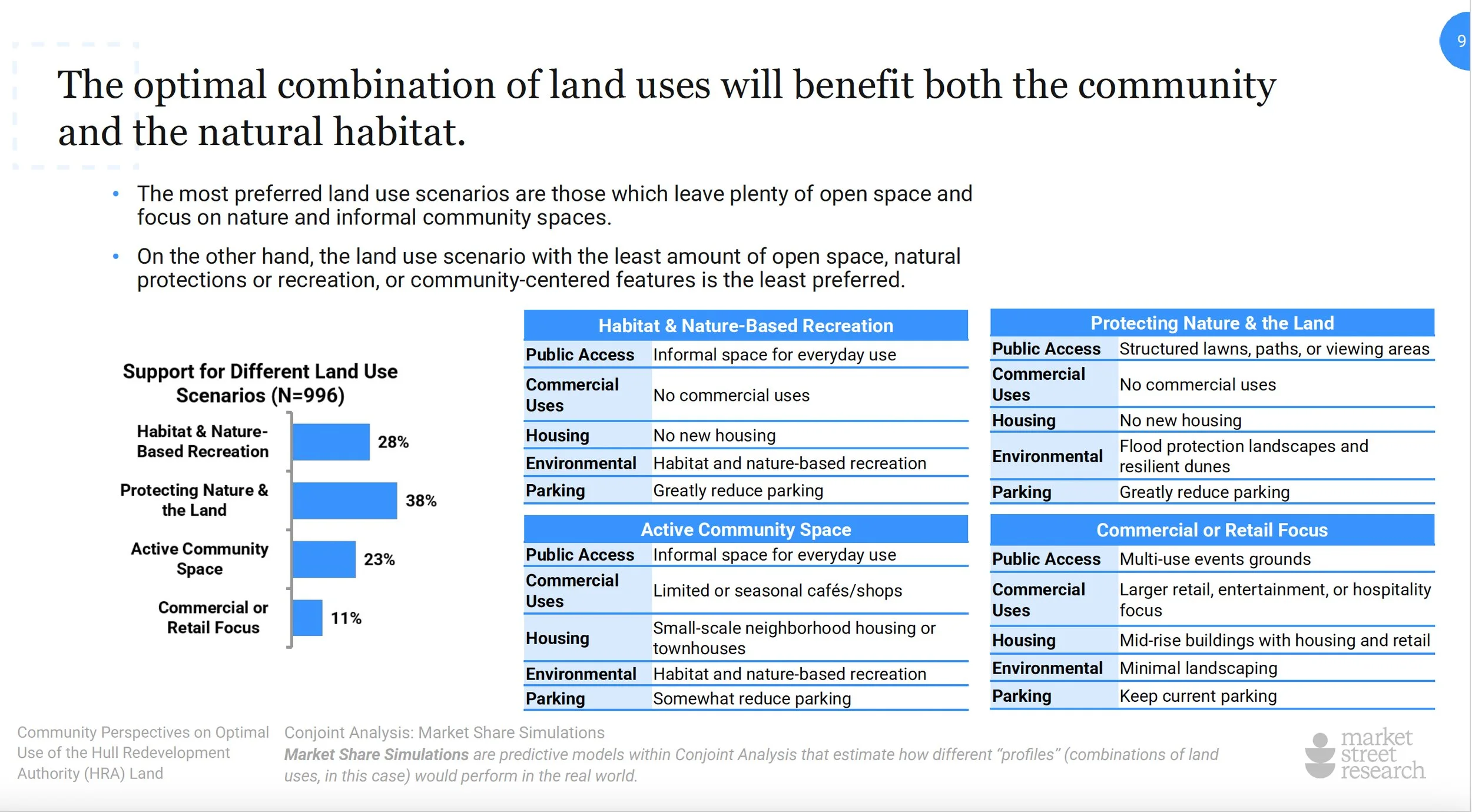
On the other hand, “the land-use scenario with the least amount of open space, natural protections or recreation, or community-centered features is the least preferred,” according to the report presented to the authority.

Beyond just the HRA property, some residents consider commercial – especially larger retail, entertainment, and hospitality – or new residential buildings as “diminishing the character of their community,” and sizable buildings and housing “are not appealing to residents.”

The survey results also show that respondents are overall against private ownership of the HRA land “because they doubt that would lead to decisions made in the residents’ best interests.”

Public open space and year-round community uses are among the most appealing to survey respondents, as well as protecting the dunes, natural habitat, and green space.

Maintaining neighborhood character

“Neighborhood character is important to residents; they don’t want to lose what they feel makes Hull unique or a desirable place to live,” the report states. One comment expressed interest in maintaining “the traditional character of our quirky little seaside gem of a town.”

There’s also a preference for open space that can serve multiple purposes, including gatherings, and a desire for natural open spaces and environmental protection.

“The least appealing use was adding new housing,” Gonthier said.

When Gonthier asked the board for feedback or whether members had any questions, member C. Anne Murray said she would like to hear Chair Bartley Kelly’s reactions and thoughts as a longtime HRA member.

“The responses were pretty much what I thought they would be,” he said. “Now the board has to grapple with how to balance the wants and needs,” including how to fund the cost of maintaining open space and other priorities outlined in the survey results once the board decides on next steps and what direction to take heading into continuation of their work on the urban renewal plan for the property. This project has long been delayed for a number of reasons, including waiting for the survey results.

The first priority, Kelly said, is to “take the data we know in our hearts and from the community and as a board decide what direction we should go in. We’ll need to fit the pieces of the puzzle together so we have some kind of plan moving forward to accomplish different objectives, especially the ones pointed out in the survey results.”

Hiring a consultant a possibility

The board also talked about possibly hiring an urban planner, landscape architect, or other consultant once a consensus is reached to provide guidance through the URP process, based in large part on the survey results.

Resident Susan Mann called the results “good news” and agreed that hiring someone to help with the planning is a good idea. However, she questioned whether hiring an urban planner would be the right decision since the URP requires approval by the state – which might be looking for certain things in an urban plan that you might not be able to give them at this point, she said.

It was also noted that there are various groups such as the Wildlands Trust and others that the HRA could partner with, and grants that the HRA might be able to access.

MSR’s recommendations based on the survey results included keeping the land open, supporting a sense of community by using the HRA land as a space that everyone can enjoy, and protecting nature.

“We have our work cut out for us as we move on to the next steps,” Kelly said.

MSR submitted the lowest bid of $22,000 and aligned most closely with the solicitation of services for a townwide survey design and analysis issued by the HRA earlier.

Services included working with HRA members on the design of the survey questions and format, survey response optimization features, analysis of response data, and submission of the survey report this week.


Like what you’re reading? Stay informed and support our work with a Hull Times subscription by clicking here.

Do you have an opinion to share? Click here to write a Letter to the Editor.

© 2026 The Hull Times. All rights reserved.

In split vote, HRA members agree to extend closing time of parking lots until 8 p.m.

By Carol Britton Meyer

During a two-hour meeting this week, the Hull Redevelopment Authority heard a report on the results of a recent community survey about proposed uses for the HRA property (see related story); gave the go-ahead to HRA Technical Operations Manager Mark Hamin to begin the process of organizing the HRA’s historical records; approved an extended closing time of 8 p.m. for parking lots A and C for the rest of the season; and approved a rate increase for a staff member who has worked for the HRA in a number of capacities for many years.

Board members agreed 3-2 (with C. Anne Murray and Dan Kernan voting against) to allow the operators of the A and C parking lots to remain open until 8 p.m. for this season rather than the 6 p.m. closing time outlined in their contracts.

This is with the understanding that they will clear their lots of trash at the end of the now-later closing time in accordance with their lease agreements, ensure they are clear of debris in the morning when the lots open, and on the condition that neither operator charges more than $15 for anyone to park between 6 and 8 p.m. rather than the usual $40 a day charge.

At Water Street parking lot operator Joseph Reilly’s request, he was granted permission at the board’s June 29 meeting on a unanimous vote to extend the hours of operation for lot C until 8 p.m. for the summer season from the current 6 p.m. closing time following some discussion – contingent on fulfilling the part of the contract requiring signage to be posted in this case, by Friday, July 3 – stating that residents with town parking stickers can park there for free. Hamin confirmed this week that this requirement has been met.

The lot manager was present at the earlier meeting and was reminded that the initial contract included plans to work with businesses in the area to offer some kind of parking discount to customers.

Even though the operator of parking Lot A did not make such a request, the majority of the board voted in support of extending the closing hour for both operators in the interest of fairness this week.

Murray wondered who would “police” the lots every day to ensure the trash is being cleared – a task Chair Bartley Kelly said he is already doing – and noted that Lot C is closer to the businesses with regard to granting the 8 p.m. lot closing time to both operators with the reduced parking fee.

The original intent was that because lot C closed at 6 p.m. under the lease contract, patrons of the restaurants and other businesses would be able to park there at no charge after that hour.
Kernan noted that the later lot closing hour is not included in the lease agreements.

At an earlier meeting, the board granted this season’s parking lot operators – including Reilly – the ability for extended hours – until 10 p.m. – during the July 18 fireworks display in honor of the country’s 250th anniversary.

Increase in pay approved

In recognition of her long service to the HRA, the board unanimously approved an increase in Catherine Goldhammer’s rate of pay from $65 to $75 an hour even though she has cut back her hours as she heads into retirement and since she hasn’t had a raise in recent years.

“She has always done whatever is needed,” Kelly said.

Hamin noted that Goldhammer’s skills and institutional knowledge are “very valuable” to the HRA and that if someone were to be hired at a lower rate, there would be a big learning curve “and the job would take a lot more hours.”

Murray emphasized that the increase is due to Goldhammer’s “long-term service to the HRA and not specifically connected to the position going forward” when eventually occupied by another person.

The board also approved Hamin handling the organization of the many boxes of HRA historical files “in a way he sees fit” – whether by himself working on a task that the board agreed he is overqualified for, although Hamin is willing to do it – or finding someone such as a college student to do the work under his supervision.

“If we brought on a staff person at a lower pay rate to take on this role with guidance, that could be a cost-saving measure,” he said. “I will explore that option.”

A replay of Monday’s HRA meeting will be posted on Hull Community Television’s website, www.hulltv.net.


Like what you’re reading? Stay informed and support our work with a Hull Times subscription by clicking here.

Do you have an opinion to share? Click here to write a Letter to the Editor.

© 2026 The Hull Times. All rights reserved.

Armed with a 215-foot crane, volunteers return to Hull’s rocky coastline to remove marine debris

Staff and volunteers from the Center for Coastal Studies returned to Hull Monday to employ a 215-foot crane to remove heavy debris left behind following an earlier cleanup along the shoreline.

In April, the Provincetown-based marine conservation organization enlisted dozens of volunteers from its “beach brigade” to remove more than 8,000 pounds of wire lobster traps and rope debris that were loose or able to be hauled by hand over the rocky shore. But considerable heavy and cumbersome debris remained, often wedged among the rocks. Much of the debris had accumulated during storms over several decades.

“Winter storms at sea have energy that is hard to comprehend. Nor’easters will tear up tons of fishing gear off the ocean bottom, and the wave activity can roll the fishing gear into entangled masses that are often deposited on shore,” said volunteer Tony Lacasse.

To remove the remaining debris, a highly technical operation was required to hoist the material hundreds of feet to a staging area above. A new crane from Winkler Crane and Construction Company of North Truro provided the most efficient method of removal. Among the large debris removed Monday was a massive 5,400-lb. tangled knot of nylon rope.

Often working with partner agencies, CCS leads efforts to conduct shoreline cleanups on Cape Cod, the Boston Harbor Islands, Cuttyhunk, and many other locales, as well as to remove ghost gear, or lost lobster pots and other fishing gear, from the sea bottom.
“Unless removed and disposed of properly, plastic debris on our coast remains forever, shedding microplastics and posing problems for habitat and wildlife,” said CCS Marine Debris and Plastics Program Director Laura Ludwig. “We were fortunate to work with Hull residents and others to help preserve this unique urban coastline.” 

Now celebrating its 50th year, the Center for Coastal Studies is a non-profit organization dedicated to understanding, preserving and protecting marine ecosystems and the coastal environment through applied research, education and public policy initiatives. For more information, visit www.coastalstudies.org.


Like what you’re reading? Stay informed and support our work with a Hull Times subscription by clicking here.

Do you have an opinion to share? Click here to write a Letter to the Editor.

© 2026 The Hull Times. All rights reserved.

Residents’ input is needed to help the MBTA improve Hull’s transportation service

Submitted by Steven M. Greenberg

In Hull’s Golden Age, public transportation provided the backbone to bring all the customers we needed to our beautiful little town of Hull. From the steamships bringing visitors to Steamboat Wharf, to the first electric railroad that moved people all over the peninsula, to the trolley and buses from Dorchester or Mattapan, public transportation has always been a cornerstone of what made Hull the place to visit and enjoy.

Generations of visitors and residents alike experienced Hull without needing to drive their own car. To continue this tradition, representatives of the MBTA are hosting an in-person event where you can learn about the project, view drawings of the proposed bus stops, and provide feedback of Phase 1 of the project to provide the bus stops from Hingham Depot to W Street.

Phase 2 will cover W Street to Pemberton Pier. The goal is to complete the Phase 1 stops in 2027. They are currently in the design phase and are looking for feedback from the public on the bus stop locations before they move forward.

Plans for future bus stops will mark a change from our existing flag-stop system and will help serve our town for generations to come. Your participation in this meeting will help the MBTA planners gain feedback and insight from the community.

This meeting and your support for increased and improved bus service also support the MBTA’s decision to continue to have two buses per hour after the existing one-year pilot program stops. Together, we can all start thinking about the 714 bus as an alternative means of transportation to reduce some of the traffic and parking issues we face.

Please attend and make sure your voice is heard as we go through the planning of this most important public transportation project in Hull. The meeting is on July 20, from 6-8 p.m. at Hull High School, 180 Main Street.

Don’t forget about the upcoming no-fare days July 18 (fireworks) and August 14 (parade and field day).Visit MBTA.com/714BusStops to learn more.


Like what you’re reading? Stay informed and support our work with a Hull Times subscription by clicking here.

Do you have an opinion to share? Click here to write a Letter to the Editor.

© 2026 The Hull Times. All rights reserved.

Hearing set for Tuesday on developer's appeal of Allerton townhouse project denial

the developer who proposed nine townhouses at the site of the former sunset marine has appealed the planning board’s denial of its site plan review permit.

By Christopher Haraden

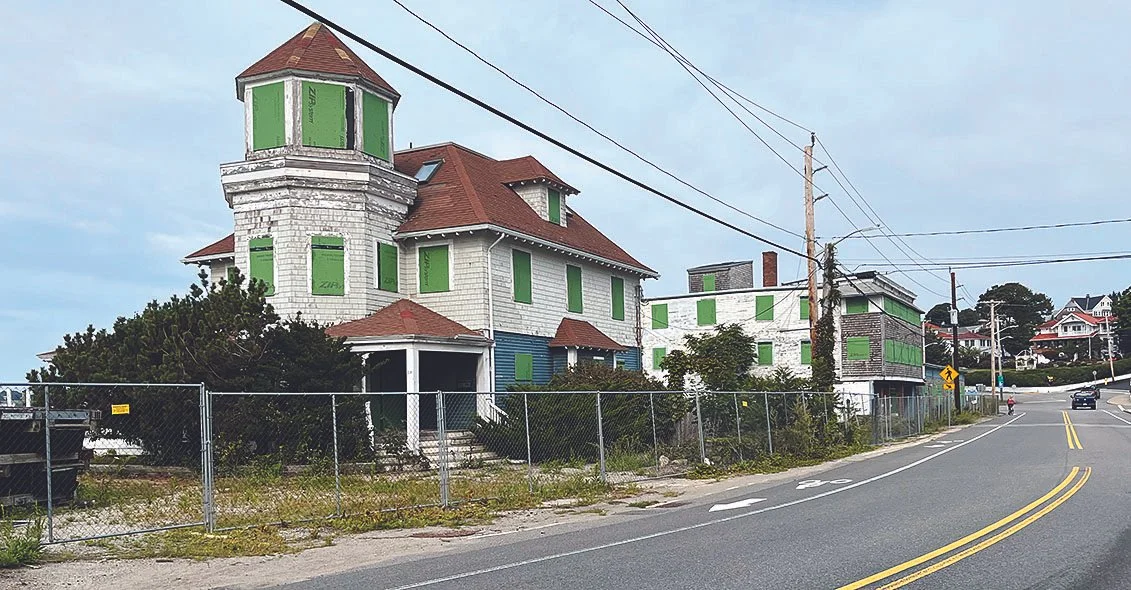
The developer proposing nine townhouses at the foot of Allerton Hill has appealed the planning board’s unanimous vote to reject the plans for the former Sunset Marine property at 839-845 Nantasket Avenue.

The zoning board of appeals will hold a public hearing on Tuesday, July 21 at 7 p.m. at the high school on The Point Nantasket Realty LLC’s challenge of the planning board’s May 14 denial vote as part of the Site Plan Review process. Under the town’s zoning bylaws, building permits cannot be issued for projects without site plan approval.

The Point Nantasket Realty had sought to construct nine “residential cottages” – units connected by a common deck – as well as a pavilion, boat ramp, boardwalk, and other amenities on approximately 3.28 acres.

The proposal called for demolishing the existing structures – which have been boarded up and surrounded by fencing for years – and repairing the existing dock. The long-vacant property that once housed the Lighthouse Restaurant, Sunset Marine, and an apartment building, is located at the base of Allerton Hill.

The current owner, ARC DC purchased the site, once owned by businessman William R. Kelley, from a court-appointed receiver for $1.05 million in 2018. The project is being proposed by Chris Reale of Hingham, who formerly owned the Paragon Boardwalk property at Nantasket Beach, along with Hingham builder Tom Fleck, whose father once ran the boat yard at the site.

Less than one month after the planning board rejected the development plan, the property owner blocked access to a boat ramp frequently used by the town’s fishing fleet and recreational boaters.

The ramp at the corner of V Street and Cadish Avenue is privately owned, but is subject to a state Chapter 91 license issued in 1994 that has provisions for public access. The 99-year license also covers the dilapidated pier at the end of U Street and the deteriorating wharf that once was the centerpiece of the marina.

Amid outcry from the public about the unexpected closure in early June, a member of the development group said the owner’s insurance company raised safety concerns about allowing the public on the waterfront lots, but pledged to work toward providing long-term access.

At the May hearing on the townhouse development, planning board members said they felt that the developer had not addressed all of their concerns and had presented plan revisions in a piecemeal format. That sentiment differed from comments board members made the previous month, when the developer was lauded for “responsiveness” and “making a lot of good progress” in modifying the plans in response to feedback.

Design Review Board Chair Julia Parker told the planning board that the DRB had voted against the project on May 13.

After the planning board voted 6-0 to deny the project, members of the audience applauded the decision.

A replay of the planning board’s May 14 hearing and other meetings about this project are available on demand on Hull Community Television’s website, www.hulltv.net.


Like what you’re reading? Stay informed and support our work with a Hull Times subscription by clicking here.

Do you have an opinion to share? Click here to write a Letter to the Editor.

© 2026 The Hull Times. All rights reserved.

Hull’s celebrations of the country’s independence have adapted during the past 250 years

By John J. Galluzzo 

As a nation, we’ve had numerous anniversaries celebrating the founding of the United States and, in particular, the signing of the Declaration of Independence on July 4, 1776. Hull has been around for all of them. Each commemoration, however, has changed in size, scope, and focus based on where Hull was on its historic journey.

1826

When we think of the way Hull might have observed the semicentennial of the birth of the nation, we must remember a few facts about the town’s history. During the Revolution, the town was evacuated, and only about half of the families returned. By 1826, the population was half of what it had been in 1776, about 125 people. And while the population was rebounding, it was also evolving. In 1826, Joshua James, the great lifesaver, was born. He was the son of a local mother and a Dutch immigrant father, and he and his direct family alone made-up 10% of the town’s population. Other families had also left their European homelands behind and found the little village at the end of the peninsula to be a safe haven to start a new life during the past few decades. While for many Americans the Revolution was in living memory 50 years on, for many Hull residents who had recently come to North America, it didn’t mean nearly as much.

In 1826, the Sportsman, a new hotel operated by Paul B. Worrick, opened, signaling the beginning of Hull’s future as a summer resort, but for the moment Hull was still a small and secluded town. If Hull residents celebrated that year, it was with church bell ringing, maybe a speech or two, and probably a few old-timers telling tales about the day, when they were just young men, that they took up arms and marched off to war.

That said, Massachusetts was ahead of the field as far as early observances went. In 1781, Massachusetts became the first state to recognize July 4th as a state holiday. In June 1825, Daniel Webster spoke at the laying of the cornerstone for the Bunker Hill Monument in Boston, but the giant obelisk would not be ready for the 50th anniversary; in fact, it was not completed until 1843. On the national level, the federal government appointed a 50th anniversary commission for what turned out to be a muted affair. July 4, 1826, would quickly turn to a day of mourning, as both John Adams and Thomas Jefferson, invited to participate in the 50th anniversary commemoration in Washington, D.C., passed away within hours of each other.

1876

The country’s centennial fell just 11 years after the end of the Civil War. The federal government had officially recognized Independence Day in 1870. Hull was entering its heyday as a growing summer resort, perfectly positioned to celebrate the 100th anniversary.

In general, the centennial became a moment of healing for a country torn in half by the recent fratricidal conflict. The flying of the American flag became a symbol of the reunified union, and a six-month long World’s Fair, the Centennial Exposition in Philadelphia, attracted more than eight million people to witness the wonders of American innovation.

Hull Village was more accessible than ever in July 1876, with the laying out of Nantasket Avenue to Pemberton Point in 1870. The Boston and Hingham Steam Boat Company’s steamers Governor Andrew, Rose Standish, and John Romer carried revelers from Boston to Downer Landing in Hingham and to the Nantasket wharf. They had a few choices for lodging and dining. Nehemiah Ripley described his Rockland House as “first-class in every respect; delightful drives; unsurpassed facilities for boating and fishing; hops [i.e., dances] twice a week; patronized by the elite of New England.” Advertisements called summer visitors to the Nantasket House in Hull Village and the Gun Rock House, “surrounded on three sides by water.” The Seabreeze House offered “roast clams every half hour” and the Wayside House boasted “a first-class place for parties seeking a day’s pleasure; good boating, bathing and fishing.” The Hudson House, on Jerusalem Road, boasted that “the celebrated grove and water facilities make it the most desirable resort on the road.” At the base of Atlantic Hill, The Pavilion offered “chowders, fried potatoes, fish, etc., at moderate prices” with “soda water, confectionary and cigars for sale at the counter.”

The Hingham Journal reported on July 7 that “the attractions at Downer Landing led hosts of people to seek the cooling breezes of the harbor, and great numbers also tested the benefits of the pure air at Nantasket Beach, and luxuriated at the various cafes and hotels on the shore.”

In the Village, according to The Boston Globe on July 6, “Hull was patriotic to the extent of a public meeting, the reading of the Declaration by Lewis Loring, Esq., and addresses by the Rev. Mr. Beadle and others. A gayly-adorned tent was the scene of the speaking.” The year-round population in Hull was about 300.

1926

The sesquicentennial, like the centennial, occurred not long after the closing of a major war. Hull would long feel the results of World War I, with citizens physically, mentally, and spiritually wounded and families mourning lost loved ones. By 1926, the town had seen its peak as a summer resort and was on a slow decline during one of the largest boom periods in American economic history.

Hull had everything in place for a major celebration: miles of sandy beaches and ocean views, numerous grand hotels from Gun Rock to Pemberton Point, restaurants, boardwalks, a 20-year-old amusement park, and more. Unfortunately, it had also become a known location to easily get booze during the height of Prohibition. Throughout the 1920s, federal agencies acting under the Volstead Act regularly raided the town. While Miss Nantasket may be crowned in front of thousands on the beach as revelers screamed down the first hill of the Giant Coaster at Paragon Park in the background, Treasury agents might be concurrently busting down doors to find illegal hooch and carry off popular hoteliers and restaurant owners to face judges and plead their cases. Though unpopular, the law was nonetheless rigidly enforced.

Steamboats still ruled the summer waves off Hull. Although the train had come to Hull in 1880, the steamers offered a chance to beat the heat, gliding through the cooling breezes amidst the beautiful scenery of Boston Harbor. Thousands took the boats from Boston to Nantasket Beach. Thousands more arrived by automobile, so many, in fact, that the Boston papers had started to keep count of how many cars were seen at the beach, the numbers in the tens of thousands. It could not have been a pleasurable ride; the state chose to make major repairs on the Boston-Quincy-Weymouth-Hingham road to Nantasket Beach throughout the summer of 1926. For those people off the steamboat lines and without cars, buses ran regularly to the beach.

On July 1, 1926, the state bathhouse at Nantasket Beach opened for the season, on land taken for a state reservation after the devastation of the Portland Gale of 1898. July 4 fell on a Sunday. At one minute past midnight, the Surfside and Paragon Park ballrooms kicked off dances until dawn to usher in the celebration. At 2 a.m., the Hull and Metropolitan District Commission police forces began their raids, making 39 arrests for drunkenness, disturbing the peace, disorderly conduct, operating a vehicle under the influence of liquor, keeping and exposing liquor and having             gambling implements.

That morning, 125,000 cars thronged Nantasket Beach and “not another automobile could possibly find room for parking within the limits of this town,” according to The Boston Globe on July 5. With only the one road into town (George Washington Boulevard did not yet exist), traffic backed up well into Hingham. On the Reservation, state officers directed drivers to park on both sides of the thoroughfare, and “so congested and narrow was the passage lane over the Metropolitan District Commission that it required more than 60 minutes to proceed the half-mile distance.” Parents lost children frequently among the 300,000 people on the beach, with all safely reunited by police.

The Pemberton Improvement Association held a bonfire at the point, their first in 25 years, safely distant from all houses. The year-round population of Hull had grown to approximately 1,900 residents.

1976

The country’s Bicentennial had a long buildup period. Hull purposely formed a new historical commission in advance, to begin to take stock of what the town held in terms of historic stories, buildings, and artifacts pertaining to the community’s role in the Revolutionary War.

Commemorations in Hull began in 1975, in connection with the 200th anniversary of the trials of 1775, the Battle of Boston Light, and other wartime activities. A play focusing on the life of Susanna Haswell Rowson, a young girl who lived in the Village during the war and became a celebrated author, brought her story back to life.

As July 4, 1976, approached the town’s residents prepared for Hull’s biggest party in years. A Revolutionary War-era ball welcomed all dressed in period costume a few months in advance of the big day. Around town, local neighborhoods held their own gatherings. Allerton Hill held an essay contest for kids, with two savings bonds as prizes. At 9 a.m., the James Murphy “marathon” for young people 18 and under promised a trophy and other prizes. At 10:30, Roy Scannell of 1 Point Allerton Avenue held a flag-raising and shortly thereafter the annual Hilda and Thayer Baldwin peanut hunt for children took place, part of the “races, fun, fellowship” portion of the day.

On Saturday, July 10, Hull celebrated the Bicentennial in style. At 9 a.m., as 100,000 gathered at the beach to find vantage points from which to see a Tall Ships parade and the USS Constitution sailing offshore, runners raced from A Street to Sunset Point and back. At 10:30, with the Tall Ships sailing past, Hull officials, visitors from the French Embassy and U.S. State Department dedicated Fort Revere Memorial Park and Frenchman’s Grove, the town’s permanent memorials to the Revolution. At 1 p.m. a gala parade of nearly 100 different units marched from Monument Square to Bayside, where a beer garden, food vendors, and a variety of novelty concessions could be found at an event the organizers called Field Fest. Clowns, puppets, a clambake, square dancing in the tennis courts and a Children’s Olympic Games wrapped up the event.

By 1976, Hull’s year-round population was around 9,900.

Hull rode a roller coaster of its own from 1776 to 1976, from a small, secluded outpost of a town to an overcrowded summer resort before finding its place as a seasonally busy suburb of Boston. During that time, the year-round population grew 7,820%. Celebrations moved from a hyper-localized affair in Hull Village – the epicenter of Hull’s population in 1826 – to more broadly designed affairs meant to cater to out-of-town summer tourists to a decidedly inward-focused prideful reminiscence of the town’s role in the grander history of the formation of the United States.

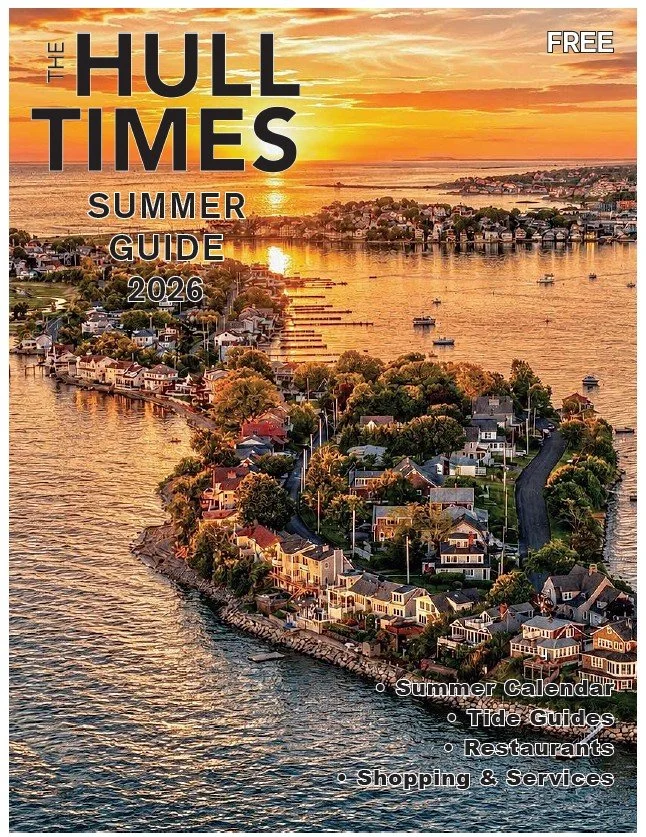
As we approach yet another celebration, the semiquincentennial, Hull will once again define its own path as we remember the birth of our country. Those events will be highlighted throughout the summer in the Times and this year’s Summer Guide, available online and in local stores.



Like what you’re reading? Stay informed and support our work with a Hull Times subscription by clicking here.

Do you have an opinion to share? Click here to write a Letter to the Editor.

© 2026 The Hull Times. All rights reserved.

Town to seek valuation of James Avenue beach parcel, allows abutter to use railroad bed

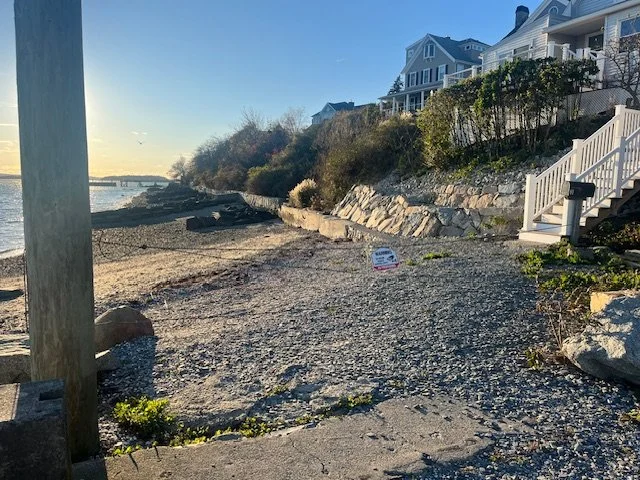
The owner of the access point for the beach at james avenue has blocked residents from crossing his property in order to protect his rights. A spring town meeting article authorized the select board to pursue an agreement with the owner to guarantee public access. [PHOTO COURTESY OF KELLY REILLY]

By Carol Britton Meyer 

The select board this week heard the first “Annual Comprehensive Financial Review” of the town’s finances; approved a license agreement for the owner of 9 Manomet Ave. to use an adjacent portion of the former railroad bed; discussed posting a draft meeting agenda 72 hours in advance in addition to the required posting of the final agenda 48 hours ahead of time; and heard an update on James Avenue beach access.

Regarding the access issue, Town Counsel Brian Winner – noting that Article 44 passed at the spring town meeting – recommended that the board commission an appraisal of the property involved, an action they supported.

A citizens’ petition sponsored by Kathleen Wolf – which passed on a vote of 191 to 11 following a lengthy discussion, meeting the two-thirds vote requirement – authorizes the select board to acquire either an easement in, or to purchase outright, a small, privately-owned parcel of land on James Avenue that has traditionally been used by the public for beach access. In 2017, town meeting voted in favor of a similar proposal, but no action was taken by the town.

This would allow people to continue to take four or five steps onto the property owner’s land to access the beach.

Once the appraisal has been done, the board will discuss the issue and next steps at a future meeting, including a funding source – which could require a town meeting vote, depending on the cost. Another consideration, Winner said, is that the property owner could challenge any action taken by the town in court.

Select board member Greg Grey said he stopped by the beach recently and the cables that had been placed across part of the property by the owner to prevent beach access had been cut, “fishermen were on the beach, and someone was walking their dog. I agree that what the owner is doing is wrong, [but people are] using the beach anyway. One person being very mean is what it is.”

One abutter said that she and others living in the area don’t have a problem with allowing people to access the beach.

Another said “it’s a beautiful spot for the neighborhood and for people wanting to bring their kids with inner tubes and kayaks – I wouldn’t want to see that change.”

In approving a license agreement allowing the owners of 9 Manomet Ave. – Karl D. and Lettie E. Buldoukian, trustees of the Summer Wind Irrevocable Realty Trust – to implement a restoration plan for a section of the former railroad bed that was approved by the conservation commission, Winner said having one in place is a tool that will enable them to finish restorative work that’s necessary due to plantings being removed during earlier construction – “without prejudice” in order to allow further discussion, including a report, about “the larger issues surrounding [the railroad bed]” at a future meeting.

“This is kind of an access agreement,” he said.

Board member Jerry Taverna called use of the railroad bed by abutters “the hot potato of the entire town. We’re waiting on the report [that will be presented] at a future meeting.”

During yet another discussion, the board decided to delay a vote on the proposed 72-hour draft agenda notice until member Irwin Nesoff is present. The board talked about this idea at its recent retreat.

“I suggested that the draft agenda [be posted] 72 hours ahead of the meetings, even though the law says 48 hours because I think it’s important to give citizens extra time to go through the agenda items, do their own research, and get prepared for a meeting,” board member Susan Short Green said. “This is our opportunity to show citizens we’ve heard them and are willing to make changes to our policies and procedures with them in mind.”

Constable noted that an agenda can be updated any time prior to the 48-hour timeframe.

Chair Brian McCarthy said he has been “inundated with emails” from citizens “looking to have agenda information earlier. That might make more work [for the town manager], but it’s probably the right thing to do at this time.”

If approved following further discussion at the July 22 meeting, the draft agenda would be marked as such with a watermark. Green offered to work on the wording in the meantime.

The 137-page “Annual Comprehensive Financial Review,” which was presented by Town Accountant Michael Buckley and Town Treasurer Eileen White and will be posted on the town website, “is a vital piece of Hull’s financial road map to where the town is going over the next 10 to 30 years,” Constable said. “This is an independent review of the overall financial health of the town – a plain-language overview – designed to be used by elected and appointed officials and citizens.”

After the board has an opportunity to review the document over the summer, there will be a “deeper dive” presentation on the town’s financial status in the fall.

“This is one of the ultimate tools in providing transparency and will help town leaders make informed decisions using facts rather than assumptions and will build public trust,” Constable said.

The report will also help establish Hull’s creditworthiness as the town faces some major capital projects.

“That we’re in a stable financial position now is due in large part to new development or redevelopment of existing properties,” she said.


Like what you’re reading? Stay informed and support our work with a Hull Times subscription by clicking here.

Do you have an opinion to share? Click here to write a Letter to the Editor.

© 2026 The Hull Times. All rights reserved.

Recognizing an aging population, town to apply for ‘Age-Friendly’ community status with AARP

By Carol Britton Meyer

The Council on Aging was given the go-ahead by the select board this week to apply for designation by the American Association of Retired Persons as an “Age-Friendly” community for residents, businesses, and visitors.

A letter signed by select board Chair Brian McCarthy will be submitted on behalf of the board to AARP Massachusetts State Director Jennifer Benson at the recommendation of the COA seeking designation under AARP’s Network of Age-Friendly Communities – an affiliate of the World Health Organization’s Global Network for Age-Friendly Cities and Communities.

“AARP designation allows towns to determine their own priorities and goals and to work toward achieving them at no direct cost to the town, except any money that might be allocated toward programming,” COA member Rhoda Kanet said.

Another benefit, she said, is that gaining Age-Friendly status allows a community to seek AARP, and possibly other, grants.

COA Director Lisa Thornton noted that the senior center is already engaged in efforts that are compatible with the designation guidelines, which would become part of the COA’s “Age-Friendly” action plan. “We’re already ahead of the game, including [the recent] needs assessment,” she said.

Recognizing the changing demographics, the town and the Council on Aging commissioned a few years ago the University of Massachusetts’ Center on Demographic Research on Aging to conduct a Community Needs Assessment to investigate the needs, interests, preferences, and opinions of Hull residents ages 55 or older.

According to their research, 55% of Hull’s population by 2030 will be over 50, with at least 4,200 residents over the age of 60.

Town Manager Jennifer Constable said that the planning process under an Age-Friendly designation would involve integration of demographics of all ages.

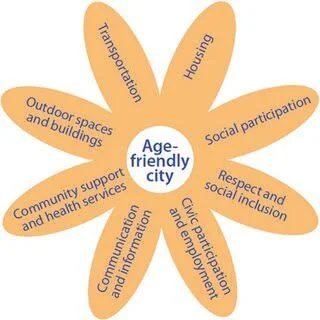
The town is committed to taking meaningful actions that align with AARP’s Eight Domains of Livability “to make our community more inclusive, accessible, and resilient for people of all ages,” the letter states.

In seeking Age-Friendly designation, the letter outlines actions the town would take as part of this initiative, including:

• Ensuring town departments, boards, and committees understand the needs assessment and develop a means to track how each has considered its contents in their own work;

• Planning for the growing demand for senior center programs and services by developing three- and 10-year strategic plans that address staffing, space, transportation, program mix, social connection, and technology access;

• Ensuring the town’s affordable housing plans incorporate the needs of people of all ages;

• Identifying vulnerable residents, strengthening wellness check systems, and integrating age-friendly readiness to resiliency planning;

• Coordinating across departments to improve walkability, curb cuts and crossings, bench placement, lighting, and wayfinding and expanding age-friendly transportation options that connect residents to services, shopping, and recreation.

• Establishing an age-friendly communications plan, including an accessible town web page and regular newsletters.

• Including representative community members in the process, with an emphasis on older residents.

In other business, the select board appointed citizens to several boards and committees. Member Irwin Nesoff was not present at Wednesday’s meeting. These applicants were appointed:

100% Clean Energy Climate Action Committee: Jason McCann and Maria Writesel; Beautification Committee: Hillary Taverna; Permanent Sewer Commission: Liz Kay; War Memorial Commission: Kevin Richard Beck; and the Weir River Estuary Park Committee: Neal David Connors, contingent on confirmation of an opening.

These citizens were reappointed:

Affordable Housing Committee: Lisa Ann Boretti and Beverley Love Rock; Beautification Committee: Camellia B. Bloch, Maureen Koelsch, and Amy Russell; Conservation Commission: Samuel Campbell and Paul Paquin; Council on Aging: James Pitrolo; Economic Development Committee: Jennifer Mullin; Hull Cultural Council: Steven Greenberg, Nicole Hocking, Karen Shirey Pitrolo, and Meghan Riley; No Place For Hate Committee: Sandra Baler Sagel, Eva Borsody Das, and Meghan Riley; Opioid Abatement Task Force: Scott J. Miller and Richard Schutte; and the Zoning Board of Appeals: Anthony May.


Like what you’re reading? Stay informed and support our work with a Hull Times subscription by clicking here.

Do you have an opinion to share? Click here to write a Letter to the Editor.

© 2026 The Hull Times. All rights reserved.